Church Brothers Farms Promotes Jeff Church And Rick Russo

Church Brothers Farms recently promoted two employees. Jeff Church is now chief operations officer and Rick Russo joins the executive team as senior vice president of sales and marketing, both report to CEO Brian Church.

As chief operating officer, Church will collaborate with all departments to identify, communicate and support the company’s strategic objectives. As a senior executive, he is working with the company’s customers to meet their needs and further develop existing relationships.  He is also charged with reviewing the company’s product portfolio and exploring new business channel opportunities.

Right: Jeff Church.


In his new role as senior vice president of sales and marketing, Russo is responsible for developing and implementing strategic sales plans.  He will also direct new product development objectives and will review and approve an annual marketing plan that includes trade shows, advertising campaigns and other supplemental activities. 

Right: Rick Russo.

“We look forward to Jeff and Rick’s continued strategic support of the company as we move forward during these challenging times,” Brian Church said. 


By Fresh Plaza

OVERVIEW GLOBAL AVOCADO MARKET

Avocado bars may have had to close due to the coronavirus, but the demand for avocados has clearly not dropped. The season in the Northern Hemisphere is coming to an end and the production from countries such as Peru and South Africa is steadily increasing. The productions from Peru and South Africa in particular could clash on the market between weeks 17 and 22/23.

The Netherlands: Good avocado sales; shortage of larger sizes expected in the short term
The coronavirus crisis seems to be driving up the demand for avocados. A Dutch importer says that avocados are among the most sought-after categories, together with citrus and summer fruits. Peru and South Africa are the countries that will be supplying the fruit in the near future, although the importer says that the volumes arriving are still small. “In the short term, I foresee a shortage for the larger sizes. Of course, that can change later in the season, but now the demand for Hass avocados is particularly good. Sales prices range between 12 and 14 Euro (4 kg) for sizes 14-20 and between 11 and 12 Euro for the smaller sizes.

Belgium: Trade going well
There is currently a great demand for more luxurious products, including avocados. Prices are currently at a normal level for the time of year. A Belgian trader is also satisfied with the quality and appearance of the avocados.

Germany: Low demand due to start of German strawberry season
The avocado market is quiet in the German wholesale. The focus now is on regional seasonal products, like strawberries and asparagus, which are traded in large volumes. Exotics are therefore pushed more into the background at this time of the year, according to a trader from Karlsruhe.

“Until recently, we still had beautiful avocados from Spain. They were very popular among our customers. Now, however, we have switched back to overseas goods, which we receive via Dutch large importers. The origin varies depending on availability and quality.”

France: The logistics is causing headaches at supermarkets
Although the French government is calling on the population to consume French fruit and vegetables, avocados have not been affected. Still, the demand has changed in recent weeks. Consumers are now buying packaged avocados in the supermarkets and no longer loose ones. There are concerns about the supply of French supermarkets, since there are fewer workers for the harvest and transport is difficult.

Spain: High demand will cause season to end earlier
The Spanish avocado season will end about 15 days earlier than last year due to the surprisingly high demand for all sizes, even though the total volume harvested this year (80,000 tons) was greater than that of the previous one. Despite the coronavirus, prices have remained high, even for the smallest sizes that often face strong competition from Kenya, Mexico or Chile. At the moment, prices stand at 14-15 Euro per box and these are expected to remain stable until the beginning of May, when large quantities of Peruvian avocados will arrive on the European market.

Italy: Shift from Hass to Greenskin avocados
There’s no crisis in the avocado market. A major wholesaler in Northern Italy says that the demand remains stable, despite the coronavirus. Retailers and specialist stores are the current sales channels, while the catering industry is absent due to its closure. The focus is increasingly shifting to the Hass variety, at the expense of Greenskin avocados. The Greenskin are supplied by South Africa, Kenya and Peru, while the Hass come mainly from Peru and Mexico. The seasons in Spain and Morocco are now coming to an end. Prices fluctuate, but offer interesting prospects. Currently, a box (4 kg) of Greenskin avocados is sold in the wholesale for between 8 and 12 Euro, while a box of the ready-to-eat Hass oscillates between 13 and 20 Euro.

South Africa: Larger volumes this year; formidable competitor for Peru in Europe
There isn’t a great avocado supply on the market at the moment. Rainfall and the Easter weekend have delayed the harvest, but stocks are expected to increase in the coming weeks. The average price on the local market amounts to around 8.23 ​​ZAR (€ 0.40) and is thus lower than last week. The prospect is that the price will drop if more volumes come on the market.

During the first week of the lockdown in South Africa, fewer avocados were sold due to the closure of the catering industry. Private buyers were also unable to purchase avocados on this market due to legislation that has now been dropped. Exporters say that there is a lower demand for Greenskins in the UK, but that the market for the Hass variety is stable. In the period from week 17 to week 22/23, this year’s larger harvest (30% increase in the volume) is expected to clash with the also larger production from Peru.

There have been sharp peaks in the production, with a record harvest in 2018, followed by a 40% drop in the volume in 2019 and an expected 30% rise in 2020. Growers want to avoid these peaks by manipulating the harvest. The sizes of the avocados are smaller this year, but that is not a concern for the exporters. Most South African avocados are intended for the European market and the UK. As for new markets in the future, exporters see the best opportunities in Japan.

Mexico: Higher prices than usual
There are two main avocado producing states in Mexico: Michoacán and Jalisco. The avocados from Michoacán are mainly exported to the US and growers aim for a continuous supply. Jalisco focuses more on the Canadian market and also Japan and Europe. March and April are the months when fewer avocados are harvested. Volumes will increase again in May. This also ensures that prices in these two months are higher than in the rest of the year. In any case, because of the coronavirus, the demand has risen and prices are higher. Normally, prices rise by 30%, but this year they have increased by 40-45%.

Colombia: Avocado cultivation continues to expand in the country
The South American country has expanded its avocado production in recent years. Many hectares have been planted with new trees that should come into production in the coming years. The country is able to harvest avocados in 46 to 48 weeks of the year, with the off season taking place between March and July and the peak season between September and February. The peak is reached in a period when there is little competition from other countries. Europe is the main destination for Colombian avocados, but given the growing volumes, it is also important to look for other destinations.

United States: California almost had surpluses
California’s avocado production is strong this year. Growers have already harvested 21.2 tons, compared to 2.3 tons around the same period last year. This time we can speak of a normal avocado harvest. The avocado industry in the US has been holding its breath for the past two weeks, given the threat of an avocado surplus. The rainfall, which temporarily brought the harvest to a halt, and a decline in Mexico’s production over the holidays have prevented an excessive accumulation of stocks.

The demand has shifted to the retail. Not only has the coronavirus played a part in this, but also the large volumes and strong demand early this season. Almost imperceptibly, the avocado market in the United States has undergone a major shift. First, the volumes skyrocketed, but then the situation changed radically due to the closing of food service establishments and the hoarding in supermarkets. It remains to be seen what will happen in the coming weeks, but sales to the food service will be very meager. “I don’t know anyone in this business who isn’t concerned,” says someone from the California avocado industry. It is also unclear how prices will develop in the coming weeks. Prices skyrocketed when people started hoarding, but then plummeted again and now seem to be stabilizing somewhat.

China: Avocado market slowly picking up again; imports from Peru and Philippines
The avocado market in China is mainly focused on imports. Currently, there is a great supply from Peru, but imports have also started arriving from the Philippines for the first time. The avocado market has been very tough lately, as not many people are buying avocados at this time. A lot of them are normally used in restaurants and bars, but since they were closed, fewer avocados were purchased. As a result, sales were very slow, which makes things difficult for a product that doesn’t have a very long shelf life. Now that restaurants, bars and businesses are all open again in major cities, there is good hope that the demand for avocados will gradually increase again.

Australia and New Zealand: Campaign to promote local production
With the closure of the food service because of the coronavirus, 10 to 20% of avocado sales will no longer be made on the Australian market. In order to maintain the demand for avocados, promotions have been launched in Australia and New Zealand to encourage people to continue buying local products. Australia is almost about to shift from Shepard avocados (a Greenskin) to the more famous Hass. The Shepard season has been somewhat more limited than last year. For its part, an Australian company hopes to grow in the market with avocados sold under the Viavi brand, with the season running from March to April.

In 2018-2019, the avocado production had grown by 11%, to 85,546 tons. The value had decreased by 18%, to AUD 444 million (EUR 257.2 million). Exports increased spectacularly by 79% to 3,202 tons. In New Zealand, 31,424 tons of avocados were harvested in 3,795 hectares. 2.2 million trays were for the domestic market and another 2.9 million trays for export.

By Fresh Plaza


OVERVIEW GLOBAL TOMATO MARKET

The global tomato market is currently marked by uncertainty. Many growers and traders are anxious about how the demand will develop after Easter. Now tomato prices are still rising, but will this also be the case after Easter?

In many countries in Western Europe and North America, the season is about to start again and the tomato supply is increasing. At the moment, traders are forced to rely on the retail and processing industry. The catering industry has come to a standstill and niche products are being hit the hardest by this. The extent to which prices now rise or fall strongly depends on the population’s ‘hoarding trends’, which varies from country to country.

The Netherlands: “Slow arrival of productions has been fortunate”
The news regarding the coronavirus are unpredictable, and this applies also to the current situation in the tomato market, which is very restless. Shortly after the impact of the corona bomb in the Netherlands in week 12, there was a lot of hoarding, with rising prices. Soon after there was a dip linked to stock saturation and prices collapsed. Now, with the Easter demand, prices are rising again, but nobody knows what is going to happen after Easter.

What was fortunate is that the Dutch productions started slowly. The lack of sunshine in January and February put a brake on the fruit production, which means that volumes are still limited in size. What is currently on offer is therefore (still) selling well, also in a traditionally important market like Germany. There’s a limited production in the Netherlands, but the supply from Spain is also limited as a result of all the problems caused by the coronavirus there, and the supply from Morocco stopped earlier than usual for the same reason.

The larger productions are expected to arrive in about 5-6 weeks and the question remains: what will the market do next? It is abundantly clear that tomato specialties in particular have been the hardest hit, as has been the case with other greenhouse products. Unfortunately, the catering industry is closed and distant destinations, such as the Middle East and the United States, cannot be reached. The larger segments, the real retail products, are better off, with the retail opting to create extra shelf space for bulk products. Consequently, there’s also less shelf space for specialties. Prices could be further affected on Easter Monday if nothing is sold but there is still harvesting.

Belgium: “Hoarding phase different in every country”
For the time of year, tomato prices in Belgium in weeks 13-14 have been “decent”. The fact that there have been slightly more domestic-oriented buyers could be a partial explanation for this. Traditionally, prices ahead of Easter fall, as the stocks are already there and exports have mostly taken place already. The hoarding phase that is already behind us in the Netherlands and Belgium has taken place in other European countries at other times, sometimes giving a boost to the demand from those places.

It is hoped that the market will stabilize, and that is also what is likely to happen, given the limited volumes. This, just like in the Netherlands, is due to slow growth as a result of the lack of sunshine in January and February. Still, what will actually happen remains a mystery, given that “no one really has experience with what’s going on around the world.”

Germany: Large volumes of domestic production available
In Germany, the domestic production is now noticeably increasing in terms of volume. Since this week, the tomato sector has been harvesting and marketing large quantities. Due to the lack of sunshine in January and February, the season was slightly delayed, but the good weather of the past few weeks has quickly made up for that. “We therefore expect good volumes and ditto product quality across the board,” says Carsten Knodt, greenhouse grower at Landgard. The German fruit and vegetable group grows fruit and vegetables on approximately 120 hectares. The tomato harvest is also in full swing in other horticultural regions, such as Knoblauchsland (Nuremberg region), Brandenburg and Mecklenburg-Western Pomerania.

Nevertheless, Dutch and Belgian tomatoes grown with artificial light still play an important role on the German market, especially in the retail and wholesale markets in the Ruhr region, where tomatoes from neighboring countries are traded in large volumes. In terms of pricing, the coronavirus outbreak has caused extreme market fluctuations: Prices for standard vegetables, including tomatoes, skyrocketed in mid-March. Now that the majority of the German federal states have closed their catering establishments, this product must be sold elsewhere and prices will logically fall. However, this picture differs per state.

France: Government calls consumers to buy French tomatoes
In these times of crisis, the French government is promoting the consumption of French products. There is therefore a great demand for French tomatoes. Prices have even risen above € 3.00 / kg in the case of tomatoes on the vine. For these reasons, many Dutch traders are also selling their tomatoes in France. There is still demand for Spanish tomatoes, but due to the weather conditions and problems in the logistics and labor, the volume is more limited.

Spain: Great demand and high prices, but what about after Easter?
The season in Spain is currently in full swing and started earlier than in previous years. Tomato sales have increased by 20% in the retail since the start of the coronavirus outbreak. After all, tomatoes are highly versatile in the kitchen. When people in some countries started hoarding in the first weeks, tomato sales grew by up to 180%. After those weeks, the demand stabilized somewhat. Sales are still higher than usual around this time of the year, but exporters are cautious, as sales are usually higher before Easter. People are especially curious about what will happen after Easter.

The social distancing protocols, the higher production costs and the increased demand have pushed prices up and created more movement in the free market, outside of established programs. Plum tomatoes, cherry tomatoes and cocktail tomatoes are the most expensive, while loose tomatoes and tomatoes on the vine are cheaper. It has become more difficult to sell second-class tomatoes now that the catering industry is closed.

Italy: Growers satisfied with the price of tomatoes
40% of the tomato production in Italy is in Sicily. A grower taking part in the integrated disease control program is satisfied with the sales of his tomatoes on the vine, which reached an average price of € 0.63 / kg. Meanwhile, he continues to harvest cherry (€ 1.20 / kg), Piccalilly (€ 0.90 / kg) and plum tomatoes (€ 1.25 / kg). The prices are fairly high around this period and both the quality and quantity are good, especially thanks to the mild winter. In the wholesale market in Vittoria, plum tomatoes are sold for € 2.61 / kg, cherry tomatoes cost € 1.50 / kg, smooth round tomatoes are sold for € 0.95 / kg and the price of mini plum tomatoes stands at € 1.87 € / kg.

The harvest is currently in full swing in Northern Italy. A number of growers here cultivate hydroponically in their greenhouses, and they find the quality of their on the vine, cocktail and cherry tomatoes to be great. Sales to the retail proceed normally, although difficulties have been reported in sales to wholesalers. In central Italy, the demand for tomatoes increases sharply between mid-April and late May. “We will start harvesting the local production in May,” says a grower. “Then the demand for tomatoes should drop again, but we’ll also see a reduction in the supply. The situation this year is different for the colored tomatoes that are normally intended for the catering sector. The demand is not getting off the ground and prices are falling.”

South Africa: Strong price increase for tomatoes
Tomato prices have increased by 58% in the last week, reaching an average level of € 0.49 / kg (ZAR 9.68), due to the low supply on the market. These high prices are expected to last for two weeks. Some regions in Limpopo have ceased production, now that autumn is approaching, while a region like Komatipoort (close to the Mozambique border) is starting with the winter production. South Africa has a continuous supply, with tomato production regions across the country, with a predominance of open ground crops. Only around East-London (Eastern Cape) is there protected cultivation in tunnels. More and more open ground growers are switching to cultivation under nets. The different production regions are increasingly overlapping, so price fluctuations are getting smaller.

United States: “People buy less than McDonald’s”
There are currently enough tomatoes on the US market. Stocks come from both domestic growers and from neighboring Mexico. This large supply of tomatoes has to do with a shift in the demand, or rather the loss of the demand from the food service and catering sector. A few weeks ago, supermarket sales increased, but after the “hoarding wave” passed, the market became quieter, and not all stocks can be sold to retailers. “People don’t buy the quantities McDonald’s usually does,” says a Texas grower. He expects the retail demand for his tomatoes to pick up again. Regarding the price, his statement is short and clear: “You can pay whatever you want at the moment.”

Canada: Growers concerned about market demand
The greenhouse production is increasing again in Canada. The peak in the season takes place between late May and July. The first estimates for this season’s volumes point to them being comparable to last year’s. The prices will also be similar. The demand on the market is also a cause of concern for the growers; however, online sales have increased. Greenhouse product sales appear to be a bit slower. It is difficult to make predictions at the moment. “This is all new ground to us,” says a grower.

Mexico: Exports to the US are not hindered by coronavirus
Fewer Roma tomatoes are coming from Mexico this year due to the weather conditions and the fewer number of plantations, as there was a lot of uncertainty about the new Suspension Agreement on tomatoes in the United States. Although prices have reached the lowest level since the start of 2020, this is a normal development in the season. Despite the virus, inspections upon entry into the United States continue, so exports remain possible.

China: Cherry tomatoes are gaining popularity
Tomatoes are grown in many areas of China, so the supply is very large. Currently, many tomatoes come from Sichuan, Yunnan, Shandong, Shaanxi and Gansu. As a result, there is enough supply on the market. The logistics remains a challenge at the moment and this is slowing down sales. Transport difficulties are another aftermath of the coronavirus.

The price has remained fairly stable in recent months, which is positive for the market. Since the new season is now starting for many production areas, the peak in the supply is expected in June. Currently, many large tomatoes are still grown, but the popularity of cherry tomatoes is rapidly increasing on the Chinese market. The demand is high and much is invested in further increasing the production. For example, many new greenhouses have been built to improve the quality and supply and thus meet the demand for cherry tomatoes.

Australia: Price for tomatoes on the vine lower due to larger volume
The value of tomatoes increased by 11% in the 2018-2019 season, while the volume decreased by 3%. 53% of the total production is intended for fresh consumption, while the other 47% goes to the processing industry. Of the 469,199 tons in the said season, 1,000 tons were exported and 899 tons were imported. The most important variety remains the field tomato (41%), followed by the Large Truss (35%), Cherry tomato (21%) and Roma (3%). One of the largest greenhouse tomato growers reported that the current production is going well, despite the low prices from November to January. Prices rose again in February and March. The price of tomatoes on the vine is generally lower because more is planted. Due to the dry weather in the south of the country, prices have occasionally risen sharply. Prices don’t appear to have risen as a result of hoarding in the Australian retail.

By Fresh Plaza

Coronavirus: ‘Drop In Global Trade To Be Worse Than 2008 Crisis’

The World Trade Organization (WTO) is predicting a severe decline in international commerce this year.

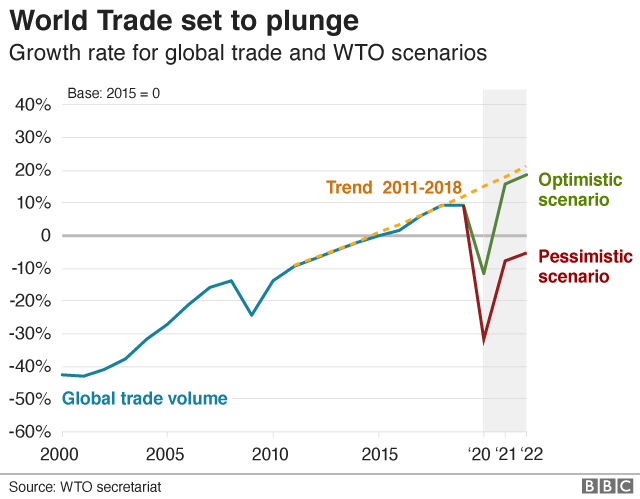
In a new report the WTO forecasts a contraction of between 13% and 32% this year.

The wide range of possibilities reflects the uncertainties about the health crisis.

It says the impact on trade is likely to exceed the slump caused by the financial crisis just over a decade ago.

The more pessimistic case would amount to a decline in global trade similar to what happened in the great depression 90 years ago but in shorter period of time.

The WTO’s director general Roberto Azevedo described the figures as “ugly”.

“There is no getting round that”, he said. He said the situation was first and foremost a health crisis and he acknowledged that governments had to take steps to protect people’s lives.

“The unavoidable declines in trade and output will have painful consequences for households and businesses, on top of the human suffering caused by the disease itself,” he added.

global trade

A decline of 13% in trade in goods is described in the report as a relatively optimistic scenario. It reflects a steep drop in trade followed by a recovery starting in the second half of 2020.

That of course would need to be based on substantial progress over the next few months in getting on top of the health crisis.

That is obviously not guaranteed, so the report includes a much more pessimistic case which reflects a steeper initial decline and a more prolonged and incomplete recovery.

The report also warns that “the extent of uncertainty is very high, and it is well within the realm of possibilities that for both 2020 and 2021 the outcomes could be above or below these results”.

The report says that the growth in global trade had already stalled towards the end of last year. By the final quarter of 2019 goods trade was 1% lower than a year earlier.

The WTO says this was the result of “persistent trade tensions”, a reference that to a large extent reflects the confrontational approach to international commerce taken by the administration of President Donald Trump.

Mr. Azevedo said trade would be an important ingredient in the economic recovery after the crisis. He said keeping markets open and predictable would be critical.

By BBC News

“The Most Positive Thing Coming Out Of This Is The Increased Demand For Citrus Fruits”

Indian grape exports came to a sudden halt a couple of weeks ago when the Indian Prime Minister gave the instruction for the country to go into lockdown. Unlike other countries the people had no time to prepare for this.

For fresh produce grower and exporter Jupiter Group it meant that only 2/3 of their Indian grapes were exported. “In India the country shut down within a day, whereas in South Africa they had four days to prepare. We had grapes ready to go and some in storage already packed, so we were able to continue to ship some grapes, unfortunately around 1/3 of our volume will not be exported, the effect of this won’t be seen immediately yet as there will be arrivals for a few more weeks,” explains Mark Tweddle CEO of the company.

Agriculture, as in other countries is classed as an essential industry in India. Within the country everything is moving but only within the local market. It is very challenging for producers particularly following on from the late monsoons in November and now the loss of the late part of the season. They do have a local market though and 94% of the grapes are sold within it.

He continues, “There are however success stories in India for table grape too; the ARRA 15 (ARRA Sweeties™) has performed particularly well despite the challenging Indian monsoon season, when compared against traditional white varieties. For the small majority of ARRA affected by the weather conditions in November, early February pruning allows a second crop toward the end of May, which does give a positively unique advantage against other grape varieties.”


South Africa
South Africa is in a 21-day lock down where agriculture is allowed to carry on but with restricted movement, so people have to stay where they are. “It is right at the start of our citrus season from South Africa, we have finished lemons and the Star Ruby harvest coincided with the start of the lock down process but it continues to work very well at the moment. There are delays at the ports because they are only allowing one ship in at a time, normally they would load multiple ships at once, so it’s not that the ports are not working, just that things are moving more slowly.

“Most of the staff at the packhouses in South Africa are local but the difficulties are seen in transportation. For our people we are supporting them with the relevant PPE, daily updates from the leadership team and guidance around their government’s advice. All our farm staff are based on the farm and all of our pack house staff are kitted out with face shields instead of masks, we shipped all of the equipment that we had in Chile over to South Africa for the start of the citrus season which was in itself a challenge, the bigger challenge now is trying to source more. All we can do is continue to give them all the appropriate training in this new situation to keep them safe, and in the usual Jupiter way, bring smiles to faces through our communication channels.”


Chile
Chile was also a challenge for Jupiter and the season there just finished on Monday, two weeks earlier than normal. “The early stop was a combination of fruit maturity and staff availability. The ports in Chile were also challenging as there were threats of strikes and they are running slower than normal.

Volatile currencies
The value of the Pound against a number of currencies has been very sporadic in the last few weeks and months, “It has recovered against the US Dollar in the last week, but at one stage it was 8% down against both the US Dollar and the Euro, but it gained again against other currencies such as the Rand which dropped 25% and the Chilean Peso 20%. It just shows how the uncertainty around the world at the moment makes currencies very volatile.

Logistics
“When the virus first hit Europe and the UK, the biggest issue was logistics, getting trucks across the borders, the EU got involved and made that easier but the problem is also finding drivers who are prepared to drive across Europe within the current climate. Now it is about finding backhaul and the cost has gone up because of this.

Increased demand for citrus
“The most positive thing coming out of this is the increased demand for citrus fruits, oranges were a product in decline and depending on which country you look at there is an increase in demand of between 40-70% which is very positive for the citrus industry on a whole. When the mainstream news is featuring the increase in price for the frozen orange juice futures market, it just shows that we’re in unprecedented times. Consumers will also get into the habit of buying more citrus and this habit will continue after all this is over. The COVID-19 crisis will increase the awareness of the need for fresh produce to support a healthy immune system and give our bodies better abilities to fight off illness too.”

By Fresh Plaza

Washington State’s Asparagus Harvest To Start Mid-April

As consumers continue to look for fresh and healthy fruits and vegetables to serve their families during these difficult times, Progressive Produce will begin shipping their strongest supply of the year of nutritious and versatile asparagus to shoppers across the United States and Canada. “As retailers discover what the new “norm” will be and look for categories to promote, customers’ confidence can remain high when purchasing fresh green, organic, white, and purple asparagus from Progressive Produce,” stated Cory Stahl, VP Sales of Progressive Produce.

The Easter holiday presents an excellent opportunity to drive sales on fresh asparagus as the start of spring in much of the country. While these promotional opportunities are now locked and loaded, the company is looking forward to having promotable quantities of fresh asparagus over the next few months. Washington State, Obregon MX, Constitucion MX, and Peru will begin harvesting high-quality asparagus. Progressive Produce is excited to start the harvest of asparagus in Washington State in mid-April and will ship through June as well as begin shipments from Peru at the end of April. Organic supplies will be available both from Mexico, as well as Washington. Availability will run well into June.

The versatility of asparagus is one of the terrific benefits of this vegetable. Progressive Produce will have purple asparagus from both Mexico and Washington and source white asparagus from Peru. Product will be packed in 11-pound boxes, but the company will also have the capability to pack in 28-pounders. A dynamic bag program is also available with many sizes and styles. “We have an unwavering commitment to deliver excellence during this critical time. We are proud to say that Progressive’s mission has never before shined so brightly. In the meantime, keep yourself safe, your family safe, and we look forward to brighter days ahead for all,” added Stahl.

By Fresh Plaza

Corona-update: US Asparagus Farms Have Been Hit Hard

When we again take a look at the present situation, the news seems to be somewhat more uplifting day by day. Still, in the US, asparagus farms in San Joaquin County claim they have been hit hard by COVID-19 events. There are also some hard supply and demand lessons for Northwest apple and potato growers.

In France, farmers are relieved as some street markets have been allowed to reopen and squash and kiwifruit exports continue at New Zealand ports. The British NFU, meanwhile, has vowed to back Worcestershire fruit and veg farmers in their struggles. In the Middle East, Citizens of Gaza are launching new sterilization processes for fresh fruit and vegetables.

This, and much more, in our daily Corona-virus update. Enjoy and stay safe.

US: Asparagus farms in San Joaquin County hit hard
With spring in full swing, the San Joaquin Valley is heading into harvest season. But, the first major crop to grow this season, asparagus, has already been stunted by the coronavirus. “It landed right at the start of the season. I mean, right now, with the weather coming out like (on Tuesday), the asparagus would be growing vigorously,” said Tony Noceti.

Noceti is the host of Stockton’s Asparagus Festival. The weekend after next, April 17 to 19, would have marked the 35th annual Asparagus Festival. But for the public’s safety, Noceti pulled the plug.

“It’s unfortunate that it hit at this time,” he said. “With the vendors, and the nonprofit groups and the agriculture, the farmers, all of us are stuck in the middle of this thing.”

Different realities for northwest US potato and apple growers
The coronavirus pandemic continues to make its presence known in all facets of daily life, including agriculture. That extends to some supply and demand economics lessons for Northwest apple and potato growers.

Some of the largest potato processors in the world are dramatically cutting back their contracted acres with farmers this spring. That’s largely because the global pandemic has closed restaurants, and therefore demand for frozen french fries.

This potato crop cut back means big-money-hurt in Washington and Oregon farm country. The Columbia Basin is one of the world’s most productive areas to grow potatoes for frozen fries. But fries are in less demand now that most restaurants are closed or only doing takeout.

Three large processors —  McCain, Lamb Weston and Simplot — have cut back the acreage contracted with farmers. So far, the cuts range from 14 to 50%, and may get even bigger.

French farmers relieved as some street markets reopen
In France, authorities have partially lifted a ban on street markets if they abide by a series of strict social distancing rules. Being unable to sell their produce was a big challenge for farmers whose daily labour has already been adversely affected by the coronavirus outbreak.

New Zealand squash and kiwifruit export continues at port
Eastland Port handled close to 171,700 tonnes of cargo during March despite the introduction of the Covid-19 shutdown. A dozen ships came calling during the month — three squash ships, a kiwifruit ship, six log boats and two cruise ships. A total of 171,693 tonnes of cargo was exported, of which 4541 tonnes of squash and 1396 tonnes of kiwifruit.

Eastland Port is designated an essential service during Alert Level 4. “However, all non-essential operations are on hold,” a port official said “Since the departure of vessel Matakana Island on March 29, there have been no further logging ships in port. “The export of squash and kiwifruit continues as an essential service. Later this week, the Uni Harmony log ship will be anchored in the bay awaiting further instructions on where to proceed to.”

UK: NFU backs Worcestershire fruit and veg farmers
The NFU is looking ahead to ensure Worcestershire farmers can cope should the coronavirus crises extend into the annual harvesting season. Traditionally the county has been a big producer of fruit, salad crops and hops and has relied on hundreds of temporary workers, especially from abroad, to help bring them in, but if travel restrictions are prolonged this labour stream could be cut off.

NFU West Midlands  regional director Robert Newbery said the union was staying in close contact with its extensive network of Worcestershire and Herefordshire farmer and grower members to gather and relay important sector and COVID-19 information.

He added: “Like everybody we are concerned with developments and how the virus is evolving, farmers are feeding into us so we can build up a picture of the impact on their businesses. The industry is resilient and contingency plans are in place to ensure the smooth running of food and farming supply chains, which are absolutely vital at this time.”

Jamaica: St Elizabeth farms hit, but not as badly as suggested
As expected, market demand for agricultural produce, including vegetables and fruit, is declining rapidly in southern St Elizabeth as the COVID-19 pandemic takes a grip. In the case of honeydew melon — which for some reason is not favoured by many Jamaicans — the market has dried up completely following the sudden collapse of the tourism industry.

However, farmers have been quick to dispel “false” information about a glut in watermelon. They voiced extreme annoyance at a television news report suggesting that the popular fruit was in such abundance, it was being fed to hogs.

Davis and fellow melon farmer Gregory Campbell, also of Flagaman, explained that while farmers were “in trouble” falsehoods such as had been aired about watermelon could distort the market, though they conceded that some people found it funny.

Campbell said the media and others needed to recognise that the peak of Jamaica’s melon crop is in the summer months of June, July and August.

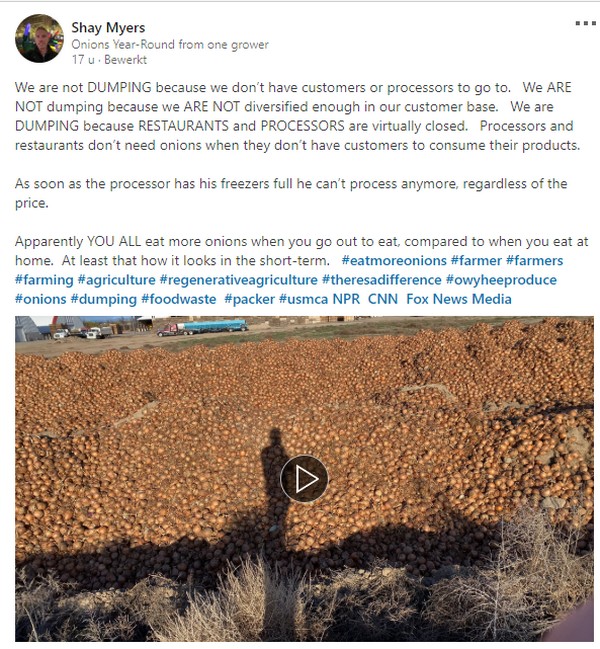
Onion dumping in the US
On LinkedIn, American grower Shay Myers had his own thing to say about the onion situation in the US:

Florida watermelon farmers face uncertainty
As fruit and vegetable farmers in South Florida decide what to do with produce once destined for now-closed schools and restaurants, watermelon farmers in North Florida have recently finished planting their crop.

Given the uncertainty around the market for fresh produce, the decision to plant came down to economics, said Mark Warren, agriculture agent for UF/IFAS Extension Levy County. “For many, this crop represents a large portion of their annual income, and they have already invested in land rent, tillage, fertilizer, seed, transplant costs, irrigation and plastic mulch,” Warren said.

Watermelons are an important part of the economy in Levy and surrounding counties. According to the 2017 USDA Census of Agriculture, Levy County has the largest acreage of watermelons in the state, with Gilchrist a close second. More than 20% of the state’s watermelon crop is produced in these two counties.

Indian government agencies step in to help banana farmers
Government agencies have stepped in to help farmers growing red banana who are struggling to find markets for their yield due to the COVID-19 lockdown. Both the Kerala State Horticultural Products Development Corporation (Horticorp) and the Vegetable and Fruits Promotion Council Keralam (VFPCK) have included red bananas in their vegetable and fruit kits that are being sold online.

Known locally as kappa pazham, the red variety finds takers mostly in Thiruvananthapuram and Kollam districts. However, the COVID-19 epidemic dealt a blow to the farmers this year. The variety is grown in agriculturally rich regions such as Neyyattinkara, Nedumangad and Kattakada in Thiruvananthapuram, a district known for banana cultivation.

Horticorp and the VFPCK have procured around three tonnes of the red banana so far in the district. “We are stepping up procurement. We have also included it in the fruit kits supplied in Ernakulam,” said J. Sajeev, Managing Director, Horticorp, adding that Horticorp was planning to step up procurement.

India: How Ninjacart ensures a steady supply of fruit and veg
The nationwide lockdown to combat the coronavirus epidemic has frozen India’s entire supply chain infrastructure, disrupting the delivery of daily essentials like vegetables and fruits. In such trying circumstances, agritech startup Ninjacart is keeping its wheel running with quick thinking and innovations on the fly. The Bengaluru-headquartered startup, which supplies horticulture produce like vegetables and fruits to retail outlets and others across the country, has been able to keep up its deliveries even as each day throws up new challenges. In a conversation with YourStory, Thirukumaran Nagarajan, Co-founder and CEO of Ninjacart – popularly known as Thiru – says, “Every day is now a war and the situation has become very hectic as we have a skeletal operation.”

Backed by investors such as Walmart, Flipkart, Tiger Global, and Accel, among others, Ninjacart has, over the last five years, expanded its operations across India, delivering 1,500 tonnes of fruits and vegetables every day. However, the situation is now completely different as there is a greater focus on how one can enable the supply when nobody is sure which part of the network will be operational.

Gaza launches new sterilization process for fresh fruit and veg
Palestinians in Gaza have launched a new sterilization process for fresh fruit and vegetables in an effort to combat the spread of the novel coronavirus. The new system allows all fresh produce to be vacuum-packed and sealed in a sterilized environment without human intervention.

The few staff members at the plant enter the area through a specially created passage which cleanses them using steam and disinfectant sprays. They then wear hazmat suits, gloves, masks and goggles before beginning work. The staff then transport the items to the consumers and local markets.

The new passage is mobile and can be transferred to any new facility and may be rolled out to other industries in Gaza. To ensure the system continues to operate in spite of the continuous power failures experienced in the Strip, the device operates using batteries.

Congressman advises to procure mangoes and oranges from Indian farmers
Congressman Komatireddy Venkat Reddy on Tuesday wrote to Chief Minister K. Chandrasekhar Rao, urging him to procure the produce of mango and orange farmers. “Farmers cultivating oranges and mangoes are in distress. The CM had recently said that mangoes and oranges contain Vitamin C and that they would boost one’s immunity. However, the government has failed to support these farmers,” he said.

BJP State chief and Karimnagar MP Bandi Sanjay Kumar also urged the State government to procure oranges and lemons. On Tuesday, he said, “Orange and lemon farmers have been facing a tough time transporting their produce to Nagpur in Maharashtra.”

Tamil Nadu horticulture department to launch 500 vans selling vegetables and fruits
Tamil Nadu chief minister Edappadi K. Palaniswami has made a slew of announcements for agriculture sector to ensure uninterrupted supply of essential commodities, including the launch of 500 vegetable and fruit vans in urban areas to sell produce of members of collective farming.

In a statement, the chief minister said the government would not collect storage charge from farmers, who avail its cold storage units until April 30. “The units are functioning to help the public get uninterrupted supply of goods and for the welfare of farmers. Considering the prevailing situation and foreseeing an increase in mango production in a fortnight, the storage charge will not be collected. The government will bear the cost,” Palaniswami said.

Wuhan farmers struggle as crops wither due to travel limits
Chinese leaders are eager to revive the economy, but the bleak situation in Huangpi in Wuhan’s outskirts highlights the damage to farmers struggling to stay afloat after the country shut down for two months. Authorities are easing travel controls after declaring victory over the virus, but flowers and some other crops deemed nonessential are withering while farmers wait for permission to move them to market.

Most transportation in and around Wuhan, a city of 11 million people in central China’s Hubei province, was suspended Jan. 23 to fight the coronavirus. Trucks carrying food supplies deemed essential were allowed through.

The final restrictions on residents of Wuhan leaving the city were due to be lifted Wednesday, but farmers and companies still are working to restore supply chains that carry food to crowded cities and raw materials to factories.

The impact of Covid-19 on global shipping
The rapid spread of coronavirus has had a major impact on global shipping markets, with the slump in demand for goods from China having a ripple effect on everything from container ships to oil tankers. In part 1 of our coronavirus special, we look at how it has unfolded so far.

Ship-technology.com gives a great insight into the current situation.

South Korea set to cope with global food shortage
Massive lockdowns imposed around the world to reduce the spread of the novel coronavirus have drastically slowed down international trade and food supply chains. This led three related international agencies to warn of a potential global food shortage if the coronavirus crisis is not managed properly. South Korea is also looking at ways to cope with a possible global food shortage.

“Uncertainty about food availability can spark a wave of export restrictions, creating shortages in the global market,” said the joint statement signed by the heads of the UN’s Food and Agriculture Organisation, the World Health Organisation and the World Trade Organisation.

Australian government will help get essential imports
Efforts are underway to speed-up border clearance of imported groceries during the coronavirus crisis, with the Australian government working with supermarkets and their brokers to bring about better outcomes.

The Department of Agriculture, Water and the Environment says it is placing “dedicated people” within its import assessment, bookings and inspection functions to enable faster clearance of critical supplies. This has been developed via consultations with the major retailers as part of the Australian government’s Supermarkets Taskforce.

Head of biosecurity Lyn O’Connell said the department is completing inspections as quickly as possible: “Dedicated staff will prioritise these applications so we can get product on the shelves quicker to complement Australia’s supply of quality fresh food produced from all parts of the country.”

How your diet can strengthen your immune system
As the coronavirus situation intensifies, you might be wondering: how can I keep myself healthy? And will swallowing a pill protect me from getting sick?

First, there’s the not-so-great news. Despite claims you may have seen on the Internet, there’s no magic food or pill that is guaranteed to boost your immune system and protect you against coronavirus.

“There are no specific supplements that will help protect against coronavirus and anyone claiming that is being investigated by the FTC [Federal Trade Commission] and the FDA [Food and Drug Administration],” said Melissa Majumdar, a registered dietitian and spokesperson for the Academy of Nutrition and Dietetics.

But there’s uplifting news, too: There are ways to keep your immune system functioning optimally, which can help to keep you healthy and give you a sense of control in an uncertain time. These include proper handwashing, maintaining good nutrition, being physically active, meditating and managing stress and getting adequate sleep.

Morocco’s agricultural activities continuing as usual
The Moroccan Ministry of Agriculture reiterated the government’s guarantees that the national market will be supplied with the necessary food as usual during the COVID-19 crisis.

Production and agricultural activities will continue regularly, according to the pre-established schedule, the ministry said in a statement today.

Operators in the agricultural sector at the production, packaging, processing and distribution levels  maintain a normal rhythm of activity, the ministry emphasized. The ministry acknowledged that the prices of certain food products experienced brief increases, but have returned to normal.

Agro-food products for mass consumption remain stable, the ministry said. Rotations of crops for consumer vegetables such as tomatoes, onions and potatoes, for which production is underway, continue as usual.

The ministry assured citizens that the crops “will largely cover the consumption needs of these products during the months of April and May.”

By Fresh Plaza

Chinese Market Demand for Frozen Vegetables Rapidly Increased

Chinese consumers have had to change their eating habits in the last few weeks because many restaurants temporarily closed their doors in response to the outbreak of COVID-19. People now have to eat at home and prepare their own food. Following these changes, the shopping pattern of Chinese consumers shifted as well. People pay more attention to healthy foods as well as the shelf-life of products.

Mr. Xu of Rizhao Green Extension Food Co., Ltd. recently shared the management experience at his company during the COVID-19 pandemic: “Our company is specialized in frozen fruit and vegetable supply. We usually supply overseas markets, but during this pandemic we are also supplying the domestic market with frozen fruit and vegetables. The Chinese agricultural industry normally supplies large volumes of fresh fruit and vegetables around this time of year, but this year the outbreak of the COVID-19 pandemic changed consumption patterns. We see a growing number of orders for frozen fruit and vegetables. This is not just because frozen products have a long shelf-life, but also because frozen fruit and vegetables are easy to prepare at home. The preparation of frozen products requires less effort than the preparation of fresh products.”

“The market has been somewhat slow and chaotic in recent weeks. We resumed operations relatively early and we benefited from growing market demand for frozen products, but the export market does not look good. Our export volume has declined. This is mainly because Chinese companies temporarily closed down earlier this season after Chinese Spring Festival [25 January, 2020] and this period of inactivity was extended by the outbreak of COVID-19. This turned into a pandemic later in the season, which affected the global market. There is still demand from overseas markets, although the pandemic has an impact on general sales, but market demand for frozen fruit and vegetables will always continue.”

“We recently exported our products to Germany, the UK, and the USA. However, the USA has temporarily halted orders as the COVID-19 pandemic takes its toll. It is unclear when the situation will improve. As for distribution, domestic distribution has recovered, but overseas distribution still suffers from slower processes in overseas ports. The products are sometimes delayed, but we are still able to deliver our products to their destinations. Our overall export volume declined by 10% in comparison with last year. It is still difficult to tell how the situation will develop, because so many countries are now in the middle of their struggle with COVID-19.”

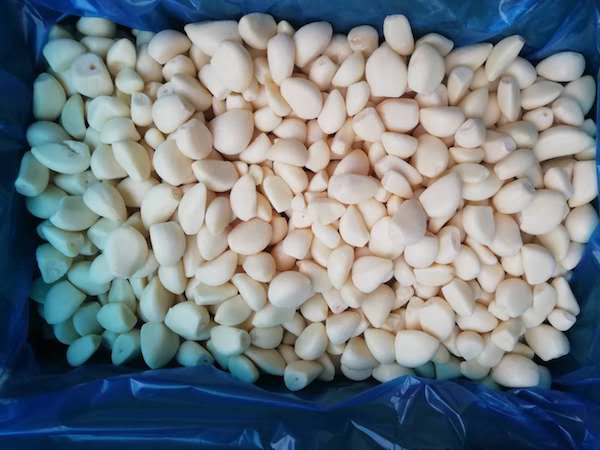
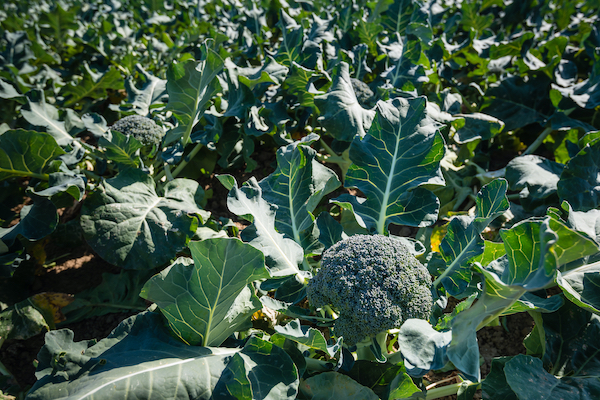
“We predict a rapid growth in global market demand for frozen products. Many people are isolated at home during this COVID-19 pandemic and they have no way to go out for dinner. People will resume their regular shopping patterns as soon as the crisis is over and regular market demand will grow again. The current market price is quite stable. However, the price is also quite low. This is because overseas demand declined. The export market is slow and somewhat chaotic, which results in a low price. We sell more than 30 kinds of frozen fruit and vegetables. Frozen garlic and frozen ginger is quite popular in overseas markets. Domestic market demand focuses on frozen cauliflower, broccoli, green peas, corn, and mixed vegetables. We can produce frozen vegetables according to the client’s requirements for size and variety.”

By Fresh Plaza

Hong Kong Cargo Flights Reduced, Produce Prices Expected to Rise

Hong Kong importers have recently warned consumers that some unpredictability could occur with cargo flights owing to the ongoing COVID-19 epidemic, placing strain on transport capacity. As a result, price surges should be expected for imported fruit, vegetables and seafood in Hong Kong.

According to the South China Morning Post, Hong Kong’s import merchants have stated that cargo flights will become less predictable throughout April and May. Numerous airlines have drastically reduced their number of flights to and from Japan, Europe and North Africa, hindering the transport of fresh food products. Since early March, supplies of fresh fruit from Spain, Italy, Australia and North Africa have been interrupted several times.

In Hong Kong, 96% of food products are imported from mainland China and other countries. Figures released by the Hong Kong Census and Statistics Department in January indicate that Hong Kong is the world’s largest high-value air cargo transit hub. In 2018, Hong Kong handled the most air cargo of anywhere in the world, a total of 5 million metric tons, coming in ahead of the airports of Shanghai, Incheon (Seoul) and Dubai.

As the pandemic has developed, a succession of countries in Asia, North America and Europe have closed their borders in a bid to combat the spread of the coronavirus, with many airlines around the world being required to stop operating commercial flights.

At present, 65 airlines have reduced their passenger traffic by 95%. Cathay Pacific and its subsidiary Cathay Dragon have already reduced their flights scheduled for April and May by 96%. However, Cathay Pacific recently stated that it will operate charter flight services and run some suspended passenger routes purely as cargo flights in an effort to meet customer demand.

The grapes, blueberries, strawberries and plums available on the Hong Kong market all arrive via air transport, and are often transported on passenger flights coming from Australia, Africa and Europe, meaning that cargo space is limited even under normal circumstances. One fruit wholesaler from Hong Kong stated that “cargo space is now much more limited than before and transport costs have risen, too. Even if we’re willing to pay the higher prices, we’re not necessarily able to transport the goods.

“A shipment of berries from North Africa now has to be transported to Hong Kong via London, which increases freight costs by 30%. So, from next week, we’ll be raising the wholesale price of berries by 20%.”

Hong Kong is the biggest market for Japanese agricultural produce and is home to the highest concentration of Japanese restaurants outside of Japan itself. Dennis Tokuaki Wu, an importer of Japanese foodstuffs, said that “April is full of uncertainty. Although at the moment cargo flights are still coming out of Tokyo and Osaka, we’re afraid that reduced demand may lead to further reduction of those flights next week.”

His biggest concern is how to guarantee a steady supply of seafood products such as sashimi, scallops and shrimp, as well as high-end fruits and vegetables. As the limited number of cargo flights has led to higher transport costs, consumers will have no choice but to pay a higher premium for high-end food products.

However, he also reassured Hong Kong’s consumers that there is no cause for undue panic regarding the supply of Japanese foodstuffs, as most products are still shipped via sea freight.

Simon Wong Ka-wo, president of the Hong Kong Federation of Restaurants and Related Trades, confirmed that the pandemic has had an impact on food supplies in the industry.

Further fluctuations are expected in flights coming out of Europe, with reduced flights increasing transport costs. Wong stated that he personally relies more on sea freight, for which the cost of importing products and ingredients has not fluctuated by more than 5% on average in recent times.

However, he also predicted that those who rely on air transport to import small volumes of goods from Europe, such as wine and frozen food, can expect logistics costs to climb by as much as 20–30%.

He also added that a Malaysian condensed milk supplier had contacted him to report that Malaysia may be implementing export restrictions in the face of the outbreak, and had advised him to put in a larger advance order of their product. “If one link in the global food supply chain is broken, then the whole global chain will be affected,” he said.

By Produce Report

Corona-update: Dutch farmers faced with a million tons of leftover potatoes

As a new week dawns on the many nations struggling with the COVID-19 pandemic, it is reported that many Dutch farmers are faced with a million tons of potatoes left over from last season due. The European Union has eased some food safety controls, while in the north-western states of the US, growers are ready to start harvesting. In the south-east, some Florida growers are forced to leave their crops to rot.

Startling reports claim that Africa faces complete economic collapse and that Zimbabwe is also suffering under the lockdown. This, and much, much more in our daily Corona-virus update.

Dutch farmers face billion kilo potato pile
Many Dutch farmers are facing a mountain of a problem, with a million tons of potatoes left over from last season due to the coronavirus outbreak. Restaurants in the Netherlands, many serving popular deep fried “patat”, have been closed since mid-March, with a ban on public gatherings set to last until June 1 at least.. With their closure, the market for potatoes collapsed overnight.

“This is a dramatic season, a turn of events no one could have predicted,” said Dirk de Heer from his farm in Beemster, in North Holland.

De Heer is one of around a thousand farmers in the Netherlands in the same situation. He says he is selling his crop to a dairy farmer for 0.01 euro per kilogram, instead of the 18 cents he had hoped to receive. Food potato production in the Netherlands is roughly 4 million tons annually, of which a quarter is exported.

The country’s agricultural organization LTO estimates damages from the virus outbreak so far at 6 billion euros, with the floral industry also hard-hit.

EU eases some food safety controls because of pandemic
The European Commission is to give member states more flexibility to do official controls in the food supply chain because of coronavirus. The Commission leaders say the crisis relating to coronavirus disease (COVID-19) represents an “exceptional and unprecedented” challenge for the capacity of member states to conduct official controls and other official activities in line with EU legislation.

Some nations have expressed difficulties in performing official controls and other activities which require the physical presence of control staff. This includes clinical examination of animals, certain checks on products of animal origin, plant products and on food and feed of non-animal origin, and testing of samples in official laboratories designated by member states.

Northwest US growers scramble to start harvesting
Northwest growers are scrambling to figure out how to work around the global coronavirus pandemic and still bring in the coming harvest.

North of Pasco, Washington, Jim Middleton’s farm crew is washing stacks of plastic boxes, called lugs. Soon, they’ll be packed with fresh-cut asparagus. The packing shed is a very small space, but workers can keep their distance from one another in the field.

Harvest begins in a few days, and he’s had little time to react. Asparagus harvest is brief and intense. It goes on every day for 10 weeks. Just one or two virus cases could cripple his operation. 

Off the record, other farmers say they’re really worried. They can’t find the normal cleaning supplies required by the federal government, pre-pandemic — supplies like bleach for wiping down worker stations.

They’re also worried about training their staff in time, especially in fruit and vegetable processing facilities, where workers often stand shoulder to shoulder.

COVID-19 forces some Florida growers to leave product to rot
Florida’s fresh produce farmers say they face a bleak future as COVID-19 precautions dry up demand. In particular, Florida’s blueberry crop is getting hit right before peak harvest.

“The coronavirus is something very different,” said Bud Chiles, owner of Jubilee Orchards and son of former Florida Governor Lawton Chiles. “It’s a black swan that has really put a pall over everyone.”

Florida’s Blueberry Growers Association estimates an at least 70% drop in sales compared to this time a year ago. Prices, they say, are down at least 30%.

“It’s across the board,” Chiles said. “It’s not small or large [farms]. It’s everywhere.”

Norway: Food and drink sector welcomes move to employ agriculture workers
Norwegian food and drink association NHO Mat og Drikke has welcomed an initiative by the Norwegian government to encourage those that have been laid off by their employer due to COVID-19 to take up a role in the agri-food sector.

New legislation means that if a worker is laid off and takes up an agricultural role, he or she will be able to earn both a salary from the farmer as well as half his or her unemployment benefit. The initiative was introduced due to fears that the farming sector in Norway will be particularly affected by the coronavirus, particularly due to a lack of seasonal workers.

“This is a scheme that will provide incentives for laid-off workers to work in the fruit and vegetable sector,” commented Petter Haas Brubakk, CEO of NHO Mat og Drikke. “If we manage to transition laid-off workers to employment in fields and greenhouses, even more farmers and gardeners can carry out the season as planned. It will be a relief to many concerned business leaders in this industry.”

Brubakk added that seasonal workers constitute a very important segment of workers in the fruit and vegetable industry, many with ‘valuable expertise’.

Effects of COVID-19 on Florida agriculture
The coronavirus has affected many US industries, and the farming industry is one that has felt the impact of the outbreak. Florida farmers are facing unprecedented times as the demand for produce has decreased.

State Agriculture Commissioner Nikki Fried said Thursday night via conference call that Florida farmers are currently facing many hardships. “COVID-19 is affecting all of our lives and every corner of our economy,” she said. We know that for producers, that means a major decrease in demand due to restaurants and schools being closed. ”

John Hoblick, president of the Florida Farm Bureau, said he thinks Fried’s department is working tirelessly to find solutions.

“The department is quite honestly working with the higher-ups and the federal government and pushing the information that’s pertinent to our producers each and every day that we produce,” he said.

Fried said the state is currently working on connecting producers to additional markets within Florida and other states. They have also maintained contact with large retailers like Walmart, Whole Foods, and Publix to encourage them to purchase more Florida produce. They are also coordinating with state departments like the Department of Corrections that are in need of fresh food.

Lufthansa transforms passenger airplane to transport cargo
With airplanes hardly carrying any passengers, if any at all, Lufthanse is showing innovative solutions to get more cargo in the plane. A demonstration of this was shared on LinkedIn; you can watch the video here.

‘Africa faces complete economic collapse’
At this point in time, the global economic crisis linked to the coronavirus could wipe out jobs for millions across the African continent, many who live hand-to-mouth with zero savings.

“We’ve been through a lot on the continent. Ebola, yes, African governments took a hit, but we have not seen anything like this before,” Ahunna Eziakonwa, the United Nations Development Program regional director for Africa, told The Associated Press. “The African labor market is driven by imports and exports and with the lockdown everywhere in the world, it means basically that the economy is frozen in place.

More than half of Africa’s 54 countries have imposed lockdowns, curfews, travel bans or other measures in a bid to prevent local transmission of the virus. They range from South Africa, where inequality and crime plague Africa’s most developed country, to places like Uganda, where the informal sector accounts for more than 50% of the country’s gross domestic product.

With some governments saying they’re unable to offer direct support, the fate of Africa’s large informal sector could be a powerful example of what experts predict will be unprecedented damage to economies in the developing world. Among the millions made jobless are casual laborers, petty traders, street vendors, mechanics, taxi operators and conductors, housekeepers and waitresses, and dealers in everything from used clothes to construction hardware.

Click here to read the full article.

Can US agriculture handle labor shortages and panic buying?
Restaurants have been shuttered for weeks. Farms have been struggling with labor shortages for years. And grocery stores have been running out of bread, meat and eggs. So what does that all mean for the national food supply during the COVID-19 pandemic?

The short answer is that US agriculture is strong enough to handle it, with farmers still farming and no major shortages in sight, experts say. But because consumers recently have changed the way they buy and consume food, various snags in the food supply chain have led to disruptions, including truckloads of raspberries getting turned back from market and dairy businesses dumping thousands of gallons of milk.

Panic-buying and stockpiling by consumers have cleared supermarket shelves of certain foods in the meantime, creating the appearance of a problem. But those shelves are soon restocked, and the frenzy is expected to subside as supply chains adjust and home refrigerators run out of room.

Coronavirus gives Georgia vegetable farmers a tough time
South Georgia farmers may be facing a third tough year, this time because of the coronavirus, and consumers could soon also pay the price.

Greg Fonsah, an agricultural economist with the University System of Georgia, believes foreign seasonal workers will not come because of international travel restrictions and fear as the virus spreads quickly in the US.

Crops will be left to rot in the field and the current overproduction will dry up, he predicted. Farmers, having suffered one loss already, will be hesitant to invest again in planting full fields, so there will be a fresh vegetable shortage and increase in prices.

“The same problem will probably last the whole of this year,” he said. Retailers and the food service industry buy about 90% of Georgia’s vegetables, said Charles Hall, executive director of the Georgia Fruit & Vegetable Growers Association. Nationally the food service industry purchases about 40%, he said. Demand in that segment has plunged as many restaurants, schools and entertainment and sports venues stay shuttered.

Fruit and vegetables impounded during Zimbabwe lockdown
Police have impounded tonnes of fruit and vegetables in Zimbabwe, despite the agriculture sector being flagged as an essential service during the 21-day Covid-19 lockdown.

The state launched a nationwide crackdown that has affected vendors, who constitute a huge chunk of the informal sector.

Vendors and producers have said that the police action on Friday morning will leave most of them counting their losses long after the lockdown. Much of the country’s available fruit and vegetables are sold in supermarkets, but are beyond the reach of many Zimbabweans because of the lockdown rules and prices.

Friday was Zimbabwe’s fifth day of the lockdown, but the ministry of health and childcare warned that the period could be extended because people were not taking it seriously.

In Zimbabwe, exporters are also feeling the effects. For those that are manufacturing, some have reduced output due to downtime while others are facing disruption in sourcing raw materials, especially those that are imported.

With regards to exporters, some local enterprises are not able to transport products as they did a few months ago, as travel and other border restrictions are affecting ability to supply products as well as meet buyers.

Kazakhstan to ban export of certain agricultural products
The Kazakh Ministry of Agriculture informed the Eurasian Economic Commission about the introduction of a ban and restrictions on the export of certain agricultural products.

Kazakhstan plans to introduce a ban on the export of the following goods: buckwheat; white sugar; potatoes; onions, shallots, garlic, kurrat and other onion vegetables, fresh or chilled; sunflower seeds, whether or not crushed; sunflower oil; buckwheat.

The Ministry of Agriculture has also announced a planned restriction on exporting carrots, turnips, beets, cabbage, cauliflower, kohlrabi, leafy cabbage and similar edible vegetables of the Brassica genus, fresh or chilled, wheat or wheat-rye flour, wheat and meslin.

The Ministry of Agriculture of the Republic of Kazakhstan emphasizes that these measures are associated with the introduction of a state of emergency in the country.

Indian fruit farmers stare at a loss of Rs 70 billion
The outbreak of Coronavirus and a freeze in the freight and logistics industry that followed the pandemic may lead to a collective loss of almost around Rs 70 bln (around $1 billion) the fruit growing farmers across the country.

For many fruit growing farmers, the time between March and May is particularly joyous as fruits are transported and sold to wholesale markets and from there it reaches the consumers.

The current situation will impact the small acreage farmers more as such farmers take loans for farming. Simply put, they will not be able to repay the crop loan they had taken and may even not have spare money for the next year’s season.

Chinese border gates with Shan State closed indefinitely
Both official and unofficial border gates between the northern Shan State townships of Muse and Namkham and China have been closed for travel for the foreseeable future to slow the spread of the coronavirus pandemic. 

Truck drivers stated that on April 1 the Chinese authorities closed all border gates, such as those at Mang Weing, Nandaw, Sinphyu and on village roads.

Muse parliamentarian Sai Kyaw Thein said that he didn’t know when the gates would re-open. “The Chinese authorities do not allow Burmese people to enter into China and they have blocked Chinese people from going to Burma,” he told SHAN. “But the Jin San Jao border gate remains open for border trade between the two countries.”

The shift came as Burma began reporting infections of the pandemic—one of the last countries in the world to do so.

Export of Kashmir apples resumes after 10-day suspension
The export of apples has resumed after it was suspended due to the national lockdown, with owners allowed to send fruit to the different parts of India.

The Directorate of Horticulture has written to the law enforcing agencies about the hassle-free movement of vehicles and employees carrying high-density apple plantation so that the plants would not sprout and result in losses.

According to official figures, around 200,000 apple trees are being imported from different countries to Kashmir while around 300,000 are being transplanted to district-based nurseries since they have been imported last year and put for quarantine. The data also reveals that 150 hectares of Horticulture land are being brought under high density this year.

Manila: Speedy release ordered for reefer containers, dry vans
The Filippino government has sought the adoption of processes to ensure the speedy release of refrigerated containers and dry vans during the Luzon-wide enhanced community quarantine.

To decongest the country’s ports, the Department of Finance, Department of Agriculture, Department of Trade and Industry, Bureau of Customs and Philippine Ports Authority signed Joint Administrative Order 20-01 on April 2.

“There is a need to issue clear and coherent inter-agency guidelines to resolve specific issues arising from restrictions imposed under the enhanced community quarantine to prevent congestion at the ports which may unduly cause disruption in the supply chain and impede the availability of basic necessities and essential goods,” the order read.

Borneo vegetable growers record up to 50 pct drop in business
Members of Sibu Vegetable Planters Association (SVPA) are suffering between 40 and 50 per cent drops in their business since the movement control order (MCO) came into effect on March 18.

SVPA chairman Tieu Kiu Sing says this is due to the closure of schools here where its members used to supply daily, and also the limited supply to Sibu Central Market where only a certain number of sellers are operating on rotational basis.

“We also receive no demand from the food stalls and restaurants, which are now closed. As the lives of many have been badly affected by the MCO due to the Covid-19 pandemic, ours are of no exception. However, we do understand that there is no choice as the government is taking the right and timely move, for the safety of everybody.”

500,000 tons of surplus vegetables sold in Hubei
A total of 500,000 tons of surplus vegetables in Hubei Province, the epicenter of the coronavirus outbreak in China, have been sold thanks to the coordinated efforts of people across the country, said officials.

Hubei developed an oversupply of agricultural products due to the impact of the coronavirus pandemic. The province was locked down in late January in a bid to stop the further spread of the coronavirus, which severely affected the normal operations and sale of its agricultural products.

With the pandemic starting to ease in China, Hubei lifted transportation restrictions effective March 25, which gave farmers a way to sell their products.

Some of the backlogs have been greatly alleviated, but as the seasons change, the contradictions in the production and marketing of Hubei’s agricultural products mainly lie in agricultural products including crayfish, mushrooms and spring tea, said Zhang Guihua, an official with the agriculture and rural department in Hubei.

Malaysian vegetable vendors impacted by MCO
Tanah Rata assemblyman Chiong Yoke Kong is urging the government to ease operating hour restrictions for vegetable vendors to prevent an impact on the food production and supply chain.

Chiong said some of the measures announced and imposed during the movement control order (MCO) period were inconsistent with how real market and supply chain works, causing the vegetable supply in the market to become unstable while food prices were increasing.

He explained that the government’s intention of restricting movement was understandable, but added that it was also imperative to ensure the continuous and stable operation of food production as well as the supply chain ecosystem in order to prevent inflation.

Vietnam exporters urged to prioritise containing COVID-19
The Ministry of Industry and Trade’s Agency for Foreign Trade has urged firms that export goods to China to give the highest priority to preventing the COVID-19 pandemic from spreading further and ensuring the safety of their workers and the public.

The Ministry of Industry and Trade’s Agency for Foreign Trade has urged firms that export goods to China to give the highest priority to preventing the COVID-19 pandemic from spreading further and ensuring the safety of their workers and the public.

Exporters should not make light of preventive measures against the coronavirus because of the pressure to ease the backlog of goods at border crossings with China and boost imports, the agency said in a notice recently sent to local departments of industry and trade, business associations and exporters.

Banana prices have nosedived in India
Banana farmers in the Andhra Pradesh are a worried lot because of the steep fall in the price of their product. The crop is ready for harvest, but there are no takers even for half the price that prevailed a fortnight ago. With no farm workers turning up in the backdrop of COVID-19 pandemic and the lockdown that followed, the farmers are keeping their fingers crossed.

Bananas are one of the major horticulture crops in the State. Different varieties of banana are cultivated in an extent of 1,04,953 hectares across the State. The yield is estimated to be 62,97,180 tonnes this year. Kadapa, Anantapur, East and West Godavari districts top the list with the highest area under cultivation.

“Traders are not coming forward on the pretext that there is no market for the produce,” bemoans Bandireddi Damodar Reddy, a farmer, at Mallempudi village of Guntur district.

As per sources, the Farmer Producer Organisations (FPOs) had procured 22,000 tonnes so far. Of this, while 18,500 tonnes had been exported, the remainder was sold in the domestic market.

Coronavirus keeps hitting Vietnam’s fruit exports to China
Fruits exports to China in the first quarter fell 29.4 percent year-on-year as the coronavirus pandemic halted trade activities.

Exports to China, the largest buyer of Vietnamese agriculture produce, were worth $300.4 million, as containers of dragon fruit, watermelon, banana, and durian repeatedly piled up at the border due to a lack of Chinese staff to process imports, according to the Department of Farm Produce Processing and Market Development.

Trade has partially resumed, but exports still suffer due to lack of demand, it said. Last year China accounted for 27.8 percent of Vietnam’s agriculture, forestry and seafood exports of almost $8.5 billion.

Vietnam’s overall exports in the quarter fell 10.9 percent despite sharp increases to some markets such as a Thailand and Indonesia. Imports fell almost 30 percent to $294 million, with double-digit drops in purchases from China, Australia and Thailand.

Myanmar plantations and workers suffer due to suspended trade
Plantation owners in Ye Township are experiencing plummeting prices of fruits such as durian, mangosteen, pineapple and melons.  Due to a suspension of trade, other products like rubber and the harvesting of betel nuts are also suffering.

Ye Township has the second-largest population in Mon State, with many residents involved in these industries. There are more than 150,000 acres of rubber plantations, making the township the largest producer in the state.

There are reports of no fresh durian and mangosteen in the city markets. Despite the limited local supply,  traders are only buying these fruits at a low price.

The compulsory quarantine rules are also impacting businesses.  Ko Lwin added, “Because it is compulsory to  stay-at-home, all of my business — the guesthouse, store, and plantation have to be closed. We have to make advance payments for April. If the situation takes longer than this, it will threaten the safety of our family. We have plenty of time to access news as we stay at home. When reading news, we notice that the government has been unresponsive until now,”

Morocco: Agricultural production continues
Morocco’s Ministry of Agriculture, Maritime Fisheries, Rural Development and Water and Forests has affirmed that agricultural activity and production are ongoing despite the health emergency state announced to face the coronavirus outbreak.

“Workers in the sector will maintain the level of production, packaging, transfer and distribution at a normal pace,” the ministry said in a statement on Thursday.

Prices of some goods which witnessed occasional hikes, returned to normal, while the prices of the most consumed food products remained stable, the statement noted. It reassured people that agricultural production will continue normally in full respect for the pre-determined timetable, allowing continued supply to the market and sufficient quantities of agricultural and food products.

By Fresh Plaza

OVERVIEW GLOBAL KIWIFRUIT MARKET

The demand for kiwifruit, just like that of citrus fruits, has increased on the European market due to the coronavirus. At the moment, Italy and Greece dominate the European market. Italy has been particularly affected by the Greek competition, which could break records this year. Due to this formidable competitor, prices in the kiwifruit market have remained stable, despite the lower yields. The increased demand for kiwifruit could save the end of the season, now that Greece is out of the market. In North America, the California season has been extended due to the falling demand from schools and caterers. This is hindering the Chilean exports. However, April is the month when New Zealand comes back on the market. The first batches are currently at sea.

New Zealand: First kiwifruit shipment at sea
The first of the 47 shipments of kiwifruit expected this new season from Zespri has left the port of Tauranga and is bound for Japan. At the end of March, more than 1 million boxes of SunGold kiwifruit were shipped to the Tokyo and Kobe market, including 330,000 boxes of SunGold from Gisborne, one of the first regions to go into production in the country. Although there are challenges ahead for exporters, the ports in Japan, South Korea and Europe are still operational. Zespri expects to be able to sell around 155 million boxes (600,000 tons) of Premium Zespri kiwifruit on the global market. The latest estimates point to 80 million boxes of SunGold and 70 million boxes of green kiwifruit this year. Zespri expects to ship 18,500 containers on 47 ships; 4 to Europe, 11 to the Mediterranean and 32 to the Asian market.

Australia: Smaller volume on the market last season
The latest figures from Hort Innovation’s Horticulture Statistics Handbook show that in the financial year that ended on June 2019, the production fell compared to the previous year. Volumes were 26% lower and stood at 7,134 tons, while the value fell by 28% to AUD 19 million (EUR 10.6 million). Exports decreased by 36% to 660 tons while imports (especially from New Zealand) increased.

The Netherlands: Kiwis are the best-selling fruit at Albert Heijn
The demand for fruit with a lot of Vitamin C is on the rise, and this includes kiwifruit. In fact, the largest Dutch retailer, Albert Heijn, reported that kiwis are suddenly the best-selling fruit at the supermarket. For years, bananas had been the undisputed leader. “This is probably due to their high vitamin C content,” said CEO Marit Van Egmond. Good news for the New Zealand kiwifruit season which is about to start.

Belgium: First Sungold in week 17
Zespri expects to have volumes of green kiwis available up until week 19. The first Zespri SunGold kiwis will arrive out of Nieuw-Zealand in week 17. Zespri is seeing a positive market situation in the Benelux with the same sales volumes as last year. The pressure is high because of COVID-19 but the demand is steady. There is higher demand for pre-packed options due to hygiene concerns and this has caused some pressure in the packing facilities, especially in combinations with the preventive guidelines of social distancing in place.

Germany: Uncertainty before switch to southern hemisphere
Italian kiwifruit traditionally dominates the supply in the German wholesale market, as Germany is traditionally one of the largest importers of Italian kiwis. Other European origins, including Greece and France, hardly play a significant role. It is taking a while for the switch to the southern hemisphere to happen. This week, it was reported that the first New Zealand Zespri kiwis are on their way to Europe. Only in four weeks will it be possible to give a definite answer about the total volume that can be exported to Europe in the current coronavirus-marked times.

France: High demand for kiwifruit
Due to its reputation as a healthy product, kiwifruit has been doing very well recently on the French market. Unfortunately, the French season is almost over and the stocks left are small. The market will soon switch to imports.

Italy: Greece and the coronavirus: two hurdles for Italian kiwifruit
The 2019/2020 Italian kiwifruit season started with a lower yield, which led to hopes for better prices. But this was countered by Greece, which is improving every year in terms of quality while cutting production costs. COVID-19 also had its impact on the market, doing away with the hopes for better prices. In general, prices have therefore remained stable.

“The situation for kiwifruit changed completely in March compared to previous periods,” said a major trader of Italian kiwis worldwide. “Both the domestic and the foreign demand have risen considerably. The Greek kiwifruit season is almost over and the Italian stocks stand below 80,000 tons (37% less than last season). I therefore expect a better and shorter end of the season, compared to the first 4 months of the campaign.” In early May, the first yellow kiwis are expected to arrive from Chile and that production is forecast to be in line with previous predictions when it comes to the quality and quantity. The harvest is currently underway in Chile.

“We started this season with 30% fewer Hayward green kiwis and with optimal quality,” says a spokesperson for a national growers’ cooperative. “The market should have responded positively to this, but we hadn’t taken into account that the Greeks would remain so competitive until mid-February. This year, the size of Greek kiwifruit has been mainly medium-large, so Italian kiwifruit growers have obtained better prices for the smaller sizes. Now that Greece is out of the market, we are dealing with the consequences of the coronavirus, especially in terms of transport. We expect more competition in the market in the future. We are keeping an eye on Iran in particular.”

Spain: Season ended earlier; lack of small sizes for the retail
Kiwis are one of the most demanded products on the market at the moment. Sales have skyrocketed because the fruit is rich in vitamin C and has a long shelf life; two characteristics that consumers truly appreciate right now. The Spanish kiwifruit season is coming to an end earlier than usual, about 20 days before the first kiwis arrive from Chile. The yield has been 20% lower, with an abundance of large sizes. There has been a shortage of small sizes which the retail does demand for packaging in punnets. Because of this, retailers have packed larger sizes: 33 instead of the usual 42.

Greece: Record kiwifruit exports this season
Kiwifruit exports may be record-breaking this year. On March 20, the fruit’s exports amounted to around 149,019 tons, compared to 111,210 tons last year. Not only has the volume of Greek kiwifruit increased this year, but also the value.

Chile: Longer season in California hinders exports
Different kiwifruit varieties are grown in Chile, such as the Hayward, Golden and green kiwifruit. The green kiwifruit season runs from March to June. A large volume of kiwis is expected in April. The fruit is exported worldwide. An important market is the US, but since the domestic season in California is lasting longer due to the drop in the demand caused by the coronavirus, less is going to this market. California’s campaign is expected to finish around late April.

United States: Lower demand due to closure of schools and caterers
At the moment, the kiwifruit on the US market comes exclusively from California. “We import kiwis from New Zealand and Chile, but mostly for the summer months,” says a trader. “Our suppliers tell us that given the European stocks, there may be some gaps in the market. We expect little impact from this due to the domestic supply.” The challenge in the US market lies mainly in the demand. The demand from the catering industry, schools and cruise ships has stalled due to the coronavirus. “There may also be delays and reductions in exports due to the current market situation,” says a trader.

The trader also expects the harvest in Chile to be 15% smaller than last season. European yields are also lower and the logistics has been slowed down by the coronavirus. Prices were expected to rise, but the drop in the demand is keeping the price stable. Next year, the harvest in California is expected to be 5-10% smaller. Two new varieties are being harvested before the fall in California: the yellow kiwifruit and the red kiwifruit, with hopes that these varieties can give a boost to the demand for the fruit.

China: Local kiwifruit on the market until May, then exports from New Zealand
The 2019-2020 kiwifruit season is coming to an end in China. The last local kiwis will be sold in May. The first early varieties will come back on the market in August. In the meantime, there will be a lot of supply from New Zealand. The new season from Zespri has just started and the first orders could be made in April. There is also supply from Chile.

Next week: Overview global tomato market

By Fresh Plaza

OVERVIEW GLOBAL ORANGE MARKET

Due to the large-scale COVID-19 outbreak worldwide, the demand for certain products, such as toilet paper, face-masks and disinfectants, has risen to unprecedented levels. Oranges and other citrus fruits are in high demand in the countries affected because they are rich in vitamin C.

Spain, Morocco, Egypt, Greece and Turkey are currently on the market in Europe. In the US, there is supply from California, Florida and Mexico. Meanwhile, China also has production for the local market. The first early Navels for export have already been harvested in South Africa. Orange prices are rising on the Northern European market due to problems in the logistics. Internal border controls have led to an increase in transport costs. Nevertheless, there is enough fruit to meet the demand, even in North America, despite fears of a gap in the supply around May and June, in the period when the local production is replaced with imports from South America.

Netherlands: Oranges in a really good situation
Although COVID-19 has had a significant impact on the entire fruit and vegetable market, oranges seem to have remained in a good position since the start of this crisis. Many consumers are falling back on longer-lasting and more standard products; consequently, orange sales, particularly at supermarkets, proceed smoothly. Since many markets are closed, the trade has taken a big blow. There are enough opportunities for trade, although the delays in transport and the lockdown in Southern Europe are resulting in the entry of products generating higher costs.

Belgium: Prices rise due to more expensive transport
Since the outbreak of the coronavirus crisis, the demand for oranges in Belgium has increased significantly. According to Belgian supermarkets, products that contain a lot of vitamin C are currently doing very well. The demand reached its peak two weeks ago during the hoarding period. The supply from Southern Europe continues uninterrupted, but transport has become more expensive and the trucks are traveling for longer. As a result, prices have risen somewhat.

Germany: High prices are not stopping consumers
Orange prices are currently very high in Germany. Given the bad weather in Spain and Italy, the supply has been very moderate in recent months. However, the demand has skyrocketed due to the coronavirus crisis. “Consumers now want healthy food, which has given a boost to orange sales,” said a Berlin trader. The high prices do not stop consumers; on the contrary, “people are prepared to stock up on oranges at any price. That, in fact, is essential for us as traders, given that the logistics costs have also gone up. Fewer and fewer truck drivers are still willing to travel to Italy. Moreover, the trucks are often returning empty. These additional costs will have to be reflected in the final price in one way or another.”

France: Strong demand for oranges, but supply from Spain is difficult
The demand for oranges is good at the moment, compared to other products on the market. Oranges have a reputation for being healthy and rich in vitamin C, which is exactly the sort of product people tend to look for in a crisis period like the current one. However, the supply from Spain is hampered by the shortage of field workers for the harvest, despite the good volumes and quality resulting from the fruit having received sufficient hours of sunshine.

Spain: COVID-19 is causing orange prices to go up
The harvest of late orange varieties such as the Navel Lanelate, Navel Navelate, Washington and Thompson Navel is now underway in Spain and will continue until the end of July. This season there has been a reduction in the volume of around 25-30% which has led to higher prices at origin. So far, the season has been good for the growers, but less so for the traders. The price margins in the retail have been narrow due to the high prices at origin and the high share of unusable fruit due to the impact of storms.

Since COVID-19 has spread around Europe, the demand and the price for oranges have risen sharply, as have the production costs, especially those of the logistics. The harvest, sorting and packaging have been delayed due to mobility restrictions and hygiene regulations such as the 1.5 meter distance rule on the work floor. This is creating tensions between traders and buyers on the European market. In week 11, the average price of oranges at origin increased by 20% compared to the previous week, reaching an average of € 0.30 / kg. The retail price has increased by 3% compared to last week and stands at an average of 0.67 € / kg.

After the Chinese New Year, the COVID-19 outbreak delayed, and in some cases stopped the restart of Spanish exports to China. At first it was difficult to find reefer containers and ships for export and in the end the ports also closed. Although trade with China is now starting up again, many exporters decided to fully focus on the European market this year. After all, the value has risen sharply in recent days and this market is less risky and closer to Spain.

Italy: Increasing demand due to coronavirus
A wholesaler reports that the volume of oranges of Italian origin is falling. The season for the Tarocco variety, which is in high demand, is almost over and the fruit is sold at a price of 2.50 € / kg. The smaller sizes of all varieties, normally intended for the processing industry, are now also in great demand and sold for around 1.00 € / kg. Due to a shortage of Italian oranges, the market is currently focusing on imports from Egypt, Greece and Spain.

“It is currently an ideal time to sell oranges,” says a logistics service provider. “The demand has risen in recent weeks, but there is little available. Many companies completed their campaigns a few weeks ago. At the moment, oranges come from Egypt, Greece and the Maghreb, but especially from Spain, where the quality of the oranges is similar to the Italian. The most common varieties on the market are the Lane Late and Navel Powell. Prices at the wholesalers can reach up to 0.75 € / kg.”

“At the moment the market is very lively,” says a citrus grower from Southeast Sicily. This is due, on the one hand, to the lower yields this season, and on the other hand, to the COVID-19 virus pandemic, which has had a great impact on consumption patterns.

South Africa: Early navels on the market; prices under pressure due to high volumes
The early Navel season has started in South Africa. On the local markets, prices are under pressure due to the high volumes, with an estimated average of € 0.26 / kg (ZAR 4.95). For the 2020 season, a yield of 26.5 million boxes (15 kilos each) of Navels and 47.5 million boxes of Valencias is expected. Last year, these figures stood at 24.2 million and 44 million boxes, respectively.

China: Fewer imports of oranges due to COVID-19
There is currently a great supply of local oranges on the Chinese market. In the last few weeks, the supply and production have been affected by COVID-19. In most areas there have still been workers, but not enough to cope with the good production levels. As a result, the harvest started later in most regions. In addition to the shortage of laborers, there were also logistical problems, as a result of which sales did not go smoothly and got off to a slow start.

Now that the situation is largely under control again, the market is slowly regaining momentum. Chinese oranges are also exported to neighboring countries. The export volume of Chinese oranges has fallen this year, as not everything has gone smoothly with the exports. In addition to exporting, China also imports oranges from Egypt, Spain, Pakistan and the US. Due to COVID-19, the import volumes were already somewhat lower this year, but since the virus is now also present in other countries, this trend continues.

North America: Peak in the demand for oranges
The demand for oranges has seen a steep rise in North America, which is most likely linked to the COVID-19 virus, which is now spreading across the continent. “We see the demand for citrus outpacing our supply,” says a California wholesaler. A trader on the American East Coast also sees the demand for oranges peaking. “People want to increase their vitamin C intake, which in turn boosts the sales of oranges,” says the wholesaler. Traders are not surprised that consumers are demanding oranges. “With the SARS virus 15 years ago, it was announced that people had to take more vitamin C, and we clearly noticed that in the sales volume at the time, even more than now,” says a wholesaler.

Not only is the demand now peaking, but also the fruit quality in terms of color, juice content, nutrients and brix. “We see sales increase with every flu wave, but this time it is uncertain how long the demand will last.”

Currently, most oranges on the East Coast come from Florida and Mexico. The oranges on the West Coast are subject to more problems. The pressure on the stocks is not only due to the pressure on the logistics due to the virus; the rainfall has also hampered the harvest and that pressure was unexpected and sudden, so the stocks dried up quickly. The question is how long the demand will remain so high. “When people are hoarding, should they eventually have enough in their homes?” asked a wholesaler. California also fears that the high demand will cause the season to end earlier, creating a gap between the local season and imports, which will arrive in July. The end had been estimated for May or June, but now it may happen earlier. In Florida, the orange stocks are also disappearing quicker than usual. The East Coast is looking to start importing oranges from Morocco as soon as possible.

Australia: Concerns about prices in the processing industry
The country is getting ready for the winter orange harvest, following the record export of oranges in 2019, when more than 208,000 tons worth AUD 315 million (171.5 million Euro) were shipped; 10% more than the previous year. The first estimates for 2020 point to lower figures than in 2019, but with large sizes. Growers are also using the vitamin C content in oranges to promote them. This is important in the winter months, especially with the on-going COVID-19 outbreak.

Citrus Australia has expressed its concerns about the juice industry, since the prices paid by the supermarkets to the industry are not correct, given the impact of frost and dry weather on the 2019/2020 Valencia harvest. According to some estimates, there is also a risk of a shortage in the industry in the coming months. The crop reduction is now estimated at 45% in the main region producing oranges for the juicing industry, the Riverina, where 60,000 tons of fruit are expected this season. It is feared that the pressure on prices will push growers out of the market.

By Fresh Plaza
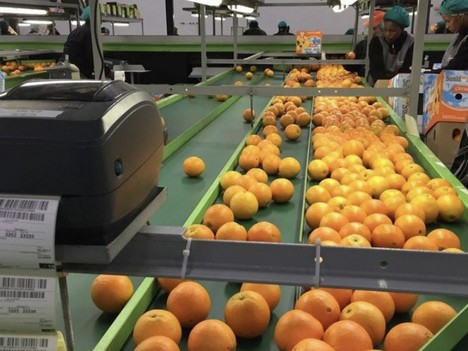
UN Warns That Measures Against Virus Could Cause Global Food Shortages

As the world keeps on dealing with the COVID-19 situation, the UN has come out with a warning that the measures taken against the virus could cause global food shortages. More locally, in the US, apple retail sales get a boost and British officials ask their  citizens to help pick fruit and vegetables.

In Africa, South African exporters are financial hardships due to the chaotic global trade while Rwanda reports that agricultural activities continue during the lockdown. In the small nation of Bhutan, the Agriculture ministry puts import restrictions on produce while in Mumbai, the onion auctions are suspended at Lasalgaon. This, and much more, in today’s Coronavirus update.

UN warns: COVID-19 measures could cause global food shortage
Protectionist measures by national governments during the coronavirus crisis could provoke food shortages around the world, the UN’s food body has warned. Harvests have been good and the outlook for staple crops is promising, but a shortage of field workers brought on by the virus crisis and a move towards protectionism – tariffs and export bans – mean problems could quickly appear in the coming weeks, Maximo Torero, chief economist of the UN Food and Agriculture Organisation, stated.

“The worst that can happen is that governments restrict the flow of food,” he said. “All measures against free trade will be counterproductive. Now is not the time for restrictions or putting in place trade barriers. Now is the time to protect the flow of food around the world.”

Click here to read the full article.

US apple retail sales get a boost
The coronavirus scare has boosted retail sales of Washington apples 40%, but it also may keep growers from getting all the H-2A-visa foreign guest workers they need.

“Retailers are up 40% on apples. With everyone staying home and online grocery orders off the charts, our shippers are double shifting and running weekends. Bag demand is crazy,” said Brian Focht, manager of the Washington Apple Growers Marketing Association in Wenatchee.

“If this continues, it could save the season for growers,” said Desmond O’Rourke, world apple analyst and retired Washington State University agricultural economist.

The downside of the virus is that while Mexican workers who worked in the U.S. on H-2A, foreign agricultural, visas in the last 12 months are being allowed to return to the U.S., first-time H-2A workers are not. That’s a concern for Washington tree fruit growers, who filled 26,226 jobs with H-2A workers last year.

Demand is high for apples in transparent, film bags, because they are viewed as more sanitary than apples in bulk, Focht said, adding it will be interesting to see if demand for film bags continues after the crisis.

Britain asks citizens to help pick fruit and vegetables
On Wednesday, UK officials called on the nation’s citizens to help pick fruit and vegetables to ensure a supply of food during the global coronavirus crisis – work that would usually be largely carried out by migrant seasonal workers.

Britain’s agricultural sector is heavily dependent on seasonal workers, but the coronavirus pandemic has disrupted the flow of migrants into the country. “We need to mobilize the British workforce to fill that gap and make sure our excellent fruit and vegetables are on people’s plates over the summer months,” environment minister George Eustice said in a statement. “There are already brilliant recruitment efforts underway by industry and I would encourage as many people as possible to sign up.”

The supply of seasonal workers was already under pressure following Britain’s departure from the European Union.

Auburn food safety expert: ‘US food supply is not at risk’
Dr. Bob Norton, chair of the Auburn University Food System Institute’s Food and Water Defense Working Group, says the US food supply is not at risk. He offers tips on how citizens can best prepare their personal food supply. Regarding U.S. and China relations, he expects many companies to move facilities out of China.

“The US food supply is safe and food corporations are universally adopting very stringent COVID-19 prevention strategies and procedures, designed to keep sick employees out of food processing, packaging and warehouse facilities. The transportation industry is adopting similarly rigorous standards to ensure drivers are healthy and know how to help prevent infection by the COVID-19 virus. The retail food industry is stepping up in this war against disease, adopting standards to protect customers and employees at the point of delivery. I am very confident that the food supply is not at risk.”

S-A exporters face financial squeeze due to chaotic global trade
As more countries go into lockdown across the world, exporters are being hit hard by the impacts of coronavirus on their businesses, with logistics systems in turmoil and cashflow being stretched.

More than 440,000 people have been diagnosed with Covid-19, resulting in countries enforcing lockdowns in efforts to control the spread of the virus, which originated in China’s Hubei province at the end of last year. Exporters in every corner of the globe are now facing major operational and financial headwinds as logistics networks across industries become chaotic.

A spokesperson from Capespan, a South African-based exporter and importer of fruit, told GTR that the company is looking at adapting its supply chain and risk responses to ensure that its customers can access fruit, as it turns its focus to transporting South African citrus fruit that has just come into season to northern hemisphere customers.

South Africa will lockdown at midnight on March 26, however the country’s ports will remain open for the import and export of essential goods, and agricultural operations will continue.

Ferry Group to maximise shipments across English Channel
P&O Ferries says it is strengthening its freight operations on the Calais-Dover crossing as part of its commitment to maintain the flow of goods during the Covid-19 crisis. With so many trailers using the short English Channel crossing the company says the United Kingdom relies on P&O Ferries for much of its fresh food, as well as imports of medicines and other vital supplies. The crossing is also critical to the economies of France, Ireland and the wider EU.

P&O Ferries says the shift to meet the challenge of the Covid-19 crisis is made possible thanks to the commitment and hard work of its workforce in the Port of Calais, who are taking on new roles in freight handling to keep food, medicines and other goods flowing. P&O Ferries is following the guidance of health authorities on both sides of the channel to protect the health and well-being of employees and customers.

Millions of Americans benefiting from Florida farm output
As images of hoarding are filling social media feeds, farmers in Florida are stoically continuing to grow food that will increasingly stay in demand as social distancing and sheltering-in-place measures become the new normal.

According to Adam Basford, Director of Legislative Affairs at the Florida Farm Bureau, food grown in Florida plays an important role in our domestic food supply infrastructure. “Florida is among the top food-producing states in America, and during this critical moment in our history, every crate of tomatoes, glass of orange juice or ear of sweet corn counts,” said Basford. “Consumers should have confidence in knowing Florida farmers are working diligently during this crisis to help bring more fresh food to market.”

In South Florida alone, farmers grow enough fresh produce to provide nearly 180 million Americans with food annually. The region has among the state’s most diverse group of row crops including sweet corn, radishes, rice, green beans, romaine lettuce and other leafy greens found in produce sections nationally.

Rules on US farmers markets could hit new growers hard
In Seattle, farmers markets have been suspended altogether. In New York state –the epicenter of the US‘s fight against the virus– they remain open, but residents are being warned against gathering in groups and told to practice social distancing.

Such uncertainty is likely to hurt so-called “beginning farmers”. Nearly 30% of US farms are run by farmers who have been in the business for fewer than 10 years. In comparison to the general farming population, beginning farmers are more likely to be women, people of color and military veterans. Beginning farmers form a vibrant and diverse part of the US farming community. However, they are also among the most economically vulnerable of farmers. Since they are just starting out, they are often still formulating business plans, balancing farm finances, creating new marketing opportunities and establishing their farms’ viability.

Rwanda: Agricultural activities continue during lockdown
The Ministry of Agriculture and Animal Resources has issued instructions aimed at helping farmers get needed services amid the coronavirus lockdown.

“Essential services continue to be delivered so that food chain is not disrupted,” a statement signed by Gerardine Mukeshimana, Minister of Agriculture and Animal Resources reads in part.

Those services include harvesting, transportation and trading of farm produce, agriculture extension services, and agro-processing, as well as the marketing of processed foods and beverages.

However, the statement underscored that people engaged in such activities should respect the recommended hygiene by effectively washing their hands regularly with water and soap, and keep at least one-metre distance between a person and another so as to prevent the probable spread of COVID-19.

Speaking to The New Times, Jean Damascène Gasarabwe, Director-General of Kitabi Tea Company – a subsidiary of Rwanda Mountain Tea Company – said that they have started implementing the ministerial instructions as they keep tea farming and processing running. Gasarabwe said that the company put in place tippy taps locally known as kandagira ukarabe – hands-free tool for handwashing, in a bid to ensure hygiene both in tea harvesting and processing as well as protect workers and consumers.

Bhutan: Agriculture ministry puts import restrictions on produce
Since the agriculture minister Yeshey Penjor announced a temporary ban on imported fruits, vegetables and areca nuts and betel leaf on March 24 in Covid-19’s wake, people have gathered at the vegetable market to panic-buy. “Import of vegetables is forced to stop due to no disinfection option.”

He justified that a ban was imposed since the health ministry advised the agriculture ministry to disinfect goods coming into the country, but it was not possible for fruits, vegetables and meat. The ban is applicable to betel leaf and areca nuts.

The local vegetable and fruit production might not be sufficient, one trafer said, adding that the local produce is expensive. A few days ago, she imported more than 2,000 kilograms of vegetables. She also supplies vegetables to hotels that have turned into quarantine centres across the capital.

To increase local food production, the agriculture ministry announced that the government is committed and prepared to support all venturing into food farming such as low-interest rates, marketing, technical guidance, and procurement of implements.

Coronavirus in Mumbai: Onion auction suspended at Lasalgaon
The onion traders from Lasalgaon, which is largest onion producing and selling hub, on Wednesday decided to suspend the onion auction for an unlimited period. This is expected to send onion prices soaring in the state and other parts of the country.

However, for onion growers, it will be bad news as they may have to sell onions at below the market price or dump them on roads, if the auction remains suspended for a longer period because of the nationwide lockdown. At Lasalgaon in Nashik district, on an average, 12,000 to 15,000 100 kg-bags of onion are auctioned.

Philippines: DA to open 66 Kadiwa stores nationwide
The Department of Agriculture (DA) is set to open 66 Kadiwa stores nationwide to give local government units (LGUs) and individual consumers direct access to agriculture products from the province during the coronavirus-triggered lockdown.

Kadiwa stores are a marketing strategy of the DA that directly connects food producers to consumers, thereby lessening the cost of the products by eliminating the middlemen.

Agribusiness Assistant Secretary Kristine Evangelista said the agency is now finalizing the details of its arrangement with LGUs in the National Capital Region (NCR), especially those who earlier committed to the project such as Quezon City, Pasig, Manila, Pasay, and Taguig.

The DA is also closely coordinating with its regional field offices through their Agribusiness and Marketing Assistance Division for possible food suppliers.

American labor supply at risk
While US citizens took to the privacy of their homes this week to avoid spreading the coronavirus, the opposite scene was playing out in the Mexican city of Monterrey. A thousand or more young men arrived in the city, as they do most weeks of the year, standing in long lines at the US Consulate to pick up special H-2A visas for temporary agricultural workers, then gathering in a big park to board buses bound for farms in the United States.

About 250,000 workers came to the US on H-2A visas last year, the majority of them from Mexico. They’ve become an increasingly important piece of America’s food industry.

One end of the food supply chain has been completely upended as restaurants go dark and consumers prowl half-empty aisles of supermarkets. Food producers, though, are operating almost as normal, at least for now. Food distributors and wholesalers in the middle of that supply chain, meanwhile, are trying to perform logistical miracles, re-directing truckloads of food from shuttered businesses toward places where people now crave it; mainly grocery stores.

Malaysian traders welcome move to reduce number of visitors
Fruit and vegetable traders of Malaysia lauded the government’s efforts in looking out for traders’ safety by controlling the number of visitors to the Kuala Lumpur wholesale market in Batu Caves, Selangor. This is despite having to cope with reduced manpower in each stall in light of the movement control order (MCO).

Kuala Lumpur Vegetable Wholesalers Association president Wong Keng Fatt said each vegetable stall needed at least four people to load, unload and sort out the vegetables but traders would have to cope with a skeleton crew handling the responsibilities.

“We are definitely short-handed but since this is for everyone’s safety, we will comply. One stall is only allowed two foreign workers. The market used to operate 24 hours daily but is now restricted from 10am to 7pm, and midnight to 7am daily, ” he said.

UAE supermarkets have ample supplies from India
UAE supermarkets have assured residents of sufficient supplies from India, a day after that country announced a 21-day lockdown over the COVID-19 outbreak, even as the first batch of four cargo flights, chartered by the Lulu Group, began to arrive with fresh produce on Tuesday night.

V. Nandakumar, chief communications officer at Lulu Group, told Al Khaleej Today on Wednesday, “We have chartered four cargo flights from India to bring in fruits, vegetables and perishables to ensure that our shelves and warehouses are well-stocked in the UAE and the market remains stable in the wake of the coronavirus outbreak. Our goal is to ensure sustained product availability.”

Al Maya supermarket chain, Kamal Vachani, Group Director, said: “Supplies from India are fine as of now. The Essential Commodities Act in India provides for the free movement of rice, wheat, sugar and other essential commodities. We are in touch with our suppliers to see how things will pan out during the lockdown. We are making all efforts to ensure that we have enough supplies for the coming days.”

Troubles in India: trucks stranded & huge labour shortage
On day one of lockdown, supply of fruits and vegetables took a hit, despite the government having marked it out as an “essential service.” Wholesale suppliers from Gaffar Khan Market Association, New Delhi, to Koyambedu Vegetables, Fruits and Flowers Merchant Association, Chennai, say there are multiple logistical problems.

The biggest issue is the closure of state entry points and tolls across India. Some 1.2 crore trucks are said to be stranded across India — in garages, inside cities, and about 30 lakh on highways. Some 50 lakh drivers, cleaners and helpers are getting no food or water as dhabas remain closed for miles along highways, even as essentials rot inside the trucks, said the All India Motor Transport Congress (AIMTC) and All India Truck Welfare Association (AITWA).

There’s also a labour shortage, with some 450,000-500,000 young workers in the unorganised sectors having left for their hometowns under family fears of coronavirus.

UAE shoppers notice hike in fruit and veg prices
Prices of fresh fruit and vegetables have noticeably gone up in recent days due to the increase in price at source and limited movement of fresh produce, Gulf News has learnt.

A store manager at a convenience store in Al Barsha stated that prices of fruit and vegetables have increased due to high prices and limited transportation of fresh produce from source.

“For instance, we have seen delays in the delivery of vegetables from India because of the lockdown in some states due to coronavirus (COVID-19). This has caused prices to definitely go up. If prices from source go up, we have no choice but to also hike the retail price,” the store manager explained.

Indian state governments start home deliveries
Bringing relief to the consumers, Uttar Pradesh, Punjab, Haryana and Chandigarh administration have started home delivery and designated spots to sell fruits, vegetables, grocery items and dairy products from Wednesday.

In a first of its kind initiative state governments in Uttar Pradesh, Punjab; Haryana & Chandigarh start home delivery of milk fruits/ vegetables and groceries during lockdown. This is aimed at avoiding panic among consumers for essential food items, said officials.

Some 12,000 vendors have been approved in Uttar Pradesh to home deliver essential commodities, said Devesh Chaturvedi, principal secretary, agriculture, Uttar Pradesh. He said the numbers will increase in the coming days.

Malaysia: Cameron Highlands farmers dump vegetables
Restrictions on traffic and market operating hours have adversely affected the supply chain for vegetables and raw food. Due to the various problems and regulations imposed by Malaysian authorities, many vegetable sellers and vegetable delivery truck drivers said they would rather stop their service to avoid problems.

Whilst the Movement Control Order (MCO) is intended to safeguard everyone’s well-being by introducing restricted movement, there are a few groups of people who are going through some difficult times under this government authorised order.

Even though public markets are allowed to operate during the MCO, farmers are at a conflicted standpoint due to difficulties such as delivery trucks being caught up in the rigorous regulations imposed by authorities.

However, Malaysiakini reports that due to the various problems and regulations imposed by authorities, many vegetable sellers and vegetable delivery truck drivers said they would rather stop their service to avoid problems. This has led Cameron Highlands farmers to dump hundreds of tonnes of vegetables, resulting in a huge amount of food wastage.

By Fresh Plaza

Rain, Labor Challenges, And Loss Of Foodservice Demand Affect California Growers

For many California vegetable growers, the end of March through the beginning of April marks the time during which they transition from the desert to the more northern coastal areas of California. These transitions usually require additional labor, says Victor Wilcox of 1st Quality Produce.

With the uncertainties surrounding the status of temporary foreign workers in the US now that there have been border closures and consulate shutdowns, the spring plantings for the vegetables might be in jeopardy. Added to this is the rainy weather that California has been experiencing, which has also been negatively affecting some of the crops.


Labor issues more prominent in California than Arizona
A source in Santa Maria says that their broccoli and cauliflower harvests have been slowed a bit due to the rains, but besides that they haven’t experienced any issues or losses. With regard to possible labor shortages, the source comments: “Right now we are running a few crews of our own workers, but we don’t have that much product at this time of the year, so it hasn’t been an issue. When the lettuce starts up in a couple of weeks that is when we usually get the help of some H2A workers, but since that is still some time away, I couldn’t say whether or not it will be an issue then.”


Wilcox says: “There have definitely been worries about the availability of labor. The broccoli industry transitions from Yuma to Salinas between the end of March and the beginning of April, and that has been pushed back at least a week. This is partially because of the labor issues and we’ve seen that this is more of an issue in California than it is in Arizona. The transition will be very difficult this year because of the high retail demands. Everything is up in the air and it’s changing day by day, sometimes even hour by hour.”

He adds: “The retail demand is really high for the broccoli, but the foodservice has dropped off significantly. The main issue is that we don’t know how long this spike in demand in the retail will last – but we do know that the school and restaurant closures will remain for at least a few more weeks.” The worry is that when the retail demand drops back down to normal, the foodservice will still be at minimum demand.


Current spinach plantings disrupted
The transition for the spinach crop is happening this week, says Dave Johnson of Gold Coast Pak. “This week we’ll be 50/50 between the desert and the Santa Maria and coastal areas, and then next week we’ll be at 100% Santa Maria and the coast. At this point in time we are having more issues with the rain than we are with labor. We are in the first stages of transitioning and haven’t had issues with labor yet, but as our labor needs increase in the coming weeks it might become a challenge.” The majority of the company’s customers are in the foodservice sector, so the demand that the company is experiencing is currently much lower than usual, meaning that they also need less labor than usual.


For spinach, however, there has been an impact on both the current plantings and the current volumes, Johnson explains. “We had heavy rains in November which caused some planting gaps, so now we don’t have the volumes we usually would. We also have had issues with our current plantings and have seen some gaps there because of the rain. This will impact the spinach volumes 3 to 4 months down the road.”


Market sees strong prices
The current lower volumes haven’t impacted the company because the overall is much lower due to the loss of demand from the foodservice industry. “Around 7 out of 10 of our top customers are coming from the foodservice industry so we have lost a significant chunk of our usual demand. Despite the imbalances we are now seeing, the market has been good with good prices,” he says.


About the market and the prices, the source in Santa Maria confirms what Johnson said: “The prices haven’t lowered for the broccoli and the cauliflower because there are lower volumes available during the transition, so there is more demand than volume.”

By Fresh Plaza

Demand Spikes Across North America For Oranges

Oranges are seeing a serious spike in demand in North America that is likely tied to the COVID-19 virus making its way throughout the continent.

“We’re seeing increased demand from retail and wholesale while the foodservice sector has slowed down. That’s to be expected because of the change in the hours of operation and the manner in which foodservice can operate their businesses,” says Keith Wilson with Cecelia Packing Corporation in Orange Cove, Ca. “We’re in a demand exceeds supply situation right now.”

East Coast suppliers are seeing the same thing. “With the COVID-19 virus this last week, we’ve seen a pretty big spike in orange demand. People are trying to up their vitamin C so we’ve seen an increase in sales,” says GT Parris of Seald Sweet in Vero Beach, Fl. “While sales were normal, this definitely will help the bottom line and the grower.”

The tie to oranges
Both suppliers weren’t surprised by the surge in demand on the retail side for oranges. “With the SARS virus [15 years ago], there was a more pronounced and immediate reaction for citrus because the media was telling people to buy oranges because Vitamin C was for fighting it,” says Wilson. “This event is more driven by people looking to increase their food supply at home.”

That said, the health tie to oranges is still there. “I had a feeling we would see a big jump in sales,” says Parris, adding that the fruit is hitting peak quality now in color, juices, acids and Brix. “Anytime you go into a flu season, etc. people think of their vitamin C. But how long it’s going to last I don’t know.”

Seald Sweet currently has product from Florida and also continues to bring product in from Mexico. “Our supplies are no different than any normal year at this point. Because we’re deemed essential, they haven’t shut us down or stopped the flow so we’re going as if it’s normal,” says Parris.

Weather challenges
On the West Coast, it’s a slightly different scene affecting supplies. “This current pressure on supply is driven in part not only by the disease and also a reaction to the weather that we’ve had out here. Rain has somewhat curtailed the amount of fruit that we’re able to harvest,” says Wilson. “The pressure was almost immediate and almost unprecedented, drying up supply within a matter of days. It was unbelievable.”

And now, a few questions lie ahead for the remainder of the season. “We’re wondering if there will be a bounce? People are going to the stores to buy heavy supplies of food. At some point, will they have enough at home and will the demand picture change?” asks Wilson. He also notes that with the California season being supply-demand driven—on short crop seasons for example, the state would wrap up orange production sometime in April. Last season there was no gap in supply from California to the import season that begins in July—Cecelia Packing isn’t sure how long the season will go this year. “The target for most people was probably sometime in May, possibly June. But now I believe that’s going to change,” says Wilson.

Fresh vs. storage season
Meanwhile over at Seald Sweet, pondering over the fresh season versus the storage season is starting to happen. “My goal was to have fresh Florida Valencia oranges most of the way through May. And then typically we have a storage program that usually starts around June 1st. This year may be a bit different just because right now demand is pretty good. Typically we start putting storage away here shortly,” says Parris. “But if demand like this keeps up, we may go through our storage program faster. We’re just hitting that crucial stage where we’re trying to think about the future.”

All of this means that pricing is stronger of course. “There’s no gouging—so no doubling of prices or anything like that. Pricing has just crept into the range where the grower can make some money finally,” says Wilson. “Leading into this, some sizes and grades were being sold at less than the cost of production. But now, pricing is still pretty reasonable on a 40 lb. box of oranges.”

Looking ahead what also remains in question is the import season. “We’ll bring in product from Morocco assuming they open up,” says Parris. “I think they’re shut down for anyone working. So we’ll see.”

By Fresh Plaza

Afrucat Puts Out Urgent Call For Pickers

Association warns that stonefruit and topfruit will be left unpicked unless workers are found

Catalan fruit association Afrucat is calling for urgent action to tackle the shortage of workers that threatens to derail the new summer fruit campaign.

Between 35,000 and 40,000 additional workers will be needed in the coming weeks as work begins on thinning and harvesting of different types of fruit across Catalonia, such as stonefruit and topfruit.

Growers in the earliest production areas, around Tarragona, are due to begin the task of clearing trees at the beginning of April, with the cherry harvest period getting underway in the second half of next month.

These jobs are normally undertaken by immigrant workers coming from countries like Morocco, Algeria, Colombia and eastern Europe, but border closures have made it increasingly difficult for them to enter Spain.

Among the options being proposed by Afrucat are: a temporary legalisation of illegal immigrants so that they can be recruited by producers, and a campaign to recruit Spanish workers who are currently unemployed.
However, since previous campaigns of this nature have been unsuccessful, Afrucat believes the former option will be required.

Afrucat said in other earlier-producing areas of Spain, notably in the south, the lack of specialised labour has already led many packhouses to ask producers to leave part of the crop in the field.

Meanwhile, Manel Simon, Afrucat’s general director, welcomed a recent government announcement that it would ease restrictions of movement on some workers, by allowing more than one person to travel in vehicles at the same time.

He also urged the administration to do more to ensure a continuous supply of masks, gloves and alcoholic hand sanitiser to packhouse personnel in order to protect them from the disease.

By Euro Fruit

South Africa In Lockdown

The country enters three-week lockdown as Covid-19 continues to spread

The escalating number of confirmed Coronavirus cases reported in South African has prompted the government to announce a total lockdown of the country from midnight on 26 March until 16 April 2020.

Only emergency workers, medical staff, food outlets and people working in other emergency service will be exempted. The Army will be deployed from Thursday night to help the police to enforce the lockdown.

At this stage it is unknown to what extent the new measures will affect the fruit export crop. Previously, the government ruled that shipping would not be affected, but that vessels would not be able to change their crews in South African ports.

The cancellation of flights from South Africa and restrictions on air travel are likely to affect airfreight adversely.

The apple and pear harvest is currently at its peak and fruit needs to be placed in CA and other coldstores at optimum ripeness.

Many of the workers involved travel from South Africa’s townships and this will represent a challenge for the industry. Packhouses are also now running at full capacity and involve large numbers of people travelling to and from these facilities every day.

The avocado season – located mostly in the northeast of the country – is getting into full swing and also involves seasonal workers, as does the citrus industry which has also started shipping its early fruit.

Industry bodies have instructed their staff to work from home and it is understood that only essential staff have been on duty in offices at export and logistics operators.

The country’s quality inspection service, operated by PPECB, is essential at this stage of the season and staff are deployed country-wide. It is not certain at this stage how they will be affected.

South African citizens have been told to stay in their homes during this period – and only venture outside in order to buy food or medical supplies.

The government has announced comprehensive measures to assist the most vulnerable people, details of which will be announced today.

The country’s currency has dropped to its lowest level against the US Dollar and other major trading currencies and there are fears that the economy will be downgraded further on Friday.


By Euro Fruit

OVERVIEW GLOBAL IMPACT OF CORONAVIRUS

This week, the global market report is slightly different from what you are used to getting from us. In recent days, the measures enforced by the various national governments have followed one another quickly. Therefore, this time we are giving an overview of the consequences of those measures on global fresh produce trading.

Precautions are being taken in almost all countries: working from home as much as possible, warehouses not working at full capacity because of the space that must be kept between the employees, carriers who have to stay in their trucks and space restrictions in the companies. The demand is focused on the retail, although in some countries, this boom is already leveling off, now that people have already stocked up. The demand for citrus fruits is increasing due to their vitamin C content; however, Spain reports that there are hardly any stocks as fruit is going directly to the market.. Meanwhile, avocado, mango and berry traders fear a drop in the demand for their products. When it comes to logistics, the shortage of reefer containers and the restrictions on air freight are the main factors affecting the sector. Road traffic in Europe is hampered by internal border controls. The growers are also concerned about a shortage of labor.

The Netherlands: Huge increase in supermarket turnover, while catering suppliers see turnover evaporate
Last weekend, supermarkets were the stage of bizarre situations. Despite warnings, there was hoarding of toilet rolls, hand soap or pasta, but also of fruit and vegetables. The CBL reports that some consumers have been buying much more than they usually do in their daily or weekly groceries. The consequences for the fruit and vegetable trade are very diverse. Supermarket suppliers have seen a huge increase in their turnover. Catering suppliers, on the other hand, are seeing their turnover evaporate. According to The Greenery CEO Steven Martina, the volumes last weekend exceeded those of Easter and Christmas. Catering establishments, on the other hand, have been closed since Sunday evening, so their situation is more troublesome. There are also major concerns on the import side, especially for suppliers at a great distance. It is very difficult to make decisions about trading with products that will arrive in three or four weeks. We now see this in preparation for the South African citrus season. Uncertainty is rampant,” says Michel Jansen, of Total Produce.

The focus seems to be mainly on products that are thought to have beneficial effects, such as ginger and garlic, and products with long shelf lives, such as onions, cabbage and apples. The potato market does not yet seem to be benefiting from the situation. Market traders feel negatively disadvantaged compared to supermarkets now that many public markets have been closed, but in the Netherlands there is still no total lockdown, as in other countries. Growers who are missing out on sales are coming up with creative solutions, like drive-ins for the sale of their products. Also, more people than ever before in the fruit and vegetable trade are working from home. In general, businesses feel supported by the package of support measures that the government has announced.

Belgium: Potato sector the most affected
Although Belgium is certainly affected by the coronavirus, the consequences for imports are still not too bad. The supply of overseas products will continue for the time being, but this can change quickly. Flights are being canceled and the importers hope that the ports will not come to a standstill. Sales at the Centre Européen de Fruits et Légumes (European Center for Fruit and Vegetables) continue as normal. Sales no longer take place in the gallery and the stalls are also no longer placed. The gallery remains accessible, but the center has called for orders to be placed if possible by telephone or email. In the potato sector, the companies that supply industrial kitchens and fast food companies with potatoes and chips are currently particularly affected. With regard to the orders for processed vegetables, there has been a drop in the demand from large caterers (schools, hospitals, etc.), although this has been offset by the greater purchases from retailers.

United Kingdom: Lack of workers will be the biggest challenge in May
The demand for fruit and vegetables is shifting from the food service to the supermarkets and hospitals. Now that people are stockpiling, the fruit and vegetable shelves in supermarkets are often empty. With a shift in the demand, more people are coming to the local supermarkets to buy large quantities of fruit and vegetables which have arrived directly from the wholesale market. The wholesale markets themselves are also opening their doors to the public for direct sales. The main concern among growers is mainly the imminent shortage of workers from Eastern Europe. This fear was already there with Brexit, but with the coronavirus it will only get worse. A grower suggested that the people working in hotels and restaurants could perhaps lend a hand, although he does not think they have the right mindset for that.

Germany: Imminent shortages of seasonal laborers and logistics workers
In Germany, there is as yet no reason to fear a lack in the supply of fresh fruit and vegetables. However, when it comes to the workforce within the sector, the trade association DFHV foresees major problems in the short term. “The current shortages of truck drivers will only get worse,” said DFHV chief Dr. Andreas Brügger. He therefore argued for a relaxation of the preventive measures, so that logistic workers are not unnecessarily put in quarantine.

Seasonal workers are in a similar situation. At the moment, there is an urgent need for laborers in order to bring the first asparagus of the season to the shelves. “Growing fruits and vegetables is of no use if these cannot be carried from point A to B, or even harvested,” says Brügger’s urgent message.

Austria: Depressed mood in the country
In Austria, strict security measures are in place to prevent the further spread of the virus. Meetings with more than five people are not allowed and there is limited freedom of movement. “It is noticeably quiet on the street; the mood is very depressed. The supermarkets have been in complete chaos for a week due to massive hoarding and the wholesale markets are still in full operation.”

A trader who is mainly devoted to supplying catering companies reports a drop in the turnover of approximately 90%. “The government is speaking of compensation schemes, but whether this also applies to SME’s remains to be seen.” People are now trying to make the best of the situation, according to the trader. “We have been supplying fruit packs to private individuals for quite some time, and we will now be expanding this activity as much as possible. Many consumers are now avoiding public spaces, including retail stores, and prefer to have their food delivered.”

Switzerland: Dramatic scenes in supermarkets
Empty fruit and vegetable shelves have been spotted daily at Swiss retail stores for over a week. Daily order volumes are around 60% greater than normal, which has an impact on the logistics processes. “Efforts are being made to get orders from A to B in time.” The situation is hectic and uncertain across the board, but it is still manageable.

France: Basic products are mostly the ones being hoarded
The French social life has largely stopped. Schools, hospitality establishments and shops selling non-primary necessities have all closed their doors. Anyone on the street without a valid reason risks a €135 fine. Of course, all this is taking a toll on the fruit and vegetable market.

Just like in many other European countries, there has been plenty of hoarding in France. This has resulted in empty shelves and substantial turnover increases for the supermarkets. Supermarket directors and politicians continue to assure everyone that there will be no shortages and that there’s no need to hoard, but consumers don’t seem to care. The most popular products are basic ones, such as carrots, potatoes and citrus fruits. Luxury products, such as asparagus, on the other hand, are not doing as well. Those growers who normally sell large volumes to schools and catering establishments have been hit hard. They now have to search for other sales channels.

The logistics has become a lot more complicated due to the corona crisis. “For example, carriers do not want to run the risk of being stranded in Italy, so Italians now sometimes pick up the goods themselves in the South of France.” There are also more border controls, which results in delays.

Although the wholesale market of Rungis has closed its flower department this week, the trade in fruit, vegetables and other food products continues. This will continue to be the case, says Rungis director Stéphane Layani.

For the coming season, wholesalers expect volumes in fruit and vegetables to decrease somewhat; not because of a lack of volumes, but because many delays are still expected across the board. This is due to border controls, adherence to strict hygiene regulations and workers, including fruit pickers, calling in sick due to illness. Given this and also the high demand, prices are expected to rise. You can already see this happening with some products.

Italy: Citrus is doing well; shortage of workers ahead of the harvest
The whole country is in lockdown. The situation in the north is very bad, while in the south it is more under control for the time being. With some exceptions, Italians will have to stay inside their homes until April 3. Supermarkets are open, but tourism has disappeared and schools are closed, resulting in a sharp drop in consumption.

In some cases, the retail in Italy has increased its orders by 30%, while those of the hotel and catering industry have fallen by 80% in the last three weeks. Prices are currently good for suppliers, mainly because the availability of imported products has been reduced. For some, sales have increased by 40% or more.

Changes are being made to the programs in the field for the coming months. For example, stone fruit growers are leaving less fruit on the tree, so that their harvest will be smaller, but with larger sizes. Citrus fruits are currently doing well, but the demand for vegetables such as broccoli, cauliflower, spinach and artichoke has fallen. Artichokes are no longer harvested due to low consumption and the closed markets and restaurants. This product’s prices have fallen by an average of 50%. The price for strawberries has also fallen by 40-50%. Meanwhile, the industrial tomato season is about to begin.

When it comes to the logistics, there are mainly problems at the borders with Austria, Slovenia and Croatia. For the time being, no problems seem to be arising in the ports. The wholesale markets are open, but with many precautions. However, traders see that their sales have halved. The shortage of workers remains a major problem. Many of these laborers are currently in their home countries and cannot, and/or won’t go to Italy to help in the harvest.

Spain: Demand for citrus is rising, but stocks are almost empty as produce goes direct to retailers
After Italy, Spain is the most affected country in Europe, with the virus having spread much faster than elsewhere in recent days. The country has been in lockdown since Friday. Records have been broken at the auctions, as far as products manage to get there, in any case.

Growers are trying to harvest as much as possible and work longer to keep up with the demand from the supermarkets. Some traders have limited their sales to their customers, while others have speculated on the market. The demand for bananas and potatoes is particularly high and their prices have risen. In recent days, the price has fallen again, now that Spanish consumers are somewhat calmer and haven’t been hoarding as much. This is a “rebound” effect that can be observed with many products. The demand for citrus fruits remains high and prices are rising, although there’s not much left in stock with produce going straight to market. With an economic recession ahead, traders fear that the demand for luxury products, such as mangoes, avocados and berries, will fall.

Warehouses currently remain open with strict regulations for their workers, which is slowing down the production process. Exports to other European countries are increasing due to the growing demand for fruit and vegetables. The higher demand, problems in the production and rising costs have led to tension between importers and exporters. Many trucks are also returning to Spain empty. Further restrictions on unprocessed products may result in more problems for the sector.

Morocco: Borders with Europe closed
Morocco has closed its borders to Europe. This has stopped the arrival of Moroccan workers in Spain, which is creating a problem for the next harvest. Only 35% of the workforce is currently in the country, which means that not all products can be harvested.

Poland: Demand for apples is rising, borders are closing
The Polish borders are closed, with only goods for transport and Polish citizens allowed through, but the lines at the border with Germany are long. In fact, they are often longer than 20 kilometers. Meanwhile, the demand for apples in the country is rising sharply due to hoarding behavior. Companies report that they can continue working, although adhering to some safety regulations. Other traders fear a decline in the demand for fruit and vegetables because of their shorter shelf life, as schools are closed and sales channels are limited.

Hungary: “Severe staff shortages affect Chinese cabbage harvest”
The harvest season is about to start in Hungary. The first batches of Chinese cabbage will be harvested in the Central European country next week. “However, I have no idea how we we’ll manage to do this, now that the seasonal workers from Romania are staying at home en masse,” says a South Hungarian trader. This will certainly become a problem when the main Hungarian export products, peppers, tomatoes, cherries and plums, are also harvested, a trader predicts. Almost all corona infections have been reported in and around the Hungarian capital Budapest. Nevertheless, a full closure of the catering industry has been announced. In the retail, as in other European countries, there has been some hoarding behavior. “The fruit and vegetable shelves cannot be stocked up fast enough, especially in the case of products with a longer shelf life, such as potatoes, onions, carrots and canned vegetables.

Greece: The logistics is the biggest challenge
All tax obligations are currently suspended for Greek companies. That means that there will be no penalties if companies are behind in paying their taxes. In the meantime, sales are still made whenever possible, because fruit and vegetables remain necessary. The biggest challenge for a Greek exporter is being able to deliver orders on time due to problems at the EU’s internal borders.

Turkey: Iran and Iraq borders closed; prices have fallen
While the European demand for citrus fruits has tripled, the Turks in the east have seen the borders with Iraq and Iran hermetically closed. The border to Syria is also closed, although political reasons also play a role there. Fruits and vegetables in Eastern Turkey have therefore been sold with discounts of up to 90%.

Some warehouses are currently closing and taking a 10 day holiday. All orders have now been shipped and sold at a lower price than usual. The number of infections in Turkey is increasing and it is feared that the country is following Europe’s path. Transport is one of the biggest problems at the moment. Carriers do not dare driving to Europe and the controls at the European internal borders do not make transport any easier.

Israel: Workers unable to get to work because of closed borders
Everything in Israel is closed. Only supermarkets, pharmacies and other vital shops are open. The population has started to hoard, especially canned and dried foods, but also fruit and vegetables. People in the food industry are still allowed to work. The biggest problem, however, affects the field workers, as many of them are unable to show up to work because of the closed borders with, for example, the West Bank. There are also some problems in the packing stations. If you have permission to work, you have to stay two meters away from your colleagues and there is only room for a third of the total staff. Last week, there was a problem with an Italian freighter in an Israeli port, as there were fears that the crew had been infected. Although things are slowly improving in issues affecting the workers, everything in the fruit and vegetable sector in Israel is slower than usual.

India: The logistics will be a challenge
The recent pomegranate season ended in India with lower volumes. However, for the next season, which starts in June, a great yield (+30%) is expected thanks to the monsoon. The main market for the pomegranate seeds is Western Europe. Due to the coronavirus, Indians expect a greater demand for pomegranate seeds, since they are rich in antioxidants. However, the logistics is becoming a major challenge, because air freight is hardly possible. This could have effects on the logistics chain in India.

Thailand: Coronavirus is taking a toll on pomelo exports
Although the pomelos are of good quality this year and the volumes are good, with 3 million pieces of fruit, exports are expected to shrink significantly due to the coronavirus. The export of this product has been troubled by the virus since early 2020.

Ghana: Exports to Europe have completely stopped
Although the coronavirus has not yet arrived in Ghana, trade has come to a complete standstill because of it. European importers have been canceling their orders en masse. A papaya and pineapple exporter is currently making no shipments to Europe. The exporter hopes that the virus will disappear in the summer, when the mango season starts for him, as he has expanded the acreage this year. Meanwhile, it is necessary to look for other markets, but alternatives such as the Middle East have also been hit hard by the virus.

South Africa: Citrus industry awaits release of reefer containers from China
The impact of the coronavirus on apples and pears, the most exported fruits at the moment, appears to be minimal. The demand is good and there seems to be no reduction in it. In week 11, apple exports to the UK increased by 177% and those to the Middle East grew by 56%, while exports to East Asia fell by 34%. Cumulatively, at the end of week 11, apple exports to East Asia had increased by 42% compared to 2019. The same is true for pears, whose exports to the UK and Russia increased, while those to East Asia declined by 54%. By the end of the week, exports to all regions had increased compared to last year.

Citrus sales are currently strong and a grower thinks that this is a good way to test the logistics lines. Getting the products onto the shelves of European supermarkets can be a challenge.

The South African citrus sector is anxiously expecting China to free up ports and reefer containers for the industry, as the first large volumes of South African citrus will hit the market in May and June.

South Africa has also taken action. Transport documents are drawn up digitally, many people are working from home and warehouses are enforcing some rules. Schools are closed. For now, the disease has been reasonably well-contained in South Africa.

China: The country is slowly going back on track
China has done everything in recent months to get the virus under control. Over the last two weeks, more companies have been going back into production and the virus is under better control. The fruit and vegetable sector was an exception and had already returned to production during the difficult times when supermarkets had to be supplied with fresh products. Now all activities are being resumed and imports and exports are slowly starting up again.

North America: Air freight from South America and Europe hindered
Canada and the United States have been dealing with a lot of panic buying, but since there are sufficient fruit and vegetables in stock, there is no threat of shortages. The transition between the seasons and the rainfall in California are now a challenge. After all, they can result in lower volumes of certain types of fruit and vegetables. A shortage of niche products is also looming, as many of those special kinds of food arrive by air freight, and that is where the market’s biggest problems now lie. For example, there is a reduced supply of golden papayas and ginger from Brazil on the Canadian market. The borders between the US and Canada are closed, but not for food. What the importers and exporters are wary about is a possible closure of the border between Mexico and the US.

Chile: Impact of virus on trade not yet visible
Schools and events have been canceled in the country, but the measures have not yet had an impact on the trade of fruit and vegetables. The country is now involved in the apple season, and the kiwifruit one will follow soon. For the time being, Chileans haven’t yet seen an unusual rise in the demand for their products. However, the government is holding its breath with the approach of autumn, which will make people more susceptible to diseases. If the virus spreads, it could become a major challenge for the growers and packing stations in the country. However, the president has announced a “State of Catastrophe” for the next 90 days with far-reaching powers for the country’s government.

Costa Rica: Demand for pineapples is increasing, problems mainly in the logistics
The pineapple harvest remains on track, while the demand from North America and Europe appears to be sharply increasing. One of the main challenges is finding reefer containers for export. This may push prices up in the coming weeks, but for the time being this is speculation.

Mexico: Biggest fear is US border closure
There have been few reports of infected people and the country has also taken few precautions. The avocado industry is trying to keep the market stable with sufficient products and to keep deliveries on schedule. For the winter vegetables, they continue to work at a normal pace, although some importers currently want to cross the border as much as possible. If the borders between Mexico and the US close, many exporters foresee problems.

Australia: Fear of labor shortages
The major impact of the coronavirus is an imminent shortage of workers in the sector. The Australian Fresh Produce Alliance is urging the government to extend the visas of all workers in the sector in order to guarantee the supply of fruit and vegetables to Australian consumers. Also, the availability of reefer containers and air freight to ship their products is a challenge for exporters. The government assures that the food logistics chain is working well in the country and is not at risk.

New Zealand: Putting people from other sectors to work.
As in Australia, the biggest challenge at the moment is an imminent labor shortage. To prevent this, the sector has proposed employing people from other sectors, such as forestry, for the fruit and vegetable harvest.

By Fresh Plaza
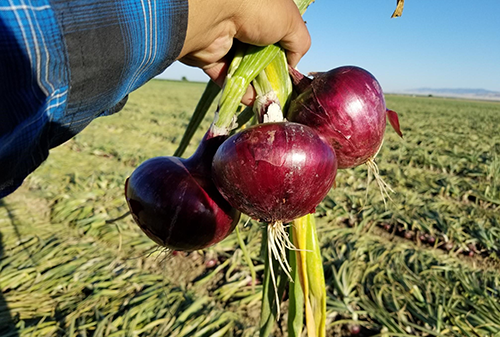
Growers Report A Tight Onion Market; Peri & Sons, Pacific Coast Trading Company, And LIV Organic Produce Comment

UNITED STATES – Many fresh produce categories across the board are experiencing a lift in prices as heightened demand persists on both global and national stages and health concerns remain top of mind. One of those categories undergoing a price spike in the market is the onion sector, as consumers fill their baskets to the brim with fresh produce items.

With such an active market, I tapped some of the onion category’s leaders to give us the 411 on what the industry is experiencing.

Jessica Peri, Retail Sales Manager, Peri & Sons Farms

Jessica Peri, Retail Sales Manager, Peri & Sons Farms“Supplies are good but demand is unprecedented,” Jessica Peri, Retail Sales Manager, Peri & Sons Farms, shares with me. “We are doing our best to fulfill orders and support our loyal retail partners.”

Currently, Peri & Sons is shipping supplies from its Yerington, Nevada, operations and will transition to El Centro, California, in late April.

Onion growers are facing a new challenge as national and global demands spike (Photo Credit: Peri & Sons)

“At some point, the market will return to normal. Consumers are nervous and stocking up, but there will be a time when everything will need to be consumed before needing to be replenished,” Jessica says. “This may take longer for onions since they store longer than other vegetables. Consumers will probably be increasing their consumption of fruits and vegetables to maintain healthy immune systems.”

Scott Schultz, Director of National Organic Sales and Purchasing for the Pacific Coast Trading Company, echoes these category sentiments.

Scott Schultz, Director of National Organic Sales and Purchasing, Pacific Coast Trading Company

Scott Schultz, Director of National Organic Sales and Purchasing, Pacific Coast Trading Company“Currently, in Washington state alone, the market is seeing a 20 percent increase in price with demand exceeding supplies,” Scott shares with me as he takes the temperature on the nation at large. “We are working with our partners to address the market and the growing popularity of the category, especially during the current market dynamic.”

Jessica adds that she is hearing that stores are starting to limit quantities purchased at checkout. Hopefully, this will help restore a sense of calm with consumers that the store isn’t going to be completely empty when someone goes shopping for items they need, she notes.

LIV Organic Produce Co-Founder Anthony Innocenti has seen the market react to the current health concerns with COVID-19 impacting consumer buying behaviors as well. He adds that the temperature of the business must be taken day by day and sometimes hour by hour, while also anticipating the challenges ahead.

Anthony Innocenti, Co-Founder, LIV Organic Produce

Anthony Innocenti, Co-Founder, LIV Organic Produce“We are striving to keep the produce department stocked and working closely with our customers to respond to demand and give their shoppers the best information,” Anthony says. “Meeting the demand of the consumer today is a challenge across multiple categories, there are not nearly enough supplies in the market including onions, and we want retailers to know that we have their best interest at heart along with their loyal shopper base as we proceed.”

Corona-update: US Farmers Working Hard To Meet Demand

While in the US, local farmers are working hard to meet the demand for apples and onions, it is still feared that travel bans will hamper US and Australian migrant labor flows. Still, Canadian sources have declared that international labour will be allowed into the Okanagan region.

Also, some jobs could really see a boom due to the COVID-19 situation. Also, we will address the recovery of the trade on the China-Vietnam border, the situation regarding Maharashtra’s grape export chain, Malaysian food exports, why Americans should ‘hug a trucker’ (after the pandemic) and much, much more.

US: Local farmers scramble to meet demand for apples, onions
The Hudson Valley’s onion and apple packing houses are going full tilt as some unfortunate coronavirus panic buying empties the produce bins and grocery stores look to restock them.

“It’s crazy,” said Rick Minkus, co-owner of Minkus Family Farms in New Hampton and one of the Black Dirt region’s biggest onion growers. “We worked 12 hours on Saturday and Sunday and we still can’t catch up.”

The orders are a boon in particular for onion growers, who have struggled with record low prices and demand since they harvested thousands of acres in September – and who are poised to start planting next week. “You would have seen the physical dumping of onions if this hadn’t happened,” said Alex Kocot, co-owner of Harvest Queen Farms in the Village of Florida.

Apple growers, who use controlled atmosphere storage to prolong fruit quality and sell well into spring, also said orders have been higher than usual for the past two weeks.

Travel bans hamper US and Australian migrant labor flows
Across the globe, governments are imposing travel limits in a bid to stem the spread of coronavirus. The unintended consequence is a squeeze on migrant labor that’s a cornerstone of food production. American produce growers preparing to harvest crops are warning of a devastating impact on fruit and vegetables after the U.S. Embassy in Mexico announced a halt to visa interviews for seasonal farm workers.

In Australia, growers say the country may face shortages of some fruits and vegetables because of travel curbs, with the nation traditionally using overseas workers for one third of seasonal farming jobs. Kiwifruit pickers are in short supply in New Zealand. And in Canada, travel limits threaten meat processors that rely on temporary foreign workers to fill chronic labor shortages.

“There won’t be anyone to harvest the crops,” said Robert Guenther, senior vice president for public policy for the United Fresh Produce Association, which represents U.S. growers, distributors, wholesalers and retailers. “It will be devastating to growers and ultimately to the supply chain and consumers. They won’t have the food.”

“Farmers work round the clock to ensure deliveries”
The Israel Fruit Growers Association (IFGA) slammed retail stores for spiking food prices during the novel coronavirus outbreak in a press release. 

IFGA CEO Yaron Balchasan slammed reports that the country is about to experience shortage as “total fake news” and said farmers are “working around the clock to deliver produce.”  As no shortage is expected, the report slammed chains for raising prices “in an unheard-of example of bold-faced behavior,” Balchasan told jpost.com. “I hope the government will put a stop to this.” 

He added that due to restaurants and hotels closing down because of the new Health Ministry regulations, the real situation is of a fresh fruit and vegetable surplus. The press release on behalf of IFGA stated the nation doesn’t face any shortage of apples, as the current supply will last until mid-June with the 2020 apple picking starting in early June. 

Canada: International labour allowed for Okanagan
Foreign farm workers will be allowed into the Okanagan this spring, summer and fall, after all. Earlier this week it looked like Okanagan orchardists wouldn’t have the labour they need to tend and harvest cherries, peaches, apricots, nectarines, pears and apples as the federal government closed the border to foreigners amid the COVID-19 crisis.

However, according to pentictonherald.ca, Wednesday, Federal Minister of Public Safety Bill Blair made an exception to allow foreign seasonal agricultural workers, temporary foreign workers, international students and foreign work visa holders to enter Canada. They will all have to go into 14-day quarantine, just as any Canadian returning from an international destination is recommended to do.

“This is good news,” said Glen Lucas, general manager of the 500-member B.C. Fruit Growers’ Association. “Without foreign workers there would be a severe labour shortage. Orchardists were extremely concerned.”

The tree fruit industry in the Okanagan is an important one with $776 million a year economic impact. Foreign workers are a big part of its success because they are willing to do the pruning, thinning and picking work that most Canadians don’t want to do.

In all, about 4,000 foreign farm workers come to the Okanagan annually between April and October. Generally, around 3,200 of them are from Mexico and 800 from the Caribbean, mostly Jamaica.

Chinese eat more fruit and veg due to coronavirus
A recent study by consultant firm Oliver Wyman suggests that the coronavirus is changing our eating behavior. The study in which 1,000 Chinese consumers were surveyed concluded that 40% of them started eating more fruits and vegetables.

Only one in five Chinese consumers maintained their usual diet during the outbreak. The other 80% of the 1,000 consumers surveyed changed their diet, half of them substantially. Fresh meat and fish/ shellfish consumption decreased among the Chinese population, 34% and 59% respectively. The consumption of eggs and dairy products increased considerably, by 35% and 33% respectively.

Read more about Oliver Wyman’s study here

The increase in fruit and vegetable consumption may be linked to advice from Chinese experts from the National Health Commission of China that vitamin C may increase resistance to the corona virus.

Jobs that could boom in the COVID-19 pandemic
As reported on newshub.co.nz¸ a recruiting and labour-hire specialist company says the need for workers has increased sharply since the COVID-19 coronavirus began spreading.Agstaff, Canstaff and New Zealand Dairy Careers managing director Matt Jones is calling out to New Zealanders facing job losses to fill the “hundreds” of jobs it has in its system.

“The work does not stop – it’s ramped up as some of our clients in the primary production sector increase production to meet New Zealand’s needs. The cows still need [to be] milked and the crops must be picked,” he says.

On Wednesday, they had a client who needed more than 40 people to start immediately in south Canterbury because the local manufacturers are trying to meet local food production needs. “Across the sectors we service, we have hundreds of vacancies, so we’re calling out to all people who might be facing lay-offs as COVID-19 bites.”

The kiwifruit industry is also putting out the call to workers affected by the disease, saying it will need more than 20,000 workers across the harvest and post-harvest period.

Significant volumes of kiwifruit are expected to be harvested next week and demand will remain high well into April, while final picking takes place in June.

Trade recovers on China-Vietnam border
Early this week, hundreds of trucks queued along a border bridge in Dongxing, a city in south China’s Guangxi Zhuang Autonomous Region, waiting for customs clearance, a scene that signifies the recovery of trade on the China-Vietnam border from the COVID-19 epidemic.

Pham Van Tan was driving a truck loaded with about 20 tonnes of dragon fruit produced in Vietnam’s Da Nang. Once passing the customs checkpoints, the goods will soon be seen in the markets of cities such as Shanghai and Beijing.

Pham has been in the logistics business for over four years. His main duty is to transport goods including fruit, seafood and farm produce from Vietnam to Chinese border provinces such as Guangxi and Yunnan.

Among the bordering cities Pham has visited, Dongxing, which is separated from Vietnam’s northeastern economic hub Mong Cai by a narrow river, serves as a gateway to ASEAN countries. Vietnam stopped issuing visas for Chinese tourists in early February and partially closed the Sino-Vietnam border to prevent the spread of the virus.

Covid-19 does not affect Maharashtra’s grape export chain
APEDA, India’s Agricultural and Processed Food Products Export Development Authority, has stated  despite the spread of the novel coronavirus and lock downs coming into force across Europe and China, export of Indian grapes has continued unabated.

According to APEDA figures, Maharashtra and Karnataka are currently exporting grapes and almost 99 per cent of the exports are from Maharashtra. The All India Grapes Export Association president Jagannnath Khapre told The Hindustan Times: “The export of grapes continue and we have been saved from the effect of the lock downs. The interesting thing is that the exports to Europe and China, which have been majorly hit by Covid-19, continue. We will receive the China export figures by the end of season (grape harvest season usually is between November and April). However, till March 175,258 containers (70,412 tonnes) had been exported to Europe. We have not received any instruction to ban the export to these nations.”

“As compared to the previous year, the export of the fruit has declined. Last year, till March 17, 6,182 containers with 83,145 tonnes was exported, but this year till March 17, only 5,258 containers have been exported.”

Spanish agricultural producers offer their fumigation machines to fight COVID-19
Agricultural producers from all over Spain are showing their solidarity with the rest of the population not only by maintaining their activity to guarantee food supplies, but also by offering their fumigation machines to the public administration to collaborate in the fight against the coronavirus by disinfecting the city streets.

The producers, who are licensed fumigators, are volunteering to help disinfect open public spaces to stop the rapid spread of COVID-19, since the use of this type of fumigation machine is much more efficient than treatments with small individual teams.

This is happening in all parts of the country, in the north, south, east and west; from La Rioja to Catalonia or Almería.

Source: hortoinfo.es

Fresh produce from Malaysia will arrive on time in Singapore
It was business as usual for suppliers of fresh produce this morning, as truckloads of fruits and vegetables streamed into the Pasir Panjang Wholesale Centre, some from Malaysia, even after the country’s nationwide lockdown took effect at midnight.  

With the exception of slight delays of up to an hour for some, batches of produce from Malaysia arrived at the wholesale centre as scheduled, suppliers told malaymail.com.

This is in line with what Prime Minister Lee Hsien Loong said on Facebook yesterday, that the flow of goods, including food supplies, were to carry on as per normal during Malaysia’s lockdown, which lasts until the end of the month.

Philippines: Benguet assures ample vegetable supply
The province of Benguet has assured that the production and transport of vegetables from the farms will continue, Governor Melchor Diclas said on Tuesday. He said they exempt the farmers from the strict home quarantine guidelines under the Luzon-wide enhanced community quarantine order of President Rodrigo Duterte.

Diclas, however, encouraged other members of the family of the farmers and the whole community to stay home and will be allowed to go outside their homes except for necessities. He said there is no crowding of people on farms, which complies with the order on social distancing.

Aside from tending to the farms, farmers are also allowed to harvest their products, pack them for transport to the trading post in La Trinidad, where buyers and traders purchase in bulk that will be brought to the various markets in the country. Benguet produces 80 to 85 percent of highland vegetables that are brought as far north as Aparri and Batanes to Visayas and Mindanao, including Palawan island.

Qatar agri sector is extremely active
Qatar’s agriculture sector continues to be “extremely active” amid the novel coronavirus disease (Covid-19) outbreak, producing more fresh and organic vegetables and fruits, prominent Qatari agriculturist Nasser Ahmed al-Khalaf said.

“There is no effect of coronavirus on the production. At this moment, Qatar’s production is at its peak,” he told The Gulf Times.

Al-Khalaf expressed confidence that Qatar’s agricultural production will witness a substantial increase this year due to the growing number of commercial farms in the country despite the Covid-19 crisis.

He noted that a series of meetings have been held between public and private sectors aimed at further boosting the agriculture sector and self-sufficiency efforts of Qatar. “Whether through the Katara farmers forum, Qatar Chamber, food security committees or the Ministry of Municipality and Environment, all want to ensure the safety and continuity of farm production,” said al-Khalaf, who is also the managing director of Agrico. Agrico, a private Qatari agricultural development company established in 2011, produces organic vegetables and fruits year-round at its 120,000sq m farm near Al Khor, and aims to help Qatar achieve food security.

Besides vegetables such as cucumber, lettuce, egg-plant, zucchini, hot and sweet pepper, and tomatoes, the farm is now producing fruits such as melon, watermelon, papaya and banana, as well as other green leafy vegetables, among others, using hydroponics all year-long.

Coronavirus remains thorn in side of Kerala pineapple growers
The euphoria over a rising trend in pineapple prices has started waning, with the coronavirus dampening the prospects of growers on account of a subdued upcountry demand.

It is peak period in North India, especially after the winter season and setting in of summer, but the virus scare has brought down pineapple prices to a bare minimum. The rates are now hovering in the range of ₹20 a kg for A grade, GI-tagged Vazhakulam pineapple as against ₹30 per kg in January this year.

Baby John, president of the Pineapple Growers Association Keralam, told BusinessLine that there had been good price realisation till March 5, but prices started eroding, especially when APMC markets were about to close down as part of discouraging people from public gatherings. This has affected the fruit movement, which was down by 50 per cent from 1,000 tonnes per day, he said.

According to John, Delhi and Maharashtra are considered to be the prime markets for pineapple and the main season is expected to start from April, catering to the Ramadan demand. Delhi is a good market for special grade pineapple while Maharashtra is the largest market for other grades.

The virus outbreak across the country has shattered farmers’ expectations of good returns from the surging prices witnessed since the new year.

Indian mango exports wilt in state of Andhra Pradesh
The outbreak of coronavirus has begun to have an impact on mango exports in Andhra Pradesh. Mango exports to the Gulf, European countries, South Asian countries and USA have been stalled following cancellation of flights due to COVID-19 scare.

Speaking to TOI, commissioner of horticulture, Chiranjiv Choudhary, said “Andhra Pradesh exported over 1,500 tonnes of mangoes (Banginapalli, Rasalu and a few other varieties) in 2019. We had planned to export over 3,000 tonnes of mangoes this year. We are estimating that AP is likely to produce around 6 mln tonnes of mangoes this season. But exports depends on various factors and the coronavirus scare has not helped the industry at all. We will be able to get a clear picture of the impact of coronavirus in a couple of weeks.”

San Francisco shoppers stock up on produce amid pandemic
Click here for a short news clip.

SeaIntelligence: Coronavirus still impacts container shipping
The containerized maritime industry may be considering developments similar to the 2008 financial crisis, SeaIntelligence told fullavantenews.com. The Copenhagen-based maritime consultancy estimates that a potential volume of TEUS 17 million will be lost in container transport, corresponding to 10% of world trade.

In the case of port terminals, a loss of about 80 million TEUs is projected in the amount of volume that will be left unmanaged, says Lars Jensen, CEO of the maritime intelligence firm.

The real underlying problem is the long-term impact of the pandemic in 2020 and possibly beyond, not only on consumer spending but also on the willingness of companies to order goods in the first place, as well as your ability to do so, as a possible financial liquidity problem is beginning to appear. There is also a realistic risk of bankruptcy.

On the positive side, there are two elements that help carriers. One is the collapse of the oil price, which acts as a short-term cash infusion for carriers who have fuel surcharges based on oil prices two months ago and who pay bargain prices today. The other is the discipline that carriers have demonstrated in navigating empty (blank) spaces and avoiding dumping of freight rates to fill ships.

South Africa’s Oranjezicht market suspended
The Oranjezicht City Farm and its Market has been closed to the public, however, people can pre-order boxes of fresh fruits and veggies. The city farm has implemented a box-purchase scheme to help the farmers and producers during this time of financial uncertainty. Customers can pre-order various boxes of fresh produce which will be available for drive-thru pick-ups outside the market, explains director Sheryl Ozinsky.

Ozinsky told capetalk.co.za the market has been forced to innovate as the livelihoods of farmers and traders are at risk amid the global Covid-19 pandemic. Once the order system is running effectively, Ozinsky says OZCF market customers will be able to order products from other market traders.

US truckers are the ‘rock stars’ in the wake of Coronavirus
Andrew Novakovic, agricultural economist at Cornell University, agrees with the many food industry experts and government officials who say there is plenty of food. “This isn’t a supply chain disruption,” Novakovic told Forbes. Though the U.S. food system is frequently criticized for being too big and too monolithic, its size and expediency, including crop surpluses, mean the U.S. has plenty of food available for the long haul.

However, Novakovic points to a number of weak spots in the food transportation system that could be aggravated by the increased demand for food. Transportation is the one thing that connects all stages of the supply chain, he says, from farm to food processing to warehouse to grocery store. That’s why any labor shortage in the food system, but especially a shortage of truck drivers, could pose a serious threat to the food supply chain if the high demand for groceries continues unabated.

Cain Adams at Trinity Logistics/Longboard Logistics in Meridian, ID, told onionbusiness.com about movement in general and freight rates this week as the Coronavirus grips the nation.

“With schools and restaurants closed, those supply chains are dead in the water. The produce is being pushed to retail. Stores are trying to restock as fast as they can. Potato sizing and supply is an issue. They can’t pack fast enough. Orders are keeping potato sheds steady.”

Cain added, “Rates are up on all lanes. Onions orders are steady out of the Northwest, and sheds who are heavy in retail contracts are swamped. Many of them are asking for teams only so they can replenish fast.” He continued, “Rates out of McAllen are higher, too, with onion prices going up pretty fast. Restaurants being closed will help get more carriers on the retail orders though. There are more loads than trucks, so some are shipping on dry vans just to get the product out at a decent price. Reefers are in high demand.”

“We are not seeing many trucks turning them off to run harder. We are still seeing 95 percent of trucks stick to the books. I think they just fear they will mess something up and get the fine. At receivers, we are seeing longer wait times to unload. This makes sense with all the other grocery items coming in. Trucks are getting taken care of, though.”

“I’d say hug a trucker, but we can’t afford to get any of them sick. They are looking like rock stars. We are so proud to work with those men and women. I can’t tell you how much many of them care about getting these loads to their destination. Truly, it is inspiring.”

Chile: Pinera declares 90-day state of catastrophe
Chilean President Sebastian Pinera on Wednesday declared a 90-day state of catastrophe as cases of the new coronavirus mounted in the nation, giving the government extraordinary powers to restrict freedom of movement and assure food supply and basic services.

A military official will oversee the 90-day measure, which is set to take effect Thursday morning. More restrictive actions would be implemented progressively, as dictated by the advance of the virus.

“This state (of catastrophe) is aimed at…preparing ourselves to confront what lies ahead,” Pinera said in a speech from the La Moneda presidential palace.

Pinera said there were 238 cases of coronavirus confirmed in Chile but no deaths. The country has closed schools, shut down its borders and limited public gatherings as the number of cases has multiplied. The order should also assure more security for hospitals, protect supply chains for medicines and allow the government to enforce quarantines and isolation measures.

The move is likely to stamp out any remaining protests over inequality after they were reignited in early March following several turbulent months of demonstrations and riots in late 2019.

Spanish fruit & veg suppliers stretching to maintain production
The Grocer wrote an article on the Spanish fruit & vegetable suppliers who are striving to maintain production as the country’s lockdown strains the capacity of its workforce.

Indian exports resume: 3,600 tonnes of onions shipped to Sri Lanka and West Asian countries
Onion traders in Nashik are upbeat on the resumption of exports and hope to ship at least 200,000 tonnes of the commodity by next month. Around 3,600 tonnes of onion has been shipped to Sri Lanka and West Asian countries as part of the first outbound consignment after the Union government lifted ban on the exports of the kitchen staple.

The federal government had banned onion exports on September 29 last year and imposed countrywide stock limits to control soaring prices of the commodity ahead of assembly elections in Maharashtra and Haryana. The ban was lifted with effect from March 15 after a notification was issued by Directorate General of Foreign Trade of the Department of Commerce.

Trinidad growers hit hard by COVID-19
In Trinidad, the closure of schools and restaurants is having a devastating ripple effect on farmers who are now struggling to find buyers for their produce.

At Rock Road, Penal, farmer Rakesh Manick said he had 450 heads of lettuce left and no one to buy. Manick said he was fearful about going to the Debe market to wholesale his produce because congregating could put him at risk for COVID-19.

He added that usually he provides 1,000 heads of lettuce to a single supplier who sells it to restaurants and supermarkets. However, most of the restaurants in South Trinidad have been forced to close because people are no longer dining out.

A source at the National Agricultural Marketing Development Company said they have received scores of phone calls from farmers asking for assistance in selling their crops. “We are documenting a list of all the farmers and their crops and we are trying to link them with potential buyers. We have had numerous calls. The problem is many people are not willing to come to the market to drop off their produce because of the risk of COVID-19,” the source added.

By Fresh Plaza

close
Loading…