Church Brothers Farms’ John Patullo Discusses Spring Transition

SALINAS, CA – This winter and spring saw growers in California and the Southwest exposed to adverse weather conditions, challenging even the most adept farming operations. But with the late spring and summer season on the horizon, things are shaping up nicely for Church Brothers/True Leaf Farms.

I recently had the opportunity to speak with John Patullo, Grower, Church Brothers Farms, to learn more about where the company is in the season and what retail and foodservice partners can expect as 2019 progresses. As a grower overseeing more than 4,000 acres and bringing over 20 years of experience to bear on the company’s operations, John was uniquely suited to assess the situation.

John Patullo, Grower, Church Brothers Farms“We completed the spring transition from our winter growing region of the Yuma, AZ, and Imperial Valley, CA—along the Mexico border—back to the Salinas Valley. The winter weather caused us to improvise in our farming operations throughout the early Salinas growing season. The specialized, lightweight field equipment that we’ve developed allows us to get into our fields for bed prep, planting, and cultivation while fields are on the wet side. Yields and quality can be affected when we’re forced to do this,” explained John.

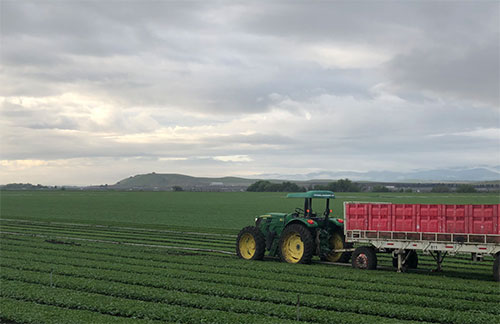
Adverse weather in California and the Southwest has forced growers to improvise their farming operations

While the weather has continued to have an impact on harvest in the Salinas Valley, John tells me that ChurchBrothers/True Leaf Farms have weathered the storms and have processes in place to address quality and supplies during these more temperamental times.

“However, our goal is always maintaining the best quality possible as well as sufficient volumes for our customers. When Mother Nature doesn’t cooperate, we can experience challenges to overcome. ChurchBrothers/True Leaf Farms are equipped with the experience and equipment to best handle these challenges, however, costs increase and weekly volumes can fluctuate.”

John states that Church Brothers Farms’ operations have systems in place to face temperamental times

A year-round grower for field pack and value-added offerings, the Church Brothers/True Leaf Farms team continues to take pride in supplying high-quality vegetable staple items like iceberg, romaine, leafy greens, cauliflower, broccoli, cauliflower, and kale—as well as tender leaf offerings like baby kales, chards, arugulas, spring mix, and spinach.

“Church Brothers/True Leaf Farms being a grower-owned processor/shipper means we take the utmost pride in every acre we grow and harvest,” John said.

It’s a commitment to the company’s product, people, and to providing the best possible customer service that propels Church Brothers/True Leaf Farms forward. It is onwards and upwards if you ask me!

By AndNowUKnow

California farmers report climbing scarcity of employees

It’s a pressing concern—and an increasing one at that—for California farmers: farm worker scarcity.

And according to a new study, Still Searching for Solutions: Adapting to Farm Worker Scarcity Survey 2019 from the California Farm Bureau Federation (CFBF) and UC Davis, the problem shows no sign of letting up.

Shortage of help 
The study, a voluntary survey of 1,071 farmers and ranchers conducted in early 2019, reveals that 56 percent of participating farmers had been unable to hire all the employees they needed at some point in the past five years. And the past two years have proved particularly problematic—of those farmers reporting employee shortages, some 70 percent noted they had even more trouble hiring in 2017 and 2018.

“The survey shows farmers have tried and are trying all the tactics available to them, such as increased wages, changes in farming and cropping patterns, use of the existing H-2A visa program and automation where appropriate,” says Jamie Johansson, president of the CFBF. “The missing element is an improved agricultural immigration system, to match willing employees with farm employers.”

In California’s peak season, farmers and ranchers hire nearly 473,000 employees while national estimates put that number at around 2.5 million employees.

Problem-solving attempts 
The survey revealed that California farmers were trying a number of solutions to solve the shortage problem. Most notably, the majority of farmers, 86 percent, said they had raised wages as an incentive to hire more people.

Sixty one percent also reported they’d hired a farm labor contractor to recruit employees while more than half reported they’d turned to mechanization to do the work, though 56 percent said that was directly linked to the shortages. (The majority of farmers surveyed noted that they had used a technology that decreased their dependence on a workforce over the past five years. Where possible, they said, they turned to technology for assistance.)

Meanwhile, 37 percent reported changing cultivation practices to make accommodations, such as reducing or delaying weeding and pruning. It was also revealed that those changes in cultivation practices have increased over the past five years.

Finally, 31 percent of farmers surveyed also reported they were switching around their crops to move away from more labor-intensive crops (such as tree fruits and vegetables) to non-labor intensive crops that suit mechanical harvesting, such as tree nuts and row crops. “We have had to decrease our strawberry and pole tomato plantings because of lack of labor. We have reduced strawberries from 80 to 17 in 2018; we had to walk away from half the field because we did not have enough employees to harvest the whole field. This year we only planted nine acres of strawberries,” reported one farmer. “Tomatoes have been reduced from 80-100 acres to 25 acres. We have had to increase our winter squash planting to 90 acres in 2018 because this crop does not require much labor to grow or harvest compared to strawberries and tomatoes. We need 125 people but have only been able to retain 40-45 employees.”

The H-2A issue 
Via the survey, while farmers said they’d looked into hiring employees via the H-2A agricultural visa program, ultimately only six percent of those surveyed reported they’d enrolled in the program. However the number of farmers who have used the program has increased. “H-2A visas aren’t practical for small growers in our area. We really need immigration reform that is practical for all growers, including portability options,” reported one farmer.

“Through the years, the H-2A program has proven inadequate for farms in California and throughout the nation,” Johansson said. “The Farm Bureau will continue to work with Congress to create a secure, flexible, market-based immigration program that works better for both farmers and farm employees.”

Meanwhile farmers continue to report that their efforts to hire U.S.-born employees on farms continue to fail, a theme that was reflected in the 2017 survey results as well. At the same time, the CFBF reports that experts estimate that some 50-70 percent of the hired workers aren’t authorized to work in the U.S. and farmers throughout both California and the U.S. confirm that they’re relying on a largely immigrant workforce.

The problem continues 
Ultimately not much of this is new since the 2019 results largely reflect the 2017 CFBF survey results—that survey noted 55 percent of farmers were experiencing employee shortages.

The CFBF also notes that studies show the availability of farm workers will continue to decrease and the issues cited within the survey are also likely to continue.

By Fresh Plaza

California stone fruit sees slow start to season

Production of California’s stone fruit is slow to start due to the unseasonable California weather.

“Any commodity buyer knows that it’s been a weather-filled last few weeks. It’s not just the rain itself but the overall lower temperatures have slowed down the volume of stone fruit right out of the gate,” says Jon McClarty of HMC Farms in Kingsburg, Ca., who adds that the stone fruit is currently coming mostly out of the Central California region.

McClarty adds that plums are the one stone fruit that hasn’t started in full production yet and is only seeing limited supplies right now. “But peaches and nectarines are seeing a bit of a slowdown because of the weather. Moisture on the fruit is never a positive thing,” he says.

As it stands, overall volume currently is lower than this time last year. “But going forward, it looks to be a pretty normal crop of stone fruit,” McClarty says.

Despite the extra rain, the sizing of the fruit looks as per usual. “We are losing some bigger fruit because of that, but most of the fruit that is on the tree is of normal size for this time of the season,” says McClarty.

Domestic competition 
While imports of stone fruit have cleared out for now, McClarty does note that along with California production, peaches are also coming out of Georgia and South Carolina. “And later on in the season there are peaches grown in Colorado, Washington, Pennsylvania, parts of the Great Lakes regions, and other areas,” he says. California stays in production on stone fruit from some growers as late as October on peaches and even later on plums.

Meanwhile demand also looks stronger right now on stone fruit given the lack of supply. “We did get some pick up in demand for Memorial Day weekend but there was a little bit less fruit available,” McClarty says.

Despite the lower volume, stone fruit pricing is looking to be as per usual and close to last year’s pricing.

Looking ahead, McClarty sees more stability for stone fruit on the horizon. “I think all the growers are getting to a point where they’re getting a normal type of production for this time of year in the weeks ahead. It should be pretty stable until the end,” he says.

By Fresh Plaza

Hot weather anticipated to ignite Mexican table grape season

With temperatures finally due to approach the 100 degree mark in the Mexican growing regions this week, table grape suppliers are anticipating shipments over the border to dramatically increase. Cooler weather has persisted all spring in Hermosillo and Caborca and as a result, growers have reported a lack of sugar and color development. Shipments on all varieties have been slow but that is expected to change within the week.

Sources indicate that with such a heavy-set hanging, growers have been forced to thin their vineyards in an effort to force additional energy into the remaining bunches. The real challenge now is how Mexican growers will be able to manage the labor necessary to harvest 18 million boxes in six weeks. Additionally, USDA inspectors both newly trained and veterans, have been extremely critical in regard to meeting proper sugar levels on fruit entering the US

Spot pricing is currently higher than pre-committed program business. But it won’t take too long for volumes to catch up with those lower program FOB’s. For back to back seasons now, the inconsistency and erratic volumes have created a frenzied start to the Mexican table grape season.

Red seedless supplies diminishing
For the past few weeks, red seedless supplies from Chile have helped to sustain the market as buyers continue to await the Mexican season. However, it appears that this pipeline is now drying up and prices are starting to increase, especially on the spot market. Recent Memorial Day demand has helped to empty the reserves and now buyers are waiting for Mexican fruit to start arriving in greater volume, just like they are for the other varieties.

Marketers in Nogales are still waiting for Mexican Flames to enter the US market, but low sugar and light color has been delaying crossings now for two weeks. With only limited supplies in the marketplace, many retailers are starting pre-committed promotional ad periods with pricing ranging from $18.95-$20.95 FOB, but spot market pricing is significantly higher ranging from $24.95-$26.95 FOB. With such a spread between program and spot market business, the majority of the fruit will go to those willing to pay the most until overall volumes begin to pick up and meet the daily demand.

Supplies improving for green seedless
One of the varieties starting to see improved movement from Mexico is green seedless, namely Early Sweet and Perlettes. Prices are still high though as demand is strong. According to our source, prices are predicted to ease as volumes increase and become more consistent, which is expected during the month of June.

This past week’s FOB’s on Early Sweet ranged from $32.95-$36.95 with the mostly market at $34.95 and Perlettes traded from $28.95-$32.95 with the mostly market at $30.95. We can expect overall FOB pricing to adjust lower throughout the balance of the week, providing that growers can catch up on harvest schedules and the backlog of USDA inspections are able to flow in a more controlled fashion.

Mexican table grape marketers are still expecting to have promotable volumes of green seedless available in June with significant volumes all coming in very condensed fashion. We should see some aggressive pricing on Perlettes this week and most importers will try to hold the price of proprietary varieties a bit firmer.

Black seedless prices remain high
After a period of practically zero black seedless availability, supplies of Mexican Summer Royals are starting to trickle through Nogales and pricing is ranging from $32.95-$36.95. However, it will be another week at least until volumes will be sufficient to meet the current demand.

Major black seedless promotions are already in place with shippers not able to meet their commitments, which has put a tremendous amount of stress on the black seedless market,” Greenstein observed. Expectations are to see pricing remain firm through the balance of the week until better volumes begin to cross and we should see pricing settle into the mid $20’s by the end of next week.

Even Red Globe grapes are beginning to see an increase in price as Chilean arrival volumes start to slow. Red Globes of good quality are attracting higher prices this week. Pricing currently ranges from $16-$20 with size and quality being the determining factors.  With limited volumes of Mexican Flame Seedless crossing the border, retailers could look to add Red Globes as a color break to the shelves for the next 7-10 days.

By Fresh Plaza

Spring report reveals how foodservice produce is trending

It’s happened with kale, avocado, and cauliflower: Fresh produce trends move through a menu cycle in an established pattern of inception, adoption, proliferation and ubiquity.

Although it’s early in gaining popularity, persimmon’s penetration into quick-service restaurants is expected to grow by 101% in the next four years.

That’s one produce trend forecast to influence the foodservice industry in the fall, according to the United Fresh Produce Association’s “Spring 2019 Fresh Insights for Foodservice,” which was the subject of a webinar May 17, led by the association’s Retail-Foodservice Board and research firm Datassential.

The webinar was moderated by Sarah Grady, strategic supply manager at McDonald’s and the board’s vice chairwoman. The meat of the discussion was based on Dataessential trendologist Mike Kostyo’s analysis of the new report.

Persimmon and many superfruits — categorized as “super” for high nutrient density — come to the U.S. from afar, Kostyo said.

“It’s harder to ship them fresh, so you’ll often see them frozen, and we see them in smoothies,” Kostyo said in the webinar. “Fresh always scores well with clients, be it in foodservice or retail, so if you can add that fresh option, absolutely work to make that happen.”

Before spring ends, there’s time to capitalize on both apricots and Swiss chard, according to the report. 

Apricots are in the second phase, adoption, and Swiss chard is in the first, inception. Foodservice trends often first appear at the hands of innovative chefs at high-end restaurants, gradually spreading to mid-level, casual, fast-casual and then fast-food restaurants, which is when the trend has reached ubiquity.

So it’s no surprise that 26% of fine dining restaurants serve apricots, but just 4% of quick-service restaurants do. That penetration is expected to shift by 9% to casual and fast-casual establishments in the next four years, according to the report.

Apricot’s penetration grew by 15% in the South and 11% in the West between 2014 and 2018, according to the foodservice report.

A fall fruit, persimmon saw menu penetration grow by 66% in the Northeast and by 76% in the South between 2014 and 2018.

Researchers found that wraps serve as an ideal vehicle for delivering fresh produce, and that the most popular ingredients are spinach, arugula, avocado, quinoa and hummus. The popularity of an outlier ingredient for wraps, red cabbage, grew 44% in the last year, according to the report.

Pancakes are another good way for foodservice to incorporate, not only in-season fruit, but vegetables. Bananas, blueberries and buckwheat are somewhat obvious trending ingredients, but sweet purple ube and grassy green matcha are hot matchups too. More adventurous menus may use carrots or zucchini in savory pancakes or make them with potatoes. Lemon, mixed berries and blue corn are expected to see the most growth in pancake pairings in the next four years, according to the report.

Arugula, strawberries and asparagus are also top contenders in the race for chain restaurant ubiquity, with arugula leading the pack at a 34% growth rate in the last four years.

Corporate chef Brandon Hudson of Grand Prairie, Texas-based Jason’s Deli pinpointed several produce-related trends in foodservice. He’s the winner of the 2019 United Fresh Produce Excellence in Foodservice Awards in the Quick Service Restaurants category.

“I’m really paying attention to the rising popularity of functional foods,” Hudson said in the report. “I think we’ll continue to see more cruciferous vegetables on plates — same with mushrooms.

“Another thing I find fascinating is the overall acceptance of bitter flavors,” he said in the report. “Arugula and other bitter greens, radish and heavy roasted/charred vegetables are all adding to a chef’s arsenal in menu development.”

This is what the award-winning fast-casual corporate chef asks of his produce buyers:

– Food safety: Details of recalls, third-party audits for farms and the suppliers’ Good Manufacturing Practices;

– Quality: freshness, shelf life, color, defects, average Brix (if applicable) and yields;

– Pricing;

– Availability; and

– Logistics to ensure supply nationwide.


Andrew Marshall, United Fresh’s director of foodservice programs and foundation partnerships, rounded out the webinar session by telling attendees what foodservice panels and speakers to expect at the United Fresh expo June 10-12 in Chicago.


By The Packer

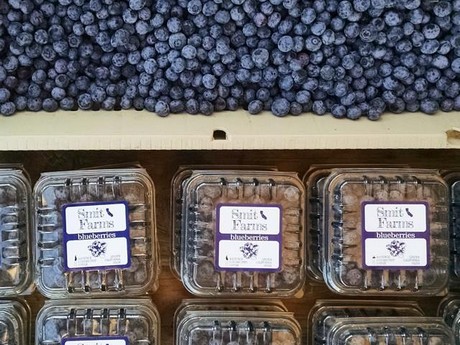
Late California blueberry season to cause overlap

Blueberry growers in California are expecting the season to run late this year, after a delayed start. Excess rains during spring pushed back the season and picking didn’t begin until the first week of May. As a result, the blueberry season is almost certainly going to run late and subsequently overlap with the start of the Oregon season.

“Our season started about two weeks late,” said Paul Smit of California Fruit Company. “The season is definitely going to extend and we now anticipate it to finish around the July 4 weekend. Oregon is due to start in mid June so there is going to be a big overlap. Georgia is also competing right now which is normal for this time of year.”

The storms and persistent rains over the past week and a half have also impacted California’s blueberry growers, but Smit noted that it has only had a minimal effect. “The rains and storms have offset us by about 20 percent on some of the earlier varieties,” he said. “But we should be through those within the week.”

Mexican blueberries keeping prices soft
The market is soft right now as more regions come online. There is also some Mexican fruit still around although they are expected to finish up for the season shortly. According to Smit however, the presence of Mexican blueberries in the market is keeping a lid on prices due to diminishing quality from end of season fruit.

“The market is soft largely because of the Mexican fruit,” he explained. “They have had rains there and are also winding down for the season so quality has been patchy. But as long as they are quoting low prices, some of the buyers use that as leverage to lower the prices they are willing to pay. Supplies are somewhat tight so normally the market would also be tighter, but the perception of the competition is keeping it soft.”

Smit added though that certain buyers are also willing to pay for the quality of the Californian fruit. “The more discerning buyers are willing to pay our prices because they know California has the quality,” he said. “The varieties we grow tend to be more appealing to consumers than some of the other common varieties found on the market.”


California blueberries found all over the US
An interesting function of the logistics of some of the buyers and distributors means that blueberries from California can be found all over the country. This is despite regions like Georgia producing a large amount of fruit as well.


“We ship all over the US,” Smit shared. “California has quite a considerable amount of production and buyers such as Walmart send California-grown blueberries all over the US with their distribution network. Because they have their own trucks, they utilize them to make sure they’re full both ways. For example, they might send a load of produce from the East Coast to California and then load California produce to send back. Overall, we have the quality and volume to sustain consistent supplies for all of our customers.”


By Freshplaza

US bails out tariff hit farmers

A US$16bn relief package for US agricultural producers has been announced in response to the ongoing trade war with China

illions of dollars will be distributed to US farmers by the US Department of Agriculture (USDA) to help them cope with the effects of ongoing trade dispute with China.

Announced today, 24 May, the relief strategy will provide up to US$16bn in programmes, which the USDA said was in line with the estimated impacts of tariffs on US agricultural goods and other trade disruptions.

Sonny Perdue, US secretary of agriculture, said the US was not going to back down. “China hasn’t played by the rules for a long time and President Trump is standing up to them, sending the clear message that the United States will no longer tolerate their unfair trade practices.”

The Market Facilitation Program (MFP) will provide US$14.5bn in direct payments to producers including a number of those in the fresh fruit industry. Tree nut producers, fresh sweet cherry producers, cranberry producers, and fresh grape producers will receive a payment based on 2019 acres of production.

The payments will be made in made in up to three tranches, with the second and third tranches evaluated as market conditions and trade opportunities dictate. 

The first tranche will begin in late July/early August and if conditions warrant, the second and third tranches will be made in November and early January.

The remaining US$1.4bn will be used to implement a food purchase and distribution program. Surplus commodities affected by trade retaliation, including fruits and vegetables, will be purchased for distribution by the Food and Nutrition Service to food banks, schools, and other outlets serving low-income individuals.

This announcement comes after China ramped up tariffs last week on around US$60bn of goods imported from the US to China. This increase did not affect fresh fruits and vegetables but did impact number of frozen fruit and vegetable lines like peas, spinach, berries, nuts, sweet potato and corn, as well as processing equipment like washing, sorting and grading machinery.

Perdue said this programme would be more successful than the US$12bn package delivered last year.

 “The plan we are announcing today ensures farmers do not bear the brunt of unfair retaliatory tariffs imposed by China and other trading partners,” he explained.

“Our team at USDA reflected on what worked well and gathered feedback on last year’s programme to make this one even stronger and more effective for farmers.”

Further specific details regarding eligibility and payment rates will be released at a later date.

By: ASIAFRUIT

Rains will put pressure on California strawberry supplies

After the heavy rains that fell over the past week in California, strawberry growers have now turned to cleaning up their fields and removing damaged strawberries. Both Salinas and Santa Maria were hit by rains, with the greater amount falling in the Salinas-Watsonville growing district. Despite growers picking as many berries as possible ahead of the rains, in general most of the ripe fruit that remained in the fields was damaged. Harvesting came to a halt as firstly muddy conditions prevented any meaningful access to fields, followed by the cleaning up process which is currently ongoing.

“Much of the labor this week was really focused on keeping fields clean, stripping off rain damaged fruit and preparing for what is ahead,” said Cindy Jewell of California Giant Berry Farms. However, she said the company expects production to be back on track very shortly with warmer weather in the forecast. “It looks like the weather might finally be shifting and there is light at the end of the tunnel by the weekend. Even though we have had damaging rain and lost a lot of what was ripe and ready fruit, the plants will quickly rebound as summer weather emerges. Because strawberry plants always have varying stages of fruit on each plant, they quickly come back after a rain.”

Because strawberries are constantly growing new fruit throughout the season, production should only be hampered for a couple of weeks. This is good news in the context of the entire summer season. “We still expect peak volume to support strong promotions ahead for the summer months,” Jewell noted. “The long summer days ahead will bring on that summer crop and we will have fruit for our retail promotional partners slated in June.”

Market will tighten up
Although production will get back to normal in a couple of weeks, shippers will still have to work through limited supplies over this period. Comparatively little fruit has been shipped this week but prices have remained steady for now. Shippers are also considering how quality will be over the next two weeks.

“The harvest has certainly been curtailed to the point that only a quarter of a million trays were packed on Monday,” observed Jay Carreon of brokerage firm GW Palmer. “Prices are at $9 – $10 and the market is holding steady at the moment. Because there was significant damage to the ripe fruit, moving forward it’s going to be hard to tell what to ship or not. Quality-wise, we anticipate seeing arrival issues from next week and will be battling this until the week after next.”

Carreon also said the industry expects tight supplies which could be problematic for companies that have locked in commitments for the upcoming Memorial Day pull and the period shortly after. “Huge commitments have already been set and we are seeing low prices at retail along with Memorial Day around the corner, both of which are going to drive the market,” he explained. “These prices were set weeks ago, so supplies are going to be tight until the end of next week at the earliest.”

By: Fresh Plaza

Growers count their losses: California cherry crop devastated by storms

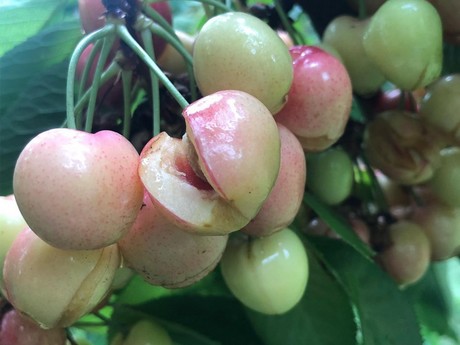
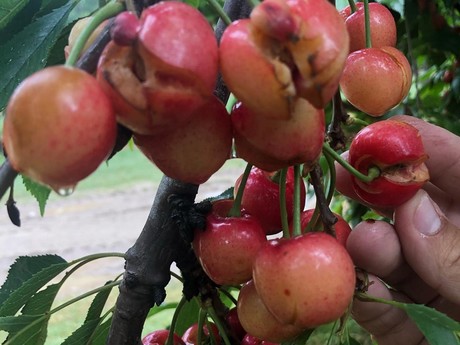
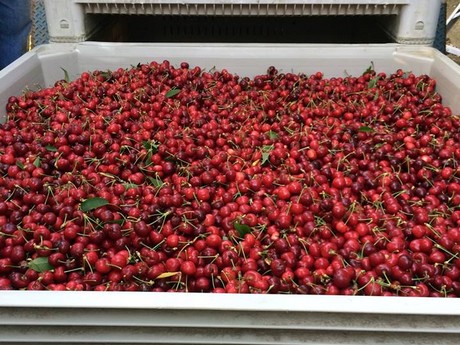
Cherry growers in California are counting the cost as storms over the past week destroyed a significant amount of the current cherry crop. While official estimates are still several days or even weeks away, the general feeling is that a few million boxes worth of cherries have been lost, with the worst affected being early season varieties and also a large portion of the Bing crop. There is some hope that some of the later season cherries can still be salvaged.

“The cherry crop has been devastated, especially the early season varieties,” said Tom Valenzuela of Sunriver Sales. “There is a chance some of the later season cherries can be salvaged, but we won’t see those until mid-June at the earliest. Tree fruit in general was hit hard, not just from the heavy rain, but also the hail. This was on the back of an already wet winter and spring which could also have an impact on future crops such as grapes.”


Image: Joe Cataldo, J&M Farms Lodi

Terrible blow to cherry growers
For cherry growers, it’s terrible news as some growers will simply have to walk away from their fields. Joe Cataldo of J&M Farms in Lodi took to social media to announce the loss of his cherry crop. “When it rains it pours,” he said. “We just witnessed one of the craziest storms ever seen this late into May. This was a true winter storm. The damage it caused has turned one of the best crops we have ever set, into garbage for the birds. Devastating is an understatement.”

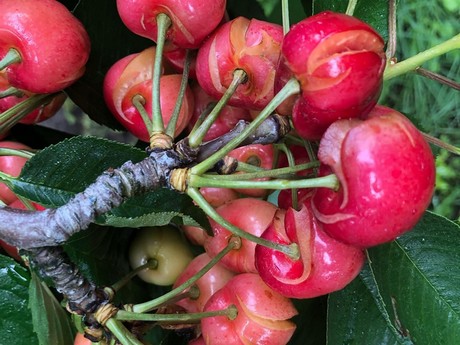
Don Goforth of Family Tree Farms further south near Reedley, said the company has already begun their cherry harvest and were hit hard by hail and heavy rain. “These storms will have a considerable impact with the most obvious damage inflicted on the cherries,” he observed. “We are about half way through our harvest but have been significantly affected. Some of our blocks are okay but others we are abandoning completely due to severe cracking. We will be busy surveying the damage over the next week but it will certainly turn into an interesting season with supplies expected to dramatically tighten up as we transition to the northern regions.”


Image: Joe Cataldo, J&M Farms Lodi

He added that Family Tree Farms also grows a large amount of other stone fruit including peaches and nectarines. These were also affected – especially by the hail – but to a lesser extent than cherries. “Our other stone fruit was also affected by hail and we are expecting to see some spotting resulting in a little bit of damage. However, it is not too severe and we are still quite hopeful of a good stone fruit crop.”

Meanwhile, there is also expected to be some impact to berry growers as several inches of rain fell in those regions. Some growers were able to pick ahead of the storm, however they are all currently assessing the fields and more will be known in the coming days. At the very least, harvest has been disrupted due to muddy conditions.

Cherry market expected to tighten up considerably
For the next few weeks, the market is likely to tighten up as cherry volumes diminish. One cherry supplier said he expects the California cherry deal to be shorter. “The rains have had a huge impact on cherry supplies,” he noted. “The cherry deal is likely going to wrap up early.”


Image: Joe Cataldo, J&M Farms Lodi

This also comes as shippers were aiming to fill orders for Memorial Day, which will now not be the blockbuster event many were hoping for. “The recent rain storms couldn’t have come at a worse time for California cherries with the Memorial Day pull in full swing,” said Ira Greenstein of Direct Source Marketing. “Last week the industry struggled to pack sufficient volumes to fulfill their holiday commitments. Weekend orders were pushed, prorated and canceled, leaving many retailers scrambling to get fruit on the shelves. Pricing on pre-committed program business ranges from $32-$45, while the spot market is trading from $45-$55 with only limited volumes available. We might not see shippers resume normal packing schedules until the middle of the week, leaving most of the industry unable to find fruit to cover heavy Memorial Day promotions.”

“A cherry crop that was originally estimated to be well over 10 million boxes may now drop well below 7 million,” he continued. “Many growers may choose to not harvest fruit at all and go the route of filing for insurance money. Either way, this recent weather event has put the California cherry industry into a state of disarray and it will take the balance of the week to truly understand the long term affects for shipments in June.”

As if there hasn’t been enough precipitation, one more storm front is expected to pass through the Central Valley today before finally clearing up. Temperatures are also expected to rise from tomorrow.

By: Fresh Plaza

OVERVIEW GLOBAL LEMON MARKET

Lemon supplies are currently on the rise in most countries. Lemons are an inelastic product. This means this year’s demand is fairly similar to that of last year. Lemon prices have dropped significantly because of this.

Argentina is, currently, the most distinctive lemon production country. This country has increased its exports to both the United States and Europe. This increased volume is putting pressure on the Spanish lemons that are on the market. Russia is currently importing lemons from China.

The Netherlands: Argentinian lemons arrival delayed, enough Spanish Verna lemons
Dutch importers say the Argentinians have started loading the first shipments of their lemons this week. The first arrivals are expected in mid-June. The Argentinian season was considerably delayed. This was due to the persistent rain in the Tucuman region. There were also local strikes.

The rain and harvesting delays mean this year’s fruit is larger than usual. Argentina will probably send more lemons to the US this year. Fewer are expected to go to Europe. This year, there are enough Verna lemons from Spain. This ample supply is expected to keep the prices under pressure.

Germany: Spain dominates supply
Spain is currently calling the shots regarding lemons in Germany. The entire German wholesale sector sells this Spanish product. Sales are satisfactory at the moment.

In general, pricing has also remained relatively stable in recent weeks. It is only in the city of Cologne that prices shot up last week. In contrast, prices in Hamburg were adjusted slightly downward.

Argentinian and Italian Amalfi lemons are also popping up here and there in the wholesale supply. According to a supplier, if temperatures rise in the coming weeks, an increase in sales is expected. This rise in sales will be mainly in the hospitality, restaurant, and catering industry.

France expects a stable market this summer
A trader at Rungis, the wholesale market in Paris, expects the lemon market to be stable this summer. “We expect a continuous supply from Spain throughout the summer. Chilean, Argentinian, and South African products supplement these volumes. There are more lemons available. For this reason, we can maintain more competitive prices.”

At the moment, the new Spanish harvest has just come onto the market. Traders are now waiting on Argentina. According to this trader, demand is satisfactory. “The demand for lemons will, however, never become huge. It remains, above all else, a seasoning.”

Italy: Primofiore rather than Bianchetto
There will be a shortage of Italian lemons this summer. It will, therefore, also be a slow season for those looking for exclusive Italian products. At the moment, many traders are getting their lemons from Latin America and South Africa. Citrus is currently being affected by black spot disease. It is still unclear what consequences this will have for the lemon trade.

Growers in Eastern Sicily are dealing with a different disease at the moment. There have been unfavorable climate changes in the region. Low temperatures and strong winds have hit the area. As a result, the ‘Mal Secco’ fungal disease has affected the lemon harvest.

At present, demand, as well as the lemon price of €0,55/kg, are still high. However, the Italian Primofiore does not store well. As a result, many of these lemons rot after a short time in storage. The Bianchetto variety is less popular as it is less weather-resistant. A small volume of Verdello lemons is still also expected.

Spain: saturated European market
The European market is showing the first signs of saturation in its demand for lemons. This, even though the demand for Spanish lemons is growing in other parts of the world, such as Canada, Brazil, and the Middle East. In China, there is a high demand for lemons. They are also prepared to import these from Spain.

However, the transportation of fresh products between these two countries has not yet been adjusted to the correct conditions. Spain is also investigating the possibility of exporting its lemons to Japan and Vietnam. This depends on whether the transport conditions will be favorable in these countries in the future.

Spanish growers harvested more Vernas this year than in previous years. Thanks to the weather, the quality of these lemons is also better than in the past.

China: exports to the regions
The Chinese lemon season runs from October to December. Most of the lemons are harvested then. They are then cold stored. This means there are lemons on the market for most of the year. Current prices are not very high. They are, however, also not lower than this time last year. 

Lemon prices in this country are expected to climb in the coming month. China also exports a lot of lemons. These exports have even increased this year. Export destinations include countries such as Russia, Indonesia, Kazakhstan, and Singapore. The Meyer variety is important for the Chinese market; while the Eureka variety is usually chosen for exports.

Uruguay: shipping route from South America to the US
A new shipping route has been opened between Uruguay and the United States. Products including lemons and other citrus are transported to the US from Uruguay. When it comes to lemons, the United States is Uruguay’s most important export market. Chile can also export goods via this new route. Products from this country are sent to the East Coast of the US. 

Argentina: floods delay harvest
It is the second year that this South American country is exporting lemons to the United States. Argentinian lemon exports to the US are estimated at 20,000 to 30,000 tons. This, therefore, means it has grown by more than 300% compared to last year.

However, most regions in Argentina experienced a lot of rain. This constant rain moved the harvest back to the end of June at the earliest. The Salta District is in the extreme north-west of the country. There, the weather conditions were less severe, and the lemons’ quality is good.

The United States: low prices for good quality
The lemon harvest volume in California rose sharply compared to last year. This is mainly thanks to the favorable weather conditions in that region. It is not only the volumes that are large; the lemons, themselves, are too. Harvests in a few areas in California are currently overlapping. This overlap is making for a plentiful supply of lemons on the market.

“The demand for lemons is at the same level as last year. This, while the supply has increased by 10 to 20%. This product also has an inelastic demand. When there is a large supply, there is no option other than to lower prices,” says a trader in that country.

“These low prices also define the season. This situation will not change any time soon. These low lemon prices are also not normal for this time of year. The prices for the smaller sizes are starting to rise again. However, the prices for the large sizes remain low.” Imports keep arriving from, mainly South America, too.

South Africa: higher production
Citrus farming has increased in South Africa. Because of this, there has been a downward trend. Income from lemons has risen by two-thirds over the past six years. But, the price of this product is falling. This is due to the increased lemon cultivation in the country. 

According to the Citrus Growers’ Association, this trend has halved the export value of lemons. Total production has more than doubled, coming to 473,000 tons last year. A large part of new orchards are, however, not yet in production. More trees are also still being planted .


By Fresh Plaza

Broccoli contains cancer-inhibiting compound

More research reveals hidden molecule in broccoli which scientists found prevents tumour growth

Brassica vegetables possess a cancer-inhibiting molecule, according to new research by US scientists.

A team at Harvard Medical School revealed in the journal Science that leafy greens such as broccoli, cabbage and collard greens contain a molecule that inactivates a gene known to play a role in several common cancers.

Pier Paolo Pandolfi, professor of Medicine at Beth Isreal Deaconess Medical Centre, and his colleagues showed how targeting the gene, called WWP1, with the ingredient found in broccoli, suppressed tumour growth in cancer-prone lab animals.

“We found a new important player that drives a pathway critical to the development of cancer, an enzyme that can be inhibited with a natural compound found in broccoli and other cruciferous vegetables,” said Pandolfi.

“This pathway emerges not only as a regulator for tumour growth control, but also as an Achilles’ heel we can target with therapeutic options.”

The molecule, indole-3-carbinol (I3C), deactivates the WWP1 gene, which the team suspected produces an enzyme that inhibits the body’s ability to supress tumours, caused by uncontrollable cell multiplication.

The team urged caution on chewing your way through shelves of broccoli, however, as one of the study’s authors, Yu-Ru Lee, said you would have to eat nearly 6 pounds of uncooked Brussels sprouts a day to imbibe their potential anti-cancer benefit.

Nevertheless, the discovery could help develop new treatment for fighting cancer.

“Either genetic or pharmacological inactivation of WWP1 with either CRISPR technology or I3C could restore PTEN function and further unleash its tumor suppressive activity,” said Pandolfi. 

“These findings pave the way toward a long-sought tumor suppressor reactivation approach to cancer treatment.”

By Fresh Produce Journal

OVERVIEW GLOBAL BLUEBERRY MARKET

Blueberry cultivation is relatively new worldwide. The global demand for the product continues to grow, mainly due to the healthy properties attributed to the fruit. The price for blueberries is therefore high and that is also the reason why many countries see potential in the crop. Eastern Europe, the Balkans and Peru in particular are strongly expanding their blueberry plantations. In fact, Peru has the ambition to become the largest producer of blueberries worldwide. In Spain, however, there are concerns about the fruit’s increasing production. In April and May, this country had an oversupply of blueberries and prices at origin dropped drastically, even though prices in supermarkets remain high.

Peru: Production grows by more than 500%
In the first quarter of this year, the blueberry production in this country amounted to 18,000 tons. This is 571% more than in the same quarter last year. The country’s fresh fruit sector as a whole also grew by 52% compared to the previous quarter. This development is in line with the country’s ambition to become the world’s largest exporter, taking that place from neighboring Chile. The majority of Peruvian exports are intended for the Chinese market.

The Netherlands: Low prices and many promotions with blueberries
At this time, Spain and Morocco are the country’s main blueberry suppliers. A lot of Spanish products reach the market through Dutch packing stations. The Moroccan season is now coming to an end. Since it has been very hot in southern Europe, Dutch importers expect that quality issues might arise in the near future. The prices stand at a low level, but there have recently been some big promotions with blueberries at various retailers. According to Dutch importers, this led to some unexpected requests last week, given that there is normally more than enough supply on the market at this time. There is currently a lot of Spanish product on the market and prices are under pressure. From mid-June, a gap in the supply is expected, as a result of which, the demand and prices will rise, so it will be a good time for the northern European production to hit the shelves. For the time being, the Dutch blueberries are looking good. The last flowers are on the plants and the setting has gone well. Hearing the rumors of Polish berries having been hit by frost damage, Dutch fruit traders have reacted laconically, saying they have often heard that before the start of the season.

Belgium
The flowering of the blueberries is going well. Some growers have been troubled by frost, but the extent of the impact is still unclear. The first harvest of the open ground production is expected to kick off in the first week of July. The acreage devoted to blueberries is growing every year, together with the fruit’s popularity. A lot is being invested in the development of new varieties, but the range is still relatively young at the moment. The biggest challenge for the future is finding good laborers.

Germany: Spain and Morocco dominate the supply
In Germany, most of the blueberry supply currently on the shelves comes from either Morocco or Spain. Morocco in particular has been gaining ground in the last few years. Moreover, some volumes from the Balkan countries (Serbia, Greece) and Poland are also arriving here and there. In Frankfurt, the price paid for Moroccan or Spanish blueberries has dropped to between € 0.80 and € 1.20 per 125 grams. In Munich, on the other hand, the supply has been limited, so prices have slightly increased.

Specialized traders still see potential in blueberries, especially for those they grow themselves, but there is also a great demand for off-season ones. This past winter was exceptionally good in terms of sales, according to a trader. The first blueberries from Germany are expected in mid-June. The so-called Dicke Blauen are grown in northern Germany, among other places, and are supplied commercially in organic quality.

France: Quiet market
According to a trader, it is now quiet at the blueberry market. “Our berries come currently mainly from Morocco and are of good quality. There is not much demand for the product. The prices are stable; the fruit is sold for around € 8 per kilo. ”In general, French traders import a lot of Spanish blueberries. Small volumes are also grown in France. The French season lasts from June to September.

Spain: Retail prices are 800% higher than those paid at origin
It has been a difficult year for the Spanish production. The prices paid for it dropped to record lows in the months of April and May due to oversupply. These prices didn’t even cover the production costs. Such a situation had been feared for a long time. The blueberry production has grown too quickly in the Spanish province of Huelva. Also, prices are falling as a result of the growing production from Morocco and Portugal. The influx of Moroccan blueberries on the European market has been particularly noteworthy.

Growers have also organized protests because their products are purchased by supermarket buyers for € 2 per kilo, and those stores then sell it for € 19 per kilo. Many growers are planning to switch to other products, probably mainly strawberries. Other growers are being forced to put their orchards up for sale.

At this time, the later varieties are being harvested and the mid-season of the Star and Ventura is coming to an end. Exporters expect better results in June, at least until the Northern European countries are able to market their own production.

Poland: Damage due to frost
Frosts in April caused considerable damage to the blueberry harvest in Poland. Since the extent of the damage varies from region to region, it is difficult to estimate how severe it is. Estimates point to the volume falling by 10 to 40%. In any case, it is certain that the production will fall. The harvest is still expected to start before week 28. At the moment, blueberry prices are difficult to estimate, mostly because the production from many countries in the northern hemisphere is arriving at around the same time. Moreover, there are production areas in other Eastern European countries that are also coming on the market. Due to the cold and the wet weather, there is a chance that the blueberry pollination will have been affected.

Ukraine: Exports continue to grow
In line with other Eastern European countries, Ukraine is steadily expanding its soft fruit production. Blueberries are one of the most popular products for new plantations in the country. At the beginning of April, an export volume of between 4,500 and 5,000 tons was expected. The majority of exports go to Poland, Turkey, France and Belarus. Just like in Poland, part of the harvest has been damaged by the weather conditions.

Serbia: Exports to Russia
Like other countries in the Western Balkans, the Serbian government has invested heavily in blueberry cultivation. In Serbia, the blueberry harvest starts in June. There have only been some weather issues this past week. The volume is expected to grow by 30%, mainly because young blueberry plantations are becoming productive. Serbia mostly exports to its own region, to Western Europe, Turkey and Russia. The Middle East is also growing as an export market, especially the Gulf countries.

Italy: Technology and varieties should give the production a boost
In Italy, the blueberry harvest begins in late March in the south of the country and in early September ends in the northern regions. The demand for blueberries is going up every year. Compared to last year, it has increased by around 60% in southern Italy. The production is constantly growing thanks, among other aspects, to technological innovation and the introduction of new varieties.

The Berryway international berry producer network has launched a project to set up a professional production chain linking various Italian territories in order to supply fruit 12 months a year. Innovative blueberries are among the products.

In Calabria, the soilless cultivation of American blueberries (Vaccinium corymbosum L.) is being tested. There are three different varieties with early ripening. Currently, these blueberries are marketed only locally.

China: Blueberries instead of popcorn in the cinema
Blueberries are a popular product in China, not only because it is a very healthy product, but also because it is perceived as a tasty snack. This year, blueberries have been widely promoted as a healthy snack at the cinema, and this has been well received by Chinese consumers. China also imports blueberries when its own season has yet to begin. At the start of the year, these imports came from Peru and Chile.

In the provinces of Shandong, Guizhou and Liaoning, blueberries are produced in a large-scale, and in the provinces of Yunnan, Hebei and Sichuan the crops are also developing quickly. The demand for blueberries is high, but the supply is limited, pushing prices up. The production of Chinese blueberries will increase considerably at the end of this month, when most production areas will start their seasons. The campaign already started in March-April for the blueberries from Yunnan, Shandong and Dalian.

United States: Storm on the West Coast threatens blueberry harvest
Due to the weather conditions, there will be a gap in the supply of blueberries in the United States. The production in Florida has already come to an end. Georgia and Central California are starting on time, but have a shorter season. After June 20, there will therefore be a gap in the supply before the season kicks off in the Northwest. In Mexico, the blueberry season is also coming to an end.

Although the quality on both the West and East Coast is good, even better than last year’s, the volumes on the East Coast are more limited. The demand in the United States remains good. “The demand for blueberries is always going to be there,” says a Canadian trader. At the moment, the price paid for blueberries oscillates between $ 17.95 and $ 22.95 per half kilo. Prices have thus risen by 25% compared to last year.

Looking ahead, the season in New Jersey will start in mid-June. These blueberries are seen by some as the product with the best taste and texture, and a good season is expected. Oregon is also gaining ground as a blueberry producer with a high-quality production.

However, there are less favorable predictions for the West Coast. A number of storms are sweeping the region and could cause significant damage to the blueberry harvest.

Australia: Drastic difference between summer and winter harvests
The blueberry production is also increasing in Australia; however, there has been a sharp drop in blueberry exports. They have fallen by 38% in terms of volume and by 48% in terms of value. Nearly 1,000 tons were also imported.

The weather conditions have generally been favorable for blueberries, although there has been a drastic difference between the summer and winter harvests, as the latter were hit by frost.

By Fresh Plaza

Delayed NW cherry season presents challenges

After an anticipated later and lighter start, volumes are forecast to ramp up in July, with growers relying on export markets

Northwest Cherry Growers’ first crop forecast for the season – released today – projects production at 24.9m cartons (9.1kg equivalents), or 249,152 tonnes. This volume represents a slight decline on last year’s total. Predictions point to relatively light supplies in June compared followed by heavy production during July. 

Northwest growers have traditionally relied on export markets for absorbing their steadily increasing cherry volume. However, a delayed start to the season from cold and wet pre-season growing conditions could pose problems as the California cherry industry, which looks to have a record crop on its hands, is also running late and may end up significantly overlapping with the start of the Northwest deal.

Further complicating matters is the escalating trade war between the US and China – the Northwest’s largest export market over the last several seasons. Problems began at mid-season last year when China implemented retaliatory tariffs in response to increased duties by the U.S. causing Northwest cherry exports to fall by nearly 1.26m cartons from 2017.

“We (still) managed to ship over 1.5m cartons last season but most of that was in June before the duties increased,” noted BJ Thurlby, president of the Northwest Cherry Growers. “This year, we’re approaching China and the tariff situation with ‘fingers crossed’ (and) hoping to ship at least a million cartons. “We’ve a full promotional programme prepared (and) even if these tariffs remain in place, China should remain a viable market for us.”

The Northwest cherry industry will continue to count on South Korea as a viable international destination as shipments rose by 24 per cent last year to 1.2m cartons. Taiwan remains another strong market with imports of 839,500 cartons in 2018.

By Fruit Net

California’s cherry season in jeopardy

Cherry growers in California’s Central Valley are very concerned for their crops as forecast storms and cooler weather began impacting the region overnight. A winter weather advisory was issued by the National Weather Service declaring that areas above 5000ft could expect up to 2ft of snow. But it’s the heavy rain in the Valley that has cherry growers worried. Just a couple of weeks ago, hopes were high that California could produce a record cherry crop this year, however these hopes have been replaced with pessimism and several growers are now expecting a total loss.

“We were expecting to pack over 10 million boxes of cherries in California this year,” observed Nick Lucich of Delta Packing Co. of Lodi. “However, 17 days into the season, things are not looking as promising. Late last week, the area from Bakersfield up to Hanford received quite a lot of rain. There are a lot of growers in this region and they are currently harvesting the Brooks and Coral varieties. Brooks in particular, does not fare well when it rains so we have heard of some growers simply walking away from their crops.”

Satellite image from the National Weather Service showing the frontal positions on May 15 5:00pm PDT.


He added that this has affected packing and suppliers have experienced a notable slowdown in product movement over the past few days. “It’s gone down from a 75 percent pack-out to around 60 – 65 percent,” he said. “It’s been a challenge to run the fruit over the lines and everything is just running slowly right now.”


The next week could determine the entire season
Although there were some impacts from last week’s storms, these could seem relatively insignificant should the current storm systems severely impact the northern Central Valley growing regions as is feared. The major issue is the timing of these storm fronts. The cherries on the trees in Lodi and surrounding areas are currently at their most vulnerable stage. With an estimated 4 million boxes worth of Bing cherries currently hanging on the trees in the region and a week of storms ahead, the next seven days could very well determine how the remainder of the California cherry season will pan out.


“With three storm systems lined up, we are looking at another seven days of unsteady weather ahead that could not only affect the existing harvest, but also the upcoming harvest around Lodi and Stockton, which is due to start June 1,” Lucich explained. “In this region, the Bing cherries are currently in transition at what is called the ‘straw’ stage, so named because they are yellow in color. This is when the cherries are at their most vulnerable as the skin is thinner and they are just starting to color up. The only cause for optimism is that the forecast is showing that it will be windy and cold, which is preferable to warmer and more humid conditions.”


This would be especially disappointing as cherry suppliers have prepared for a nice, heavy crop and have set up their programs accordingly. “We are very concerned, especially because we were preparing for a big year,” Lucich said. “Most of the promotions, bags and retail programs have already been set up.”


Central Valley grapes are okay
While cherries and other tree fruit that are just beginning harvest have the potential to be severely affected by the storm systems, grape growers are still some months away from their Central Valley harvests. The fruit has not matured enough yet for rain to have any effect.


“The rain will not affect our Central Valley vineyards which are still more than six weeks away from harvest,” shared John Harley of Anthony Vineyards. “Any fruit that is close to harvest – including some of the stone fruits – are at risk because the sugars have built up in the fruit which makes the skin softer and causes them to be prone to split. Our grapes in the San Joaquin Valley are not at that stage yet although depending on how severe the storms are, it could delay the harvest by three or four days.”

Coachella grapes ready to harvest


“At the moment, we are about 10 days out from harvesting our Coachella grapes,” he added. “It’s unlikely any of the storm activity will reach this district. So far our crops in both Coachella and the San Joaquin Valley are looking very good.”


In total, there are three storm fronts forecast over the next five days, mainly affecting the San Joaquin Valley, especially the northern half. More than two inches of rain is expected from these systems and this will be followed by seasonally cool day time temperatures in the low 70s and night temperatures in the 50s.

By Fresh Plaza

China retaliates with tariff hikes on frozen fruits and vegetables

China’s latest round of tariff retaliation hit frozen fruits and vegetables but appeared to spare additional hikes on imported U.S. fresh produce. “Overall, most fruits, vegetables, and tree nuts were spared,” said Roland Fumasi, vice president and senior analysts for RaboResearch Food & Agribusiness N.A.

In response to a lack of progress in resolving trade issues with China, the Trump administration on May 10 increased duties on $200 billion worth of Chinese products from 10% to 25%. The Chinese retaliated with a list of tariff hikes on U.S. goods, which are in addition to any that already exist on those products. The new Chinese tariffs take effect June 1.

According to a Chinese government release translated by RaboResearch, frozen fruit and vegetable increases include:

25% tariff increase for frozen peas, spinach, and berries (other than strawberries);

20% tariff increase for cold or frozen sweet potatoes and frozen strawberries; and 

10% tariff increase for frozen potatoes and sweet corn.


Fumasi said he believes the largest effect may be felt in California in the frozen strawberry deal. China accounted for about 7% of U.S. frozen strawberry export two years ago and about 6% in 2018, he said.


“(China) is in the low single-digits (of total exports), but in a deal like that every market matters.” The latest tariff hike on frozen strawberries adds to earlier retaliatory tariffs on the commodity and already existing tariffs.

“We already had a tariff over there of 30% and then when they did that first round of tariffs (last year), they added an additional 15% which brought it to 45% total; now they are going to hit it with an additional 20%, which will make the applied tariff rate for (U.S.) frozen strawberries going to China at 65%,” he said.

In California, frozen strawberries are produced by the same growers producing fresh-market berries, typically from late-season harvest.

On the other hand, frozen sweet corn is grown by specialized processed vegetable growers in Washington and Minnesota. Last year, about 17% of frozen U.S. sweet corn exports went to China.

Under pressure

The latest escalation in the U.S.-China trade war could be viewed two ways, Fumasi said.

“It’s another play where we’re not necessarily heading in the right direction, so it potentially lengthens the trade war for other crops,” he said, noting the negative effects on U.S. fresh fruit and nut exports to China.

“You can argue with the other way and say look, as pressures get turned up on more products and more tariffs on both sides, maybe that does add additional pressure…and maybe it hastens resolution,” he said. 

That second interpretation seems to be the Trump administration’s argument, he said. “On the surface, it seems like we’re headed in the wrong direction of getting this resolved,” he said. “I don’t know which (argument) is right.”

The U.S. Department of Agriculture reported that total U.S. agricultural exports to China in 2018 totaled $9.2 billion, down from $19.5 billion in 2017. From January through March this year, total U.S. agricultural exports to China totaled $2.78 billion, down from $4.6 billion for the same period in 2018.

By The Packer

These are the produce items from China hit with 25% tariff

Last week President Donald Trump raised tariffs on $200 billion worth of Chinese products coming to the United States, some of which will affect the U.S. produce market.

In response, China said May 13 that it will raise tariffs on about $60 billion worth of U.S. products starting June 1. In the list of $200 billion coming to the United States is a broad mix of products, of which food is a small part.

However, the following vegetables are in the list: beans, beets, broccoli, Brussels sprouts, cabbage, carrots, cauliflower, celery, cucumbers, garlic, mushrooms, onions, peppers, potatoes, squash, spinach, sweet corn, sweet potatoes, and tomatoes.

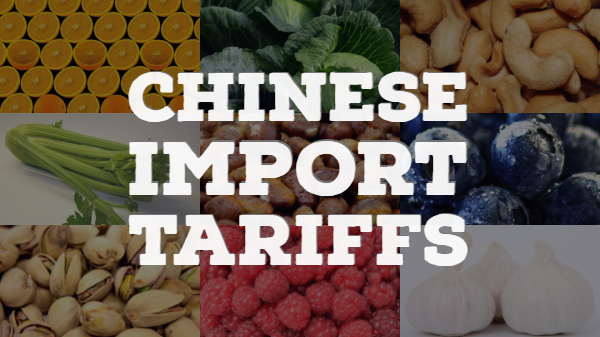
These fruits and nuts are in the list: almonds, apples, bananas, blueberries, cashews, chestnuts, clementines, coconuts, cranberries, dates, figs, grapes, guavas, hazelnuts, macadamia nuts, mandarins, oranges, peaches, pears, pecans, pineapples, pistachios, quinces, raisins, raspberries, strawberries, and walnuts.

According to the office of the U.S. Trade Representative, the U.S. imported $4.9 billion in agriculture products in 2018. The leading categories were processed fruits and vegetables ($1.2 billion), fruit and vegetable juices ($393 million), snack foods ($222 million), spices ($167 million), and fresh vegetables ($160 million).

By Blue Book Service

Trade war escalates: US to further tax Chinese products

Yesterday, China announced that it will impose tariffs on US$60 billion of US goods from June 1. US officials now have earmarked 3,805 products, worth $300bn, from laptop computers to tuna and garlic, as possible elements in the latest episode of the US China trade dispute. The list of goods was published after Beijing said it was preparing to impose duties of up to 25% on $60 bln of US imports.

Trade tensions have been simmering between Washington and Beijing since last summer – with US claims that China steals technology  at the heart of the dispute. Last Friday the US carried out a threat made by president Trump to raise tariffs on $200bn of Chinese imports from 10% to 25%.

Meanwhile in Florida, it is becoming clear that the escalating trade war could hurt local blueberry farmers. Florida blueberry growers are hoping to get a boost from China, but the growing tariffs could threaten new business deals.

A delegation from China toured blueberry farms and packing facilities in the Gainesville and Orlando areas in April. It was a visit seven years in the making, with the US on the verge of a deal to export blueberries to China.

“Florida is on the verge of exporting blueberries, one of our state’s top crops, to China – but these new tariffs threaten that trade opportunity. Tariffs not only make American exports less competitive, they make American families pay higher prices. If president Trump is serious about putting America first, he should start by putting Florida farmers first – not by inciting trade wars with China,” stated Agriculture Commissioner Nikki Fried.

Washington state
Growers in Washington’s Yakima Valley are caught in the middle as well. Scott McIlrath has been growing fruits and vegetables here in the Yakima Valley for more than 40 years. He was selling about 70 percent of his produce across the world, and now for the first time ever, that’s dropped down to 15 percent.

That’s because the tariff trade war is causing many local growers to lose out on selling to international markets because of how high the tax is. McIlrath says certain apples like red delicious have driven down so low in price, he had cut them out to stay competitive.

“I chose to fight back and I’m doing it by taking out a lot of our export apples and converting over to apples that can be sold domestically,” said McIlrath.

“Impact on US agriculture difficult to predict”  
Although the $60 billion of retaliatory tariffs China announced Monday includes a long list of foods produced in the United States, industry experts say the impact on US agriculture is difficult to predict because many of the most damaging agricultural tariffs are already in place.

Thai government considers impact on exports
Abroad, the trade war has also reached Thailand. The government is reacting quickly to perceived threats to the Thai export business by the ongoing trade wars.

There is serious concern in Thai government circles that the deepening of the trade war between the world’s two biggest economies will seriously disrupt the global economy and impact Thai exports.

Pound Sterling strong vs Chinese Yuan 
This Monday, the pound Sterling retraced some of its gains versus the Yuan. Into Tuesday, Sterling was last seen trading at ¥8.9104.

US-China trade remained the key market focus with comments on Monday helping to partially allay market fears of further escalation. For one, President Trump said he would meet with his Chinese counterpart, Chinese Premier Xi Jinping at the upcoming G20 summit in Japan and also that he expects continued trade-negotiations in Beijing to be “very successful.”

The Chinese Yuan continued to be the primary casualty in the FX sphere with the Pound Sterling to CNY exchange rate reaching a six-month best – last seen at ¥8.9582 – up over 1% from last week’s close heading into the latter half of Monday’s European session.

By Fresh Plaza

Rains threaten California Valley crops

The amount of incoming rain from the next Weather Maker, this late in the year, has the potential to damage crops in California’s Central Valley. The rain is set to start Wednesday night and impact the valley through Thursday. Meteorologists expect at least an inch of rain on the valley floor and two inches in the foothills.

“Rain that falls on the ground right now isn’t going to do much to irrigate our crops and it isn’t going to do much to help us fight any of those fungus problems,” said John Chandler, a valley farmer. In fact, it could very well worsen those problems.

Chandler says the rain is going to splash around water which will spread spores for mildew. It’ll also bring more moisture to the air, and that paired with warm Spring temperatures could create a breeding ground for that mildew. “Once they start growing, it just grows very quickly and can do a lot of damage by destroying the flowers or later in the year destroy the fruit.”

Mildew is already attracted to sugar, so fruits beginning to ripen are very much at risk. But much younger peach fruit should be in the clear. “Because they’re so green, they’re pretty sour, there’s not a lot of opportunity for that rain to cause mildew in this environment,” said Chandler.

Unfortunately, young or old won’t make a difference when it comes to other crops like raisin grapes. “Those vines can be susceptible to powdery mildew and that can grow on the vine and on the bunches of grapes that are still even on when they’re juvenile start spreading the spores around,” said Chandler.

There is something farmers do to prepare for this kind of rain event, they use sulfur to increase the acidity around the crop. “And it creates a very hostile environment for the fungus and mildew so it just won’t grow and it’s a very natural process by putting the mildew out there,” said Chandler.

But of course, the best-case scenario for healthy fruit is keeping the heavy rain for the winter. “What we really like to see is that rain in the winter and the early spring that can turn into snow and we save it so we can use it all through the summer,” said Chandler.

By Fresh Plaza

Weather Report – May 14, 2019 – Rain Storms coming

GET READY FOR CHERRY PRICES TO SKYROCKET

Two major storms and colder temperatures are lining up to hit San Joaquin Valley growing regions that have the possibility to take out the cherry crop and cause serious damage to the stonefruit crop.

Starting Wednesday night into Thursday, a storm is anticipated to hit all growing regions up and down the SJ Valley dropping between .5” to 1” of rain over the two-day period. There is a second storm scheduled to hit this Sunday with up to 1” of rain and a third storm potentially for next Tuesday, May 21. Along with the rain will come cooler temperatures starting Wednesday with highs only in the low 70°s (with some isolated 60°s) and minimums in the low 50°s for the next 10 days. Although this weather is not unprecedented for this time of year, it is extremely unusual.

Tony Taviano from B&B Imports in Fresno said these storms have the potential to wipe out a large part of the Bing cherry crop and might cause shippers to call for an “act of god” on contracts. Furthermore, Tony said this weather may sow the seeds for a challenging summer marketing season of stonefruit and potential ramifications that extend into the fall for table grapes.

Stonefruit, as we mentioned last week, can experience issues with staining from rain and possible hail damage. We wish only the best for the growers who have their crops in peril and their investments on the line, but we need to make everyone aware of the possibilities.

WET VEG AND STRAWBERRIES ALSO TO BE AFFECTED

 Storms brewing in the Pacific may affect harvest of strawberry crops and lettuces. The same storms hitting the SJ Valley will also hit the coastal California growing regions of Salinas, Santa Maria, and Oxnard causing definite harvest issues. As of right now, Salinas is expected to receive approximately 1” this Wednesday and Thursday. The second storm on Saturday and Sunday may bring up to .5” and next Tuesday has the potential of .25” of rain. There, rains could affect the harvest of strawberry crops and lettuces.

DESERT REGIONS WILL NOT SEE ANY RAIN

Desert regions are not expected to see any rain from these storms, but they will experience cooler temperatures with maximum temperatures in the 80°s and minimum temperatures in the low 60°s over the next 10 days.

by Weathermelon

OVERVIEW GLOBAL STRAWBERRY MARKET

If there’s one word that currently applies to the strawberry market, it is “recovery.” There was an early start of the season which was not in line with the demand for strawberries, so the situation was dramatic. But with Mother’s Day around the corner, and then the summer, the demand will pick up in the coming weeks. The prospect is that prices will rise because the demand is higher than the supply. The volumes of open ground strawberries are smaller than last year’s. This is due to adverse weather conditions which have either damaged the harvest or are currently delaying the ripening process.

The Netherlands: Extremely cheap strawberries in early May
“Never seen before; extremely cheap.” Dutch fruit traders were short of words to describe the poor conditions of the strawberry market in early May. A combination of an early arrival of the Dutch and Belgian greenhouse productions and a delay in the Spanish season led to an oversupply on the market. Moreover, a number of large retailers still had Spanish strawberries on the shelves in week 16, while the Dutch supply was already on the market. The situation was especially tough for greenhouse growers, who were paid between 1.50 and 2.50 Euro per kilo for their strawberries. The good thing is that the market situation can only improve from now on. Also, celebrations like Mother’s Day traditionally give strawberry sales a boost.

Belgium: Strawberry prices on the rise
Strawberry prices are currently slightly higher than they were in recent weeks and they are expected to pick up a bit, as exports are starting to get off the ground. We’ll have to wait and see what happens when the production from tunnels arrives at the end of this week, but the demand from abroad is expected to increase slightly. The situation on the strawberry market is completely different than last year. At the start of the season, prices were much too low for the most expensive strawberries, the ones grown under glass. The size of the strawberries has been sharply reduced because it was too hot a few weeks ago and the plants could not handle it.

Germany: More and more domestic production on the market
Dutch, Belgian and German strawberries dominate the German wholesaler market. The good product quality and the excellent weather in Germany are good for the demand. In the meantime, Italian, Greek and Spanish strawberries are quickly disappearing from the shelves, although the price stands generally well below that for the Western European supply. In most places, the pricing was satisfactory, although the price per 500 grams has fallen below 0.60 Euro in some places.

For the time being, the domestic production comes mainly from greenhouses, although the first open ground strawberries have already hit the market in southern Germany. In northern Germany, according to the current forecast, it will take until Pentecost for the first open ground strawberries to arrive.

France: Stable market for the domestic production
The French strawberry season has been in full swing for more than a month. The well-known Gariguette has been on the market for a few weeks, and other premium varieties, such as the Charlotte and the Ciflorette, are now available on the shelves. A trader says that the market is in balance. “The quality and quantity of the products are good. The demand remains somewhat low due to the bad weather conditions in the west. As soon as it gets warmer, the demand will rise. Prices are stable. They are not very high, but current prices are attractive enough for consumers and are also high enough for growers to make a decent profit.”

The French premium varieties are mainly purchased by retailers and the hospitality industry. Supermarkets are still offering a lot of Spanish strawberries. On Rungis, the price for the French Gariguette stands at around € 6.50 per 250 grams. Spanish strawberries are sold for € 2.70 per kilo. Prices for standard French strawberries oscillate between € 5.50 and € 7.50 per 500 grams.

Italy: Growers satisfied with prices
Although the conditions in the Italian strawberry market this year are modest and more susceptible to fluctuations, things are generally not too bad.

At the beginning of May, the best strawberries were sold for between € 2.30 and € 3 per kilo, despite the low temperatures in the country. The end of the campaign is approaching in southern Italy, while in the northern regions the season has kicked off with good volumes. The quality of the strawberries is good.

The demand for strawberries has recently grown in both Italy and abroad. The demand is much greater than the supply. This is also due to the weather conditions, which have caused the production around Naples to currently be 40% smaller than 15 days ago. The growers hope that this will lead to further price increases, especially in view of the demand in Germany.

With Mother’s Day around the corner, the demand for strawberries will rise not only in Italy. Therefore, the doors are open for exports on the European market. There are no longer Spanish imports, and the first French and German strawberries are starting to hit the market. However, the temperatures are cold and this isn’t good for the fruit’s ripening.”

Spain: Large volumes going to the processing industry
Spanish strawberry exports will be stopping this month, as the Netherlands, Great Britain, Germany and Belgium have enough stocks to cover the needs of their own markets. Prices are currently higher compared to last year, but the harvesting costs have also risen, so the profit has remained the same for growers.

As a result of mild temperatures and rain, the volume available during Easter has been limited. Due to the holidays, the market ground to a halt at the peak moment, causing strawberry prices to fall in Spain. However, due to rainfall, the quality was not optimal and large volumes went to the processing industry. The new Rociera variety suffered the most quality issues.

Greece: Difficult season, but recovery at Easter
The Greek strawberry season will continue for a few weeks. The weather conditions have recently caused some problems, so the production and prices have been lower. Fortunately, Easter has facilitated a slight recovery in the market.

The weather has played a major role this season. The start of the Greek season went badly due to frost and rain, and the production volume fell. The prices of strawberries also remained lower than expected during the season.

Exports to the Asian market have grown, especially those going to Singapore and Malaysia. Yet Greek strawberries have to deal with fierce competition outside Europe; in Asia, from the dominant South Korean strawberries; in the Gulf States, mainly from Egyptian and Moroccan products.

The European market, however, was good for the Greeks. Eastern European countries in particular imported a large part of the harvest. There was, however, a major disappointment at the season’s peak, in March-April, as the Russians temporarily closed their borders.

Given the course of the season, the Greeks may reduce the acreage for the following season if they are unable to find alternative markets.

China: Quality improved
The greenhouse season started in November and is coming to an end this month. Shandong-grown strawberries are currently on the shelves. The price is somewhat higher in the beginning of the season, because there is not yet much on the market and the quality is still very high.

In China, a lot of strawberries are also frozen, sold and exported. Until a few years ago, the norovirus was detected a few times in frozen strawberries; however, much stricter controls have been enforced ever since, and companies themselves have taken steps to combat this virus. As a result, there have been almost no more norovirus cases and the demand is high. The price of frozen strawberries depends on the market price. Right now, the price is still high and the demand is somewhat lower. Buyers generally wait until the price has dropped a bit and the strawberry season is well underway.

Japan: Exclusive product
In the same way that strawberries were once brought from America to Europe, the product has also been extremely successful in Japan. Strawberries were introduced there in the 20th century, becoming much sweeter and more expensive than it’s usually the case for a totally new product: the Ichigo.

Since then, many different varieties have appeared on the market, and they are sold at high prices. This is in line with other types of fruit on the Japanese market, which are perceived as a luxury product, similar to champagne or bonbons. The time, effort and technology put into the strawberries justify the high price for this product. The Japanese strawberry season takes place around Christmas, when the demand is high.

Australia: Varying prospects
The season in Queensland will begin in the coming weeks. The prospects vary among growers. One grower expects a high yield, while another says that the quality of his plants is deteriorating. This is due to the plants to be cultivated being shipped from Victoria and South Queensland, where they had a difficult summer; however, the market conditions could cause prices to rise. Due to the lower volumes, prices may go up in the coming season. Last year, needle pieces were found in strawberries in Australia in the processing industry.

At the end of June 2018, 93,545 tons of strawberries had been produced in Australia, with a total value of $ 445 million. Exports increased by 11%. The domestic market accounted for 72% of the fresh strawberry sales.

New Zealand: Commodity Levy for strawberries
Recently, a proposal has been made to introduce a Commodity Levy for strawberries. This would allow the sector to become stronger in the fields of research, export, safety and cooperation with other authorities.

Mexico: Good export prices for strawberries.
The Mexican season in the state of Michoacán ended well due to the rising prices in the final stage. The export price for 4 kilo boxes stood between 180 and 400 pesos. This is an increase of 100% compared to the previous campaign. Bad weather conditions have resulted in a lower yield, while prices in the US have been rising.

The rising price of strawberries is beneficial for growers and is a reason to continue growing the fruit in the following season. Thus, Mexico will likely remain the most important area, as far as strawberry production is concerned. In the Zamora Valley, we still have to wait and see whether the changing climate conditions will take a toll on the acreage.

United States: A challenging year
It seems that the 2019 season in California looks a lot like the previous one. “Most of the strawberry supply comes from the southern districts, mainly Oxnard (the largest producer) and Santa Maria (close behind it). The production is also ready in Watsonville-Salinas,” said a US trader from California.

Oxnard will continue to produce until the end of May. “It’s going to be a bit of a challenge, since the fruit from Oxnard is not as strong as in Santa-Maria and Watsonville. We therefore cannot assume that production will continue until May. It will depend a lot on the demand.”

In general, the strawberry production is falling sharply. “At the moment, Oxnard has around 4,500 tons less than last year. In the other regions, the total volume is approximately 6,800 tons smaller than last year. However, the production really gets going in the last month, and Oxnard currently has more strawberries than at this same time last year.”

The season in California lasts until October, after which Mexico takes the market over. Florida follows in December.

Stable demand
At the moment, the demand is stable, but with Mother’s Day approaching, it is expected to increase. The demand for strawberries also usually grows in the following holidays, although not as strongly as during the first ones of the year: Valentine’s Day, Easter and Mother’s Day. During the summer holidays, strawberries face competition from other summer fruits, such as watermelons and stone fruit. “I expect the demand to develop in the same way as last year.”

This means that prices will fall somewhat. “We had strong prices during the winter, lasting until about last week, but prices are still fairly high. I think the rest of the season will be similar to last year’s, and that makes it challenging. Last year, we had a relatively weak market during the summer. Now that there are enough stocks coming from California and prices are starting to fall, I don’t see how things can improve again.”

by Fresh Plaza

close
Loading…