Lemon Market In “Dire Straits” While Orange Demand In Europe Improves

Citrus farmers dump fruit as freight and landside costs bite hard

FreshPlaza has seen a video of tonnes of citrus – apparently oranges, lemons, soft citrus – of marginal counts, dumped away from orchards at a designated site between Addo and Uitenhage in the Eastern Cape.

Above: still from the video where various producers are dumping class 2 and juicing fruit

Lemon juice processors in the Eastern Cape stopped intakes a few weeks ago and it could be, a packhouse manager proposes, that the fruit is dumped to be able to re-use the bins to continue harvesting.

Blame lies with “mad” freight costs
“We pay our lemon growers around a R1,000 [59 euros] per tonne less as a direct result of high freight costs this season,” an Eastern Cape exporter says. He remarks that shipping lines’ “mad” prices have directly led to the dumping and to the suspension of class 2 exports this season.

“These days our average freight costs run to between R25 million [1.47 million euros] to R40 million [2.36 million euros] a week,” he adds. There are many complaints about the high freight costs to specifically Canada.

Demand for oranges in Europe is slightly better since there’s been a significant reduction in exports as a result of initial uncertainty. Meanwhile, for South African oranges to Europe the duty cut off date is 15 October and growers have around two weeks left to load oranges. Exports started slowly given the uncertainty around the cold protocol and there are large amounts of Valencias (and late mandarins) to be packed for Europe in the next two weeks.

Class 2 exports made impossible by logistics costs

The lemon market is in “dire straits”, exporters say. Class 2 lemons exported to Middle East at the moment don’t even cover packing costs, notes an exporter. “It’s not worthwhile packing lemons for the Middle East at the moment.”

“World markets are destroyed. Maybe 20% of the industry will end above breakeven cost,” maintains an exporter.

“The demand in the Northern Hemisphere as a result of rising fuel prices and the inflation rate means the consumer buys flour or bread, instead of soft citrus.”

While demand is weak, South African citrus volumes keep rising after years of widespread and much-heralded expansion. There have, however, been qualms within the industry about the impact of these surging volumes on markets and pricing levels.

From Fresh Plaza

“Things Look Good For Dutch Onions, Thanks To Global Onion Shortage”

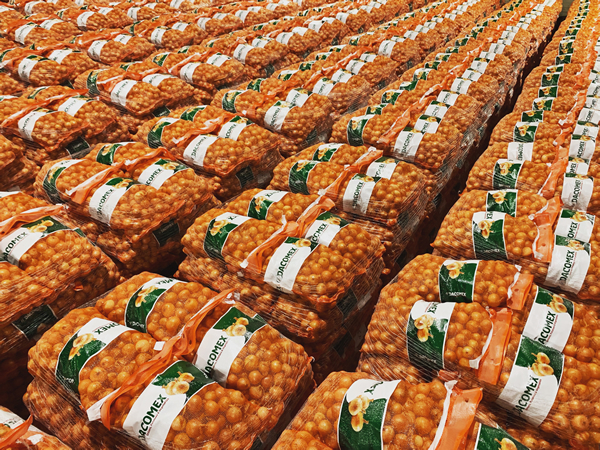
The Dutch onion season is off to a promising start. “As soon as the harvest was available, there was demand. We’re already getting requests from the craziest destinations and even have to hold off customers. Otherwise, we’ll run out of product in no time. So, it’s a matter of staying focused on the clients you supply,” says Maarten van Damme of Dacomex.

“There’s a global onion shortage. Southern Europe has had one heat wave after another, and Senegal opened almost five weeks earlier. That says it all. Morocco is currently still supplying onions to African countries, but that will come to an end in a few weeks. We’re already getting demand from destinations that usually only approach us in the spring. I, therefore, see no reason for demand to stagnate.”

“Growers also notice this and are aiming high, which is a good thing. They’ve had to grow onions at almost cost price for the last three years. It’s good that they’re earning a good living. Otherwise, they’d all be growing wheat. Hopefully, it will be a good year for everyone. The quality is also better than last year, when there was more bacterial pressure, especially in the onion sets. But, there are some random fusarium infections,” says Maarten.

“At present, the bale price is around €0.30; something I don’t see falling immediately. More supply is coming off-land, but there are shortages everywhere.” Maarten is not worried that too-high prices will deter customers from buying onions. “I was a few weeks ago, but demand has only increased. Although in some African destinations, onions might become too expensive.”

“Yet, there are no alternatives. China is sometimes mentioned, but it’s not 2018, and container rates are very different. That’s why I don’t consider China true competition. There are generally many more signals on green than red. There are more containers available, but availability is still an issue. Certainly, to Africa, the rates remain steep. To the Far East, there’s a bit more competition among the shipping companies, and those rates have cooled down a bit,” Maarten concludes.

From Fresh Plaza

Concerns In The Fresh Produce Sector On Felixstowe Strike, Possible Disruption In Coming Days.

An 8 day strike at the port of Felixstowe which started 21st August by over 1,900 port workers is expected to affect supply chains throughout Europe. The port handles 48% of the UK’s container trade. The port has a deep sea service for vessels from around the world which bring a wide variety of products including fresh produce and also RO-RO service which has around 15 sailings a week and is a key link to Rotterdam and Europe where a lot of the UK’s fresh produce comes in. 

“The strike will severely disrupt trade, delay vessels and force re-routes”, according to global information technology company, IQAX, which published data about the currently affected container ships.

“About 30% of our business is at Felixstowe, so it’s going to have a huge impact,” Paul Day, managing director of haulage company Turners of Soham told the BBC.

The Cambridgeshire company moves about 500 containers out of the port every day.

“We might be able to keep operating for two or three days but I can’t see how we’ll be able to after that,” he says.

“It will cost us a stack of money, but all I can do is optimise what we can do and try to minimise the damage – but the damage is coming.”

Nigel Jenny said Felixstowe doesn’t handle as much fresh produce as Dover or the Channel Tunnel but is still a key link to Rotterdam and Europe.

“What is on the vessels is irrelevant, customers must be able to get access to their goods, if these are re-directed it will put put stress on other ports. It is a bit early to see what the consequences will be, but we have every confidence that the ports will support their customers. Our greatest concern is that if ports have to extend the operating hours to accommodate more shipments that government officials may not do the same. Goods can’t be unloaded if there are not customs officials operating.

“We have been negotiating for significantly less inspections on goods which should be having an impact. We understand that checks must take place but officials have to recognise that fresh goods cannot be held in port as long as other non-perishables goods and act accordingly. It is important that exports can have confidence when exporting the UK.”

Mark Wright, Senior Commercial Manager at Davis Worldwide said that they import most of their produce through London Gateway and are not seeing any problem at the port yet.

Ben Goodchild from Nationwide Produce said that they have not seen any delays in produce via Holland as yet, but this may change in the coming days. “We use Daily Fresh to bring in produce via Holland and they said they could reduced services from 3 to just 1 sailing per day via Felixstowe, but will increase the use of Harwich.”

The strike will certainly have consequences for the Dutch fruit and vegetable sector, a spokesperson for GroentenFruit Huis said. “Ferries from Vlaardingen have Felixstowe as their destination. Companies will now try to use alternatives such as Harwich, Dover or the Eurotunnel. They must therefore jointly absorb the volume that cannot be transported via Felixstowe. The question is whether the capacity will then be sufficient.”

From Fresh Plaza

Stronger Export Demand For California Grapes

While demand for grapes feels similar to last year at this time, export demand feels particularly good. “I do feel like we have more export demand than last year which is encouraging,” says Jared Lane of Grapeman Farms. “Export demand completely fell off during COVID and now it feels like we have a little bit more.”

Following last year’s logistics issues, has shipping overseas gotten any easier again? “They have added more boats and there’s more room on the boats. But they’re just not as frequent–so maybe not available every week but every three weeks. That’s a little challenging,” says Lane.

Interestingly, consumer trends are also developing within domestic demand. “With inflation, people need more money and things they would cut out are luxury items. They buy whatever fruit’s on sale. It’s becoming more and more that fruit moves when it’s on sale and very stagnant off-sale,” says Lane.

Varietal development
That said, this year’s crop of grapes from California looks robust through to the first of the year with some varieties setting slightly heavier than others. “A lot of the older varieties were taken out due to low productivity,” says Lane, who notes that the newer, younger fields are more heavyset. Grapeman Farms has some new high-flavor varieties that are producing well including the red grape Jack Salutes and the Great Green, a mid-season green grape.

Harvest is well underway and ramping up throughout the next two to three weeks when peak supplies are anticipated to arrive and stay at those peak levels until October. “Stone fruit is starting to finish as are other crops so we’re hoping we can get a good push for the next couple of months. Then we’ll go into our storage program in November and December,” says Lane.

From Fresh Plaza

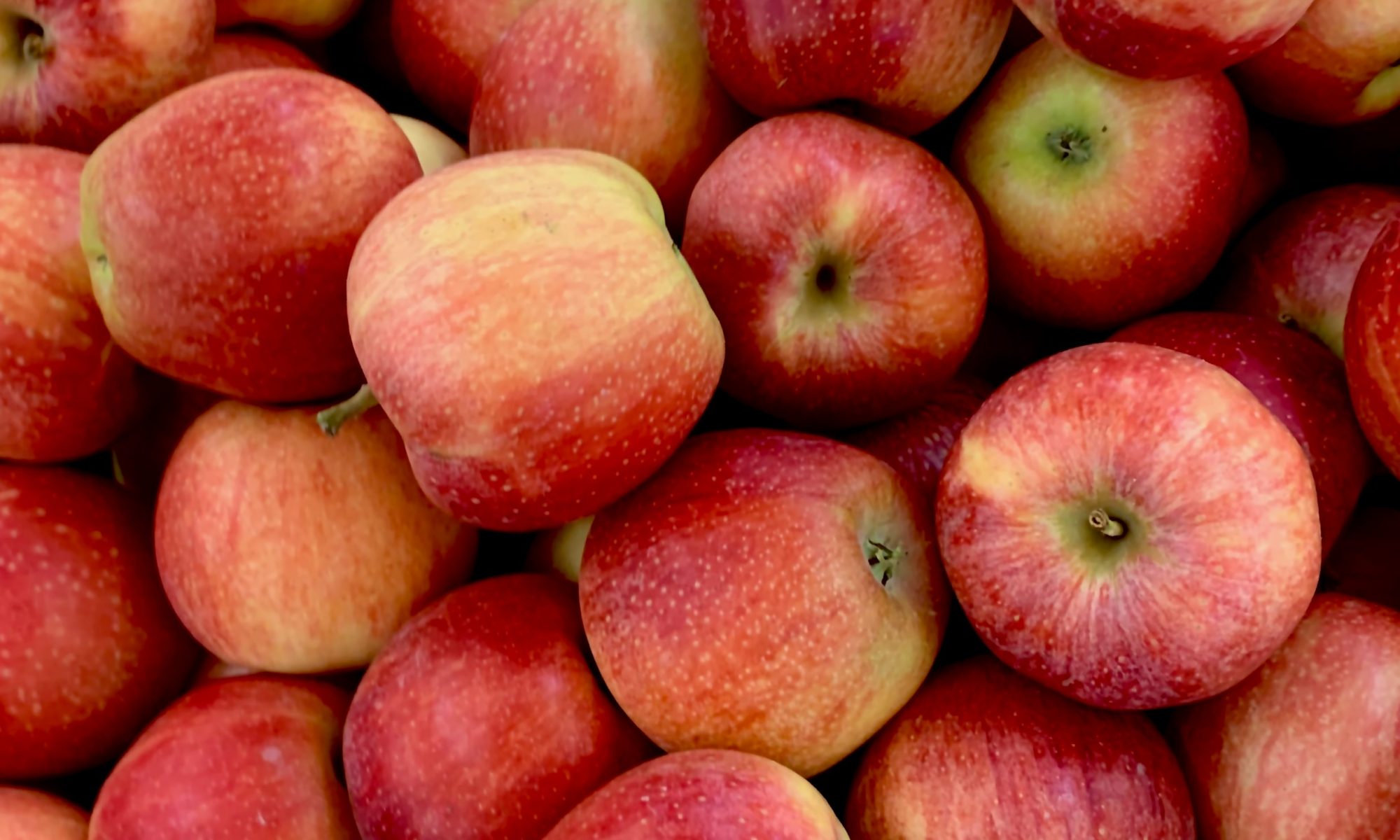
U.S. Apple Analysis Of USDA Data Reveals A Slightly Larger Apple Crop

The U.S. apple crop for 2022 is projected at 10.7 billion pounds or 255 million bushels, 2.7% higher compared with last year’s production, but 3.5% less than the five-year average.

Those are the numbers from a U.S. Apple Association analysis of USDA data, according to a news release.

U.S. Apple’s report on the apple industry outlook was authored by Chris Gerlach, U.S. Apple director of industry analytics. The group also unveiled “Newton,” an industry database and dashboard that provides a one-stop-shop for apple-related statistics.

 Gerlach noted that these figures are more comprehensive than USDA data, which only look at the top seven apple-producing states. “We’ve analyzed the production from states outside of the top seven and added that back to USDA’s figure,” Gerlach said in the release.

Varieties 

At the varietal level, U.S. Apple said gala is expected to retain the top spot, with almost 46 million bushels produced, accounting for around 18% of the U.S. apple market. Rounding out the top five are red delicious (34 million bushels), fuji (26 million bushels), Honeycrisp (25 million bushels) and granny smith (24 million bushels).

In general, the varieties on the rise include Honeycrisp, Pink Lady/cripps pink and Cosmic Crisp, according to the release. Fuji, granny smith and rome varieties have remained relatively consistent compared to 2017-2018 production volumes. Varieties on the decline include golden delicious, gala and red delicious, according to the release.

“On the positive side, Honeycrisp production has increased by 48%, or 8 million bushels, in the past five years,” Gerlach said in the release. “Conversely, red delicious decreased by 41%, or 24 million bushels, during the same period.”


Trade
 
The U.S. still retains a healthy positive trade balance for apples, according to the release.

 In the 2021-2022 July to June period, the U.S. exported more than 38.5 million bushels of fresh apples, while only importing around 6.3 million bushels. 

“On a year-over-year basis, the balance of trade has declined with respect to both quantity and value,” Gerlach said in the release.

“On the quantity side, imports have increased by 20% over 2020-2021 calendar year levels, while exports have declined. On the value side, exports have increased marginally, but imports are up almost 30%. This means that, in the 2021-2022 [calendar year], the U.S. was bringing in a greater amount of more-expensive fruit and sending out a smaller amount of slightly more-expensive fresh apples.”


Newton Database
 
Gerlach also introduced the Newton Database & Dashboard. Several years in the making, Newton is a one-stop shop for apple-related statistics. Newton gives users the ability to view preset reports or create custom queries for download. Newton’s dashboard also keeps users up to date on the latest trends in apple prices and trade, according to the release.


 “We are extremely excited to launch this unique U.S. Apple member benefit,” Gerlach said in the release. “Newton consolidates data from U.S. Apple and multiple USDA sources into one place, giving users up-to-date information on apple production, utilization, trade, prices, storages, movement, economic impacts and more.”

From The Packer

Production Dip For Washington Apples

The Washington State Tree Fruit Association’s (WSTFA) 2022 apple forecast has projected a packout of 108.7m cartons (18kg).

If the estimate holds true, it would be an 11 per cent decrease from the 122.3m cartons packed in 2021.

“We are pleased with the size of the harvest, particularly in the face of a long, cold spring,” said Jon DeVaney, WSTFA president.

“Growing seasons are never the same, and currently many WSTFA members are still evaluating the impact of prolonged cold weather and ongoing crop development. Weather is always a factor, and some varieties still have several months of growth ahead.

“However, our members are to be congratulated for once again managing this uncertainty to deliver a strong harvest for the benefit of our state, country, and ultimately the world.”

The WSTFA estimate shows that five varieties make up the majority of the Washington crop.

Gala leads production at 20 per cent, followed by Red Delicious and Honeycrisp at 14 per cent. Granny Smith makes up 13.4 per cent, while Fuji is at 12.7 per cent.

Cosmic Crisp is predicted to make up 4.6 per cent of the harvest, up from 3.2 per cent last year.

DeVaney said proprietary varieties like Cosmic Crisp continue to grow their share of the overall crop, reflecting increased consumer preference.

“The strong harvest estimate for these varieties, which have been popular with domestic and international consumers, is good news,” said DeVaney. “Apples are synonymous with Washington state, and our members are set to deliver another year of high-quality and delicious fruit.”

Washington also leads the US in the production of organic apples, making up over 90 per cent of the country’s output. The organic forecast for 2022, is 14.4m cartons, or 13 per cent of the total harvest.

The WSTFA estimate is based on a survey of its members and represents the best forecast of the total volume of apples that will eventually be packed and sold on the fresh market, excluding product sent to processors.

From Fruitnet

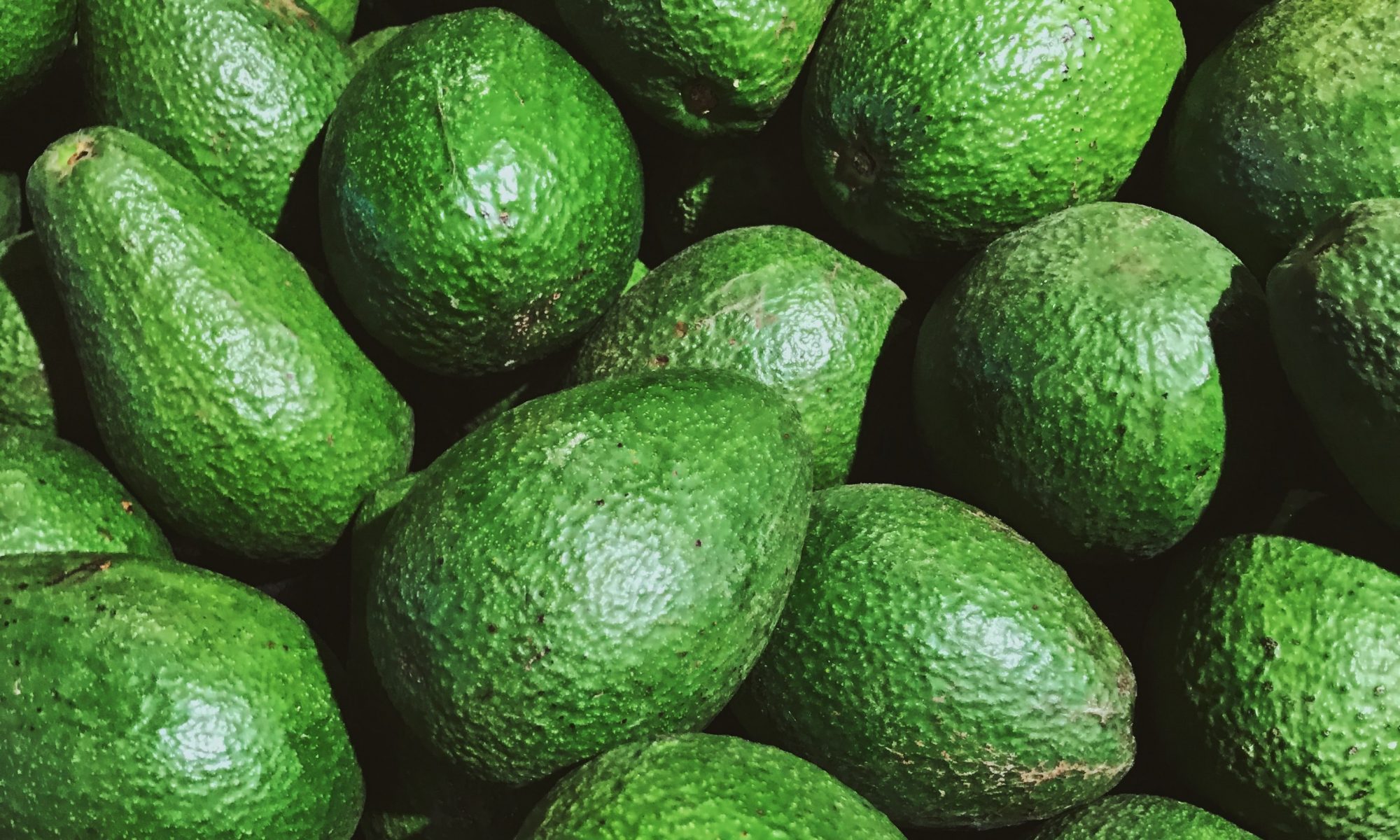
“Peru Will Have 42 – 45,000 Hectares Of Avocado At The End Of 2022”

Peru’s avocado production’s growing trend continues year after year thanks to the constant increase in growing areas in the country. Peru has gone from having 18,718 hectares of avocado in 2017 to 38,242 hectares in 2021, and expectations are that it will have 42,000 to 45,000 hectares of avocado for export by the end of 2022, stated the president of the Inform@cción consulting firm, Fernando Cilloniz Benavides.

La Libertad leads the area in the country and went from having 7,871 hectares devoted to avocado in 2017 to 12,826 hectares in 2021. It is followed by Lambayeque, which went from having 2,382 hectares in 2017 to 7,538 hectares in 2021. Lima ranked third and went from 3,268 hectares in 2017 to 5,635 hectares in 2021.

It is followed by Ica, which went from 3,209 hectares in 2017 to 5,428 hectares in 2021; Ancash, with 559 hectares in 2017 and 2,593 hectares in 2021; Ayacucho, with 108 hectares in 2017 and 1,189 hectares in 2021; Arequipa, with 644 hectares in 2017 and 804 hectares in 2021; and Huancavelica, with 83 hectares in 2017 and 544 hectares in 2021.

The president of Inform@cción stressed that the Hass variety is the most produced variety in the country, accounting for 94.2% of all the avocado plants, followed by the Fuerte, Zutano, Etinger, and Maluma varieties, among others. The area of Hass avocado in Peru increased from 18,482 hectares in 2017 to 36,038 hectares in 2021.

It is followed by the Fuerte variety, which went from 144 hectares in 2017 to 959 hectares in 2021; the Zutano avocado, which increased from 47 hectares in 2017 to 71 hectares in 2018, 122 hectares in 2019, 159 hectares in 2020, and 465 hectares in 2021.

The Etinger variety went from 25 hectares in 2017 to 337 hectares in 2021, and the Maluma variety went from 2 hectares in 2017 to 275 hectares in 2021; among others.

From Fresh Plaza

Tentative Agreement Reached Between PMA And ILWU On Health Benefits

The International Longshore and Warehouse Union (ILWU) and the Pacific Maritime Association (PMA) announced that they have reached a tentative agreement on health benefits terms, subject to agreement on the other issues in the negotiations.

It should be noted that the maintenance of health benefits (MOB) is an important part of the contract negotiated between the employers represented by the PMA and the workers represented by the ILWU.

The contract, which is still being negotiated, covers more than 22,000 longshore workers at 29 US West Coast ports.

The previous agreement expired on the first day of July.

Talks started on May 10 and are continuing on other issues.

The terms of this tentative agreement will not be discussed as negotiations continue.

From Container News

Southern Hemisphere Table Grapes Achieve New Export Record

In the 2021-22 table grape season, countries in the Southern Hemisphere achieved a new export record of 1.5 million tons, an increase of 0.3 million tons in a decade.

Of the total Southern table grape exports, 40 percent were from Chile, 35 percent from Peru, 23 percent from South Africa and 4 percent from Brazil, according to a report by TopInfo.

Chile

This season Chile managed to recover from a sharp decline in 2020-21 thanks to better weather and new plantations which entered into production. Exports stood at 600,000 tons, which although far from its glory years when exports reached 800,000 tons, is similar to 2019-20 numbers.

The trend towards red and patented varieties continues with 43 percent of grapes exported being red seedless. White grapes amounted to 24 percent of exports and black grapes, mainly seedless, 12 percent. Red Globe continues to contribute 20 percent of Chilean exports, being sent to Asia, Latin America and Europe.

Export destinations remain stable with just over half of the shipments going to North America, 22 percent to Asia, 16 percent to Europe and 7 percent to Latin America.

South Africa

On the other hand, South Africa has been recording steady progress in its table grape industry for years. Thanks to its 5 diverse growing regions and wide supply period, exports this year reached 350,000 tons for the first time, 50 percent more than 10 years ago.

Currently, two thirds of exports are made up of new varieties, with pink varieties such as, Scarlotta, Tawny, Sweet Celebration etc., dominating in particular. Patented pinks, along with the classic Crimson and Flame account for half of exports, white varieties, one third and black varieties, 15 percent.

South Africa continues to be heavily dependent on the European market, which received 76% of exports in 2021/22. Efforts are being made to diversify export destinations, particularly in Asia which received 12 percent of exports.

Peru

Unlike neighboring Chile, Peru’s export volumes have increased fivefold, jumping from 150,000 tons exported 10 years ago to 530,000 tons this season.

While 10 years ago 75 percent of Peru’s exports were Red Globe, in the last season it barely reached 24 percent of the total, being overtaken by new seedless varieties. Now, patented varieties account for half of the shipments, with Sweet Globe standing out. In contrast to Chile and South Africa, where patented rosés predominate, in Peru whites are most popular.

Moreover, there has been a strong shift towards the U.S., with 45 percent destined for North America this season compared to 26 percent in 2011. Europe reduced its share to around 25 percent, while Asia’s increased to around 15 percent.

Brazil

Brazil has been regaining exports with 63,000 tons being exported in 2021-22, a volume that doubles the low values reached between 2014-15 and 2016-17. Again, there has been an increasing move towards proprietary varieties. From the strong predominance of traditional whites, there is a shift to patented whites and rosés. 

Europe continues to be by far the main destination, although its dependence has decreased in recent years. In the last season Europe received 78 percent, 15 percent North America and 7 percent Latin America.

From Fresh Fruit Portal

Trucker Protests Shut Down Operations At Port Of Oakland

Trucker protests that started Monday, 18 July, over the implementation of AB5 law have shut down operations at shipping terminals at the Port of Oakland. The shutdown is expected to further exacerbate the container congestion at the West Coast port, with port officials highlighting the need for terminal operations to resume.

“We understand the frustration expressed by the protestors at California ports,” said Danny Wan, executive director of the Port of Oakland. “But, prolonged stoppage of port operations in California for any reason will damage all the businesses operating at the ports and cause California ports to further suffer market share losses to competing ports.”

The trucker’s issue is the AB5 law. Truckers claim that the law makes it harder for companies to classify workers as independent contractors instead of employees, who are entitled to minimum wage and benefits such as workers’ compensation, overtime and sick pay.

A federal appeals court ruled that the law applies to about 70,000 truck drivers.

The California Trucking Association sued over the law, arguing that it could make it harder for independent drivers who own their own trucks and work their own hours to make a living by forcing them to be classified as employees.

AB5 is a state law adopted in 2018 that the courts have affirmed when the United States Supreme Court denied review of the law.

The Port of Oakland said that the State is now offering resources to help truckers comply with the law.

“Truckers are vital to keeping goods moving,” noted Wan, adding, “We trust that implementation of AB5 can be accomplished in a way that accommodates the needs of this vital part of the supply chain.”

From Container News

Port Of Oakland Urges Truckers To End AB5 Protest

Truckers gear up for fourth day of protests, bringing port operations to standstill

Port of Oakland officials are urging truckers to end their protest over AB5 as the independent contractors prepare to block the terminals for the fourth day on Thursday, bringing container movement at California’s third-largest port to a standstill.

Ahead of Thursday’s demonstration, the three main terminals at the port — Oakland International Container Terminal, also known as SSA, TraPac and Everport — closed operations for both shifts.

Truckers initially planned a three-day protest in Oakland but are digging in after receiving no response Wednesday from California Gov. Gavin Newsom, who signed AB5 — a controversial statute that seeks to limit the use of independent contractors and largely classify them as employee drivers — into law nearly three years ago. 

The protesters held signs directed at Newsom on Wednesday reading, “The cargo won’t flow until AB5 goes.” 

“Since the beginning of the trucker protests on Monday, port staff have been providing federal and state officials regular informational updates about the operational status of our port,” Roberto Bernardo, director of communications for the Port of Oakland, told FreightWaves in an email Thursday. 

In a statement late Wednesday, the port confirmed the trucker protests that started Monday over the implementation of AB5 “have effectively shut down operations at shipping terminals at the Port of Oakland.”

“We understand the frustration expressed by the protesters at California ports,” said Danny Wan, executive director of the Port of Oakland. “But prolonged stoppage of port operations in California for any reason will damage all the businesses operating at the ports and cause California ports to further suffer market-share losses to competing ports.” 

Legal challenges prevented the law from going into effect in January 2020. 

That all changed when the U.S. Supreme Court refused to hear the California Trucking Association’s challenge to AB5 in late June, returning the case to the 9th U.S. Circuit Court of Appeals. 

Truckers want Newsom and the California legislature to exempt independent contractors from AB5 as they have done for other industries, including lawyers, real estate agents and accountants. 

Proposition 22, which passed in November 2020, exempted app-based, ride-share companies Uber and Lyft from AB5.

Port truckers carried signs reading, “We demand an exemption now. We deserve respect for keeping the world economy and the USA rolling.”

Independent drivers contend clarification is needed about how AB5 will be enforced and how to ensure independent contractors comply with the law. 

Truckers have dug in for the fourth day of protesting California’s controversial independent contractor law that affects 70,000 drivers. (Photo: Clarissa Hawes/FreightWaves)

The independent contractor law not only affects California truckers but millions of freelance writers, translators, artists and consultants in the state. Many are supporting the truckers’ protest on social media, urging Newsom and the legislature to repeal AB5 or exempt them as well.  

Despite the three terminal closures at Oakland and port officials calling for an end to the AB5 protests, an estimated 800 truckers still plan to show up Thursday “to show they are not relenting.”

“The truckers want an exemption and they’re not stopping until they get it,” Kimberly Sulsar-Campos, vice president of Oakland-based Iraheta Bros. Trucking, told FreightWaves.

Late Wednesday, Bobby Olvera Jr., vice president of the International Longshore and Warehouse Union, issued a statement about its position on AB5. 

“The ILWU believes collective bargaining is fundamental to workplace fairness and safety, as well as a foundation of democratic society,” Olvera’s statement read. “That’s why we support AB5: It aims to stop employers from misclassifying workers in order to stop these workers from forming unions and improving their lives.”

Farless Dailey III, president of ILWU Local 10, also released a statement Wednesday addressing the incident at the SSA terminal after 100 members refused to cross the protest line as truckers showed up early to block the gates.

“The workers stood by on health and safety, as is permitted in our contract when conditions at the terminals present a risk,” Dailey said.

Nearly 22,000 ILWU dockworkers have been without a contract since July 1. FreightWaves interviewed some of them as they headed to their cars Tuesday.

“We are working without a contract right now, so we support the owner-operators and understand what they are trying to do,” said George, a nine-year ILWU member, who didn’t want to give his last name.

ILWU 10 covers San Francisco, Oakland and other Bay Area ports.

Wan said the state is now offering resources to help truckers comply with the law but didn’t provide any details.  

“Truckers are vital to keeping goods moving,” Wan said. “We trust that implementation of AB5 can be accomplished in a way that accommodates the needs of this vital part of the supply chain.” 

From FreightWaves

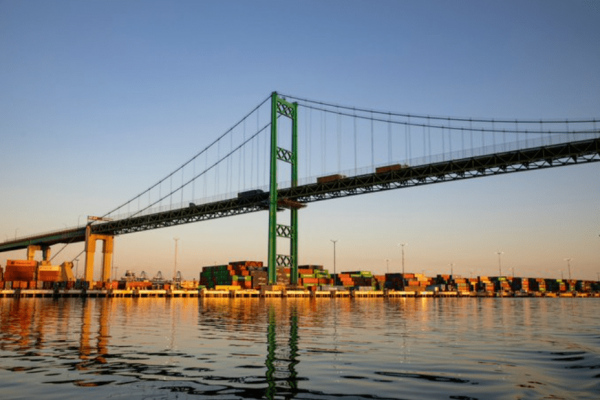
Port Of Los Angeles Surpasses 5.4 Million TEU In 2022 H1

The Port of Los Angeles (POLA) moved 876,611 TEU in June and by mid-2022 has handled more than 5.4 million TEU, matching last year’s record pace.

“Halfway through the year, we’ve been able to reduce the number of vessels waiting to berth by 75%, allowing dock workers to efficiently process more vessels,” said Port of Los Angeles executive director, Gene Seroka.

“We’re already beginning to handle back-to-school, fall fashion and year-end holiday goods. Despite inflation and higher-than-usual inventory, we expect cargo volume to remain robust in the second half of the year,” he added.

Loading imports in June 2022 reached 444,680 TEU, translating to a 5% decrease compared to the previous year’s same month, while loaded exports totalled 93,890 TEU, down 2.3% compared to June 2021. At the same time, empty containers reached 338,041 TEU, which corresponds to an increase of 8.1% compared to June 2021.

From Container News

GLOBAL MARKET OVERVIEW LIMES

Summertime on the northern hemisphere means summery drinks like mojitos and gin and tonic, but what do these two drinks also have in common? Limes of course! The exotic citrus is currently in high demand in Europe, but strict phytosanitary measures in the key origin country Brazil means the supply is lower than usual. This isn’t necessarily bad news however; lower supplies and high demand means attractive prices, and this is set to continue for some time. In North America the market is more balanced, while Colombia sees huge leaps in the sales of a special lime variety: the Tahitian lime.

Netherlands: Almost no limes stocks in Europe
“The market for limes has been excellent in the last few weeks! There are virtually no stocks in Europe and the weekly arrivals are sold immediately”, says a Dutch importer. “Due to the strict phytosanitary measures in Brazil, it is expected that the volumes will only decrease in the coming weeks, which will benefit the sales prices.”

Germany: Brazil is gaining ground year by year
The Mexican lime season is slowly getting underway. Until a few years ago, the first shipments arrived at the end of May, but nowadays Mexico starts exporting to Europe much later. “Mexico focuses first and foremost on the US, as the European market is very risky and volatile. Brazil, on the other hand, is gaining noticeable ground in Europe, not least because with the weak local market there is no attractive alternative.”

Currently, there is a ‘pleasant market dynamic’, with supply somewhat lower than demand, resulting in attractive prices. Over the long term, limes have become part of the standard retail range in Germany. In addition, there are still high volumes going to the hotel and catering industry.

France: Stable market for limes, Brazil main supplier
The lime market in France has been stable for several weeks. The prices are above the 11 euros per box oscillating between 12 and 15 euros. In general, it has been a few years since the exotic fruit was popularized in France, in particular thanks to the mojito, a cocktail widely consumed in summer. Despite high prices, the demand is good on the French market.

In terms of origin, Brazil is currently the main growing region on the market in France, with rather good quality products.

Italy: Lower supply expected due to Brazilian phytosanitary concerns
For limes, summer is the best season in Italy. The proof of this comes from a wholesaler who supplies tourist activities. “Consumption is high. Thanks to the high temperatures, many drinks are prepared on the beach and in bars. But, at the same time, sales in supermarkets and traditional shops have also increased. Wholesale prices in recent days have been between 2.50 and 3.50 EUR/kg. Currently, around 120 containers of limes are expected to arrive in Europe (mostly through the port of Rotterdam). The primary origin is Brazil. However, there is some concern that there will be a shortage of product in three weeks’ time. In fact, there have been stops in Brazil due to phytosanitary controls, so there will be fewer containers of product.”

According to another Italian wholesaler, after week 22 of 2022, there was no rush to buy limes, a product available for 12 months of the year. “After a period of more limited volumes, there is now no shortage of goods, but sales are slower. However, the prices of Brazilian and Mexican limes remain very high, also due to the increasing costs. Limes from Colombia are also present on the Italian markets, but in a more limited way. Prices are in the range of 12.50  euro per 4.5 kg crate in the case of the Brazilian product. The Mexican lime, in a 4 kg crate, reaches even higher levels. Three or four weeks ago, sales quotations were close to 16 euro. Now, depending on quality and origin, the range goes from 2.20 to 2.80-3.00 EUR/kg. For the past six weeks or so, we have been experiencing what I call a roller coaster phenomenon.”

The product arrives by sea to ports in Spain and the Netherlands. “For this year’s lime season there is one more factor to consider,” says the wholesaler. “In recent months, in both Spanish and Dutch ports, many containers of product have been destroyed – in greater quantities than in previous years – due to citrus bacterial cancer, which seriously affected citrus groves in Brazil. This meant that there was less product available on the market, and sales were always suffering. To add to this scenario, there were also ship delays. So, suddenly, lime prices shot up: from 7-8 to 16-17 EUR. Then gradually, there was a decline, down to the current quotations.”

The Mexican lime did not have the same problems in the first months of the year. “It was always more expensive than the Brazilian one and volumes were never abundant, as trade routes to the United States and Asia, markets that are much more profitable than Europe, were preferred,” the wholesaler points out.

Spain: Lime canker causes volatile market
The situation of limes for a few weeks is marked by a high demand in the European market in general, and in the Spanish market in particular. However, there is great instability, uncertainty and irregularity in the arrivals of limes to European ports, not only due to climatic conditions, serious logistical problems, strong cost increases derived from continuous increases in freight rates, transport at destination, dollar/euro parity…, but also due to a new factor that is causing a significant reduction in outgoing volumes from Brazil: canker. Canker is a disease recently detected in lime, and it is causing the destruction of fruit in European ports and in recent days, in the ports of Brazil as well, where strong sanitary controls and restrictions are being implemented for the export of fruit.  As a direct consequence, lime costs have skyrocketed at origin and in the coming weeks will really show to what extent the market and prices are affected.

North America: Stable season for limes in supply, quality, and demand
Supplies of limes are steady and ample enough to meet the demand. “There’s enough supply to where it’s not doing any detriment to a price point or to the market and it’s pretty much the same volume as previous years,” says one shipper.


Currently, the shipper is pulling limes from four locations in Mexico: Veracruz, Puebla, Jalisco and Michoacán, all of which it sources limes from at various points year-round.

As for quality and sizing, he says shippers can find pretty much almost anything out there. “To generate a premium product you have to put the effort in terms of repacking,” he says. “The quality that’s originally being put in the box is great and then once it arrives in the U.S., we still do a run on that fruit to get the quality fruit that generates the highest dollar in the market.” He adds that the product off the tree is good with consistent sizing and color.

Meanwhile demand for limes is also steady. “It seems like everyone wants the larger size on demand. Oftentimes if you have someone who wants to take your 175s and 150s, you have to use that to help move your 230s and 250s. It all balances itself out,” he says.

As for pricing, the shipper says it’s where it needs to be. “You don’t want it to be at a $30 premium. If you can maintain that lesser than $20 price, it’s the safest route to go,” he says, nothing that the higher lime markets such as a $60 market comes with the expectation of a high-quality lime. “If it’s not a perfect lime, that’s a risk,” he says. This pricing has also come down from just a few months ago where prices spiked in the marketplace. “Pricing did what we all hoped it would do and that is get back to a settling point which is where we’re at right now.”

Looking ahead, the shipper hopes for more of the same movement until just before school starts back up again, which tends to change consumer buying habits again. “So rather than buying in bulk or more sporadic buying in the summer, the restaurants will slow a bit and more retail will be driven again.” 

South America: A decade of growth in Tahiti lime exports in Colombia
The production and export of fresh fruit in Colombia has grown considerably in recent years, highlighting among them what is the most important citrus fruit for the country and which has established itself as the third most exported Colombian fresh fruit, only behind the banana and the Hass avocado: the acid lime or Tahiti lime.

According to figures, in the first quarter of this year, international sales of Tahiti limes registered a year-on-year increase of 90%, totalling 35 million dollars.

This increase in exports is due to a reactivation of the catering sector and tourism at the international level after the most acute phase of the pandemic has been overcome, as well as “the climatic problems that Mexican producers have faced, which have significantly affected world supply of Tahiti lime, mainly in the United States and Canada, where price increases have been registered, especially in the high-quality and organic segments”, an industry body explained, detailing that sales to the United States increased by a remarkable 260% between January and April.

However, this increase is not off-trend, as Tahiti lime sales have been increasing for a decade. Between 2011 and 2021, Colombian Tahiti lime exports registered an annual growth in value of 34%, going from 2.5 million dollars to 49.3 million, and 38% in volume, rising from the 1,591 tons exported in 2011 up to the 39,276 tons shipped last year.

The international markets for this fruit have also multiplied in this period; while in 2011 the Tahiti lime from Colombia was sent to 7 destinations for amounts equal to or greater than 10,000 dollars, today they amount rise to 22.

The organic acid lime market, for its part, also projects an interesting growth margin. “While the importation of conventional Tahiti limes in Europe amounts to around 200-250 containers per week, that of organic limes can be around 15,” explains a Tahiti lime exporter. “In addition, we have shown in our fields that organic agriculture is less polluting and can become more productive and with lower production costs compared to conventional agriculture. And all this, in combination with increasingly aware consumers.”

“I always say whether lime consumption grows or not, it is our job to create a better lime than the one made by other countries or other conventional suppliers, and I am convinced that if we offer a good product at a fair price to the consumer with so much added value, we will not have growth limits, at least in the following years”, he affirms.

The climatology for now is the one factor that is sowing the most uncertainty in the forecasts of the sector since, “either due to the El Niño phenomenon or really due to climate change, in the last two years we have had much more rain that has created many problems in production by affecting flowering, and we see a drastic change in productivity in some areas and in the rhythm of harvests in Colombia in general.”

From Fresh Plaza

Truckers Plan LA/Long Beach Work Stoppage Wednesday To Protest AB5

Some California truckers who move containers in and out of the marine terminals at the ports of Los Angeles and Long Beach say they plan to participate in a work stoppage Wednesday to protest a controversial state law, AB5, that seeks to limit the use of independent contractors and largely classify them as employee drivers.

On June 28, the U.S. Supreme Court refused to hear the California Trucking Association’s challenge to AB5, returning the case to the 9th U.S. Circuit Court of Appeals. 

One owner-operator who plans to participate in the port protest says he doesn’t want to become an employee driver, preferring to remain an independent contractor.

“During the pandemic, we were too busy being essential to realize we were about to be screwed by AB5,” the California trucker, who didn’t want to be named for fear of retaliation, told FreightWaves.

Gordon Reimer, manager of Southern California-based FHE Express, says many of the 75 owner-operators his company uses to move freight to and from the ports in Southern California plan to participate in Wednesday’s protest.

He has notified the trucking company’s customers to expect potential freight delays because of the protest. 

“This will be an inconvenience to us and our customers, but I understand the frustration among independent owner-operators who feel this is the only way to bring attention to their plight as being a former owner-operator myself,” Reimer told FreightWaves. “How can I blame these drivers who now find out that their dream is being snatched away from them all because they’re based here in the state of California?”

Image: (Kontaineroz FB page)

Phillip Sanfield, director of media relations for the Port of Los Angeles, told FreightWaves late Tuesday that port representatives have heard some social media reports about the planned protest, but “have no other info.” He said the port is monitoring the situation.

Representatives of the Port of Long Beach did not immediately respond to FreightWaves’ request for comment.

Ongoing legal challenges prevented AB5 from going into effect in January 2020. The law stems from the California Supreme Court’s decision against Dynamex Operations West Inc., a package and document delivery company. The court found that Dynamex had misclassified its delivery drivers as independent contractors rather than employees and that all California-based companies that use independent contractors must follow the “ABC test,” a three-pronged test to determine whether a worker is an employee.

The B prong defines an independent contractor as a worker who is engaged in “work that is outside the usual course of the hiring entity’s business.” That is problematic for motor carriers utilizing independent owner-operators to move freight.

It’s unclear how many independent contractors or owner-operators plan to participate in the work stoppage on Wednesday.

“Owner-operators are the most difficult segment of the trucking industry to try and organize — it’s like herding cats — because everyone has their own personal gripes in the industry,” Reimer said. “However, everyone seems to be pretty unified about how AB5 could effectively put 70,000-plus independent owner-operators out of business.”

Oakland truckers plan Monday protest 

To the north, multiple trucking companies hauling containers in and out of the Port of Oakland have been notified by owner-operators that they are planning a work stoppage on Monday. 

Bill Aboudi, president of AB Trucking, says he switched to an employee business model a few years ago, but with the fallout from AB5 looming, many trucking companies that serve the port are choosing to close, sell or move their operations out of California. 

“Some of the older owner-operators, who just love to drive and want to remain independent, don’t want to jump through all of these extra government hoops to set up their own corporations and pay themselves a set salary and everything else to comply with AB5, so they are leaving the industry,” Aboudi told FreightWaves.

Some of the younger independents are choosing to do something else, either find a job in another industry or leave California entirely to truck elsewhere, Aboudi said. 

“I had one guy tell me he was going back to his old job as a cook and is leaving port trucking,” Aboudi said. “We think inflation is high right now; just wait until the cost of operating a trucking business skyrockets if we don’t get AB5 off the books.”

From FreightWaves

Viewpoint: How Do You Put Value On Today’s Longshore Workers?

Labor strikes and slowdowns at ports in Germany, Antwerp, Belgium, and Rotterdam, Netherlands, are crippling trade and could trigger more logistical inflationary pressures for U.S. importers and consumers.

The German trade union Ver.di and the Central Association of German Seaport Companies (ZDS) will enter into their sixth round of negotiations on Tuesday. After warning strikes surrounding the subject of wage increases, the congestion that has been created is so solid that it will take at least three months for the pileup to be cleared out of the ports, according to Andreas Braun, Europe, Middle East and Africa ocean product director for Crane Worldwide Logistics.

“Ocean carriers have diverted to Antwerp and Rotterdam but this has now created congestion at those ports,” Braun said. “A domino effect of congestion has been created and delays at other European ports and this is expanding over into the U.S. East Coast. There is no avoiding it.”

Antwerp’s union recently had a one-day strike protesting for a better wage in the face of rising inflation. The rails in Rotterdam are currently crippled under miles of piled-up containers as a result of labor slowdowns and the rails being shut down because of jammed yard capacity at the German ports of Hamburg and Bremerhaven.

According to the CNBC Supply Chain Heat Map, the majority of pipes of trade within the European port system are clogged — from vessel availability to trucking to container availability and processing.

Source: CNBC Supply Chain Heat Map

Braun explained the delays have U.S. importers now adding four to five weeks into their calendars when looking to book a vessel. The rail congestion has also created a dislocation of containers, which is impacting availability.

Dislocation of containers was one of the reasons behind the push-up in rates during the pandemic and Braun said it could happen again. These costs are passed over to the consumer, which adds to inflation.

SONAR: Freightos Baltic Daily Index

.

“The issue with the empties starts with the importing vessels which are delayed and then you have the ports that are congested,” explained Braun. “Normally, you would get your containers out of the hinterland but that is a challenge because of rail congestion. Capacity constraints can put pressure on rates.”

US labor and trade


In the United States, logistics managers are holding their collective breath to see if the International Longshore and Warehouse Union and the Pacific Maritime Association will stick to their joint statement that they are not planning any strikes or lockouts. One of the issues being discussed is a fair wage, just like what is being negotiated in Europe. While the location of the workers may be different, the subject of pay is the same.

Both unions and employers are negotiating in an environment in which the employers (ocean carriers) have been making record profits and the longshoremen who moved the mountains of containers that generated those profits want a fair wage. As we all know, the subject of a “fair wage” is viewed very differently depending on what side of the negotiation table you sit on.

Automation will also be another key piece to this negotiation. Simply put, the PMA wants to further develop automation to improve port efficiency. The ILWU says it’s a jobs killer.

Looking at the CNBC U.S. Supply Chain Heat Map, which highlights port efficiency, peak season volumes can be seen in the anchorage times, and the dwell time for import containers is ticking up in Oakland, California, and Seattle. But don’t be fooled by the green in this category for the ports of Los Angeles and Savannah, Georgia. They are nearing the data metric to flip to moderate congestion. 

Source: CNBC Supply Chain Heat Map

As a result of West Coast port congestion, logistics managers have been consistent in their port diversification moving containers away from the West Coast. But remember, only so much can be moved. Approximately 40% of the nation’s trade enters and leaves these 29 West Coast ports. Seventy-four percent is from the ports of LA and Long Beach alone.

According to the National Association of Manufacturers, any strike or stoppage would cost the U.S. economy $500 million a day. The National Retail Federation sent a letter signed by 150 local, state and national trade associations to President Biden urging the administration to continue to work with the parties to reach an agreement.

“The only way to resolve these issues is for the parties to remain at the bargaining table and negotiate in good faith,” the letter stated.

The stakes are high in the closely connected world of trade. We have inflationary pressures building as a result of labor impasses in Europe. Unfortunately, the memories of the 2002 and 2014 lockouts and slowdowns in the U.S. have not faded in the minds of logistics managers. The economy now is facing a whole new set of challenges. The fate of more inflation that would be created by any type of slowdown is now in the hands of the ILWU and PMA.

From FreightWaves

Fingers Crossed As West Coast Port Labor Talks Head Into Overtime

The employers who operate West Coast port terminals and the union representing dockworkers on Friday rejected calls to extend their contract that was set to expire at 5 p.m. PST, but they promised to keep cargo moving without interruption until an agreement is reached.

“Both sides understand the strategic importance of the ports to the local, regional and U.S. economies and are mindful of the need to finalize a new coast-wide contract as soon as possible to ensure continuing confidence in the West Coast” as a competitive trade route, the Pacific Maritime Association and the International Longshore and Warehouse Union (ILWU) said in a joint statement Friday afternoon.

The fact that the sides are communicating with a single voice rather than issuing separate press releases in an effort to gain public support is considered a good sign by those familiar with the history of labor relations at the ports. The master contract covers 22,000 dockworkers at 29 U.S. West Coast ports, accounting for about 44% of U.S. container freight traffic. The main container gateway is at the twin ports of Los Angeles and Long Beach, Calif. 

More than 150 business groups earlier in the day urged the White House to push management and labor at West Coast ports on temporarily extending their contract to assure businesses, workers and consumers of supply chain continuity as the economy faces growing headwinds. 

Talks on a new five-year labor deal between the ILWU and West Coast employers, which began in mid-May, are taking place against a backdrop of recovery from the supply chain dislocations caused by COVID, record cargo volumes and congested container terminals, inland distribution challenges, product shortages and rising concerns about a potential recession. 

“Extending the current contract would provide additional certainty to all of the supply chain stakeholders that rely on the U.S. West Coast ports. This is even more important as we continue to experience supply chain disruptions and congestion for a variety of reasons,” the trade associations said in a letter to President Joe Biden. 

The lack of an official contract opens the door to pressure tactics, but both sides said they are not preparing for a strike or lockout.

The leadership of the Pacific Maritime Association (PMA) and the ILWU met with President Biden at the White House on June 10 and committed to reaching a labor deal without any cargo disruption. The comments were viewed by many as a positive sign after three of the past four contract talks have resulted in disruptions, including work slow downs. The economic impact resulting from slowdowns during negotiations in 2014-2015 took about eight months to overcome. 

But fears of shipment delays remain as container volumes increase ahead of the traditional busy season for Asian imports. Many shippers have already rerouted cargo to ports on the East and Gulf coasts as a hedge against possible labor-related delays along the West Coast. Several of those ports, including the Port of New York/New Jersey, are now experiencing heightened congestion and vessel backlogs. 

Meanwhile, schedule reliability for container lines between Asia and the U.S. West Coast ports has plummeted to between 10% and 20%, according to Sea-Intelligence, a maritime data provider. And backlogs could increase as exports from China pick after the lifting of lockdowns in Shanghai and other cities last month. Although some retailers say they have too much inventory now the overstock appears to be category specific and many products are still in demand, including for the upcoming the Back-to-School season.

Los Angeles Port Director Gene Seroka said on Bloomberg TV that he expected the port will report its best June ever for container throughput.

The ILWU essentially has monopolistic power because West Coast ports must use its members to handle ocean shipments. 

“As we enter the all-important peak shipping season, we continue to expect cargo flows to remain at all-time highs, putting further stress on the supply chain and increasing inflation. Many expect these challenges to continue through the rest of the year. Even with the recent joint statement, supply chain stakeholders remain concerned about the potential for disruption, especially without a contract or an extension in place,” the letter said.

Signatories include the National Retail Federation, the National Association of Manufacturers, and the Toy Association. 

On Thursday, nearly two dozen Democratic lawmakers wrote the PMA and ILWU to stress the importance of working in good faith towards finalizing a new contract and ensuring the ports continue to function without interruption. 

Both sides are facing heavy political pressure to reach a resolution. Even though a large number of ILWU members make in excess of $100,000 per year, the union is framing the talks as being between mainstream American workers and foreign shipping lines that are earning record profits. At the same time, the pro-union Biden administration is struggling to gain control over record inflation that is battering the president’s approval ratings. A work slowdown or stoppage would exacerbate existing shipping delays, raising prices for many goods in addition to transportation costs. 

A former shipping line executive who has participated in previous ILWU negotiations, but didn’t want to be identified, recently said the promise to the president significantly tilts the scales to there being no work stoppage during contract talks. 

Clash Over Automation

The key issue on the table is automation, as well as pay and benefits. Shipping lines and their affiliated terminals view automation as the only way to handle compound annual growth of 3% to 4% when most ports have run out of physical space to expand. The union worries about job losses, but many experts say they will gain jobs in the long run as container volumes increase and that more jobs will be needed to operate and maintain the technology.

Nearly all ports in Northern Europe have automated truck gates and yards, as do many terminals in Asia. The Los Angeles/Long Beach complex has two semi-automated terminals, with another one under development. A study from the University of California at Berkeley, sponsored by the PMA, in early May showed that not only do automated terminals have as much as a 44% productivity edge over nonautomated ones, but that they also tallied more work hours for dockworkers. 

A study released Thursday by the Economic Roundtable, and funded by an ILWU grant, countered that automation at the Long Beach Container Terminal and the TraPac terminal in Los Angeles has eliminated 572 full-time jobs and $41.8 million in wages per year for longshoremen. 

The nonprofit urban research organization recommended that the cities of Long Beach and Los Angeles enact a displaced worker impact fee on any new automated equipment to offset public costs resulting from job loss caused by automation. It also said the state of California should enact a tax on automated terminal equipment equivalent to the revenue from income and payroll taxes when containers are moved by dockworkers without automated equipment. The San Pedro Bay ports shouldn’t approve plans to automate terminals unless it can be demonstrated that the automation will produce net benefits for California workers, the report added.

The shipping industry executive predicted the PMA will make a significant, one-time lump payment to the dockworkers to buy the right to automate in perpetuity. 

From FreightWaves

GLOBAL MARKET OVERVIEW GRAPES

The global grape market is generally positive at the moment, but the industry continues to be plagued by many of the challenges we are all familiar with by now: high production costs, logistical issues, turbulent weather, and labour shortages. Despite this, many countries can’t complain, as grapes continue to be a popular product across the world. Some countries such as Belgium and Germany are even managing to offset the usual school summer holiday dip in sales due to the good weather, which has also been good for demand in the Netherlands. In France, there is competition from other summer fruits on the market at the moment, whilst in South Africa and China growers are worried about increasing international competition. Chile has had an excellent season in many ways, but has suffered severely from logistical issues, and finally, Australia has seen the 2021/22 season off with a bang, with the highest exports to Vietnam so far.

Netherlands: Demand for grapes not bad, high costs a challenge
After a difficult season for Indian grapes, the season continued with grapes from Egypt and Italy. Dutch importers indicate that the India season has been difficult. The free market from April to mid-May was simply not good and the high cost price was hardly even achievable. The Egyptian season started a little later at a realistic price level. Meanwhile, the Sicilian grape season has been underway for a few weeks now, and the first blue, white and red grapes are also arriving from Puglia. According to an importer, the start has been reasonably good and sales and demand are at a good level. For the grapes from Puglia, the season started two weeks earlier than last year. The weather has been good and the growers have had few problems. Overall, a slightly higher volume is expected. In all production countries, the rising costs of labour, transport and energy are a major challenge. The new varieties are also increasingly finding their way into the market in both Spain and Egypt. Not within the pitted grapes, which are largely finding their way into the ethnic market, but within the seedless varieties, more and more new varieties are making an appearance. The prices for the white seeded Sicilian grapes are around EUR 2.10 per kilo, the black ones are around EUR 2.00. Furthermore, there are still quite a few white seedless grapes from Egypt on the market. Those grapes have found their way to decent prices. The prices for 10×500 grams are still around 90 cents per punnet.

Belgium: Good sales despite holiday dip
Sales of grapes are going extremely well at the moment. “We see that the demand increases when the temperatures rise,” says a Belgian wholesaler. “Just before the holiday period you often see that sales drop a little, but because of the nice weather we continue to sell well.”

“Actually, we worked well with the white grapes all winter. You can see that the volumes coming in from Egypt and India are a bit less compared to the grapes from Italy or Spain, for example, but still the demand is not lagging behind.” The prices also remain fairly stable at the moment.

Germany: Restrained demand for grapes
The Italian grape season started about a month ago, and the main varieties Victoria and Black Magic are now increasingly entering the market. However, demand is rather restrained at the beginning of the summer holidays, reports a Hamburg fruit importer. Meanwhile, the supply situation with goods from Italy, South Africa and India can be described as rather abundant.

“The Italian season lasts until November, depending on the weather and demand, while the second half of the season is dominated by Italia and Muscat grapes,” says the importer. “In northern Germany, the Victoria grape is usually the most popular in the light range. For dark grapes, the early varieties have the problem that the berries do not grow uniformly. With the later variety Palieri which will arrive in about 2-3 weeks, on the other hand, the fruits are more homogeneous.”

UK: Changes in retail needed to improve UK grape sales
The main Peruvian grape season ended in February for the UK and it is now in the low season. The 2021-22 season was strong with good volumes and good market conditions with the exception of Europe. 

“The Californian season ended early so there was a strong demand, the Peruvian grapes were big and had an excellent shelf-life. The window in Europe for Peru is getting smaller as the European grape producers are extending their seasons and Brazil is also now making headway, the quality may not be quite as high as Peru but the pricing is lower. South Africa and Namibia have been slow to move to new varieties but are getting there now,” according to one trader.

“The UK market is difficult as they require 10x500g punnets which are very expensive to ship. Retailers in the UK have also done a good job of pushing prices down. In my opinion prices have been too cheap for a while at £1.50 or £2 a punnet, grapes are expensive to grow and this low price has affected the quality of grapes on the shelves which in turn has affected consumption. Consumers only see white, red or black grapes and the price tag, they don’t see the producing country. If they get bad quality grapes, they assume that all grapes will be the same and it take a long time for them to go back and purchase grapes again.” 

Egypt is the main supplier of grapes to the UK at the moment, the supply will then move on to Spain, Italy and Greece in the coming months.

France: Slow consumption and low prices
The import of grapes to France is currently complicated for all the origins. There are still grapes from South America on the market, a few grapes from India, as well as a large presence of Egypt and the Morocco origin. The Italian grape season has just started and the Spanish origin is about to start. Although the beginning of the campaign had started well, the end of the season is difficult. There is more supply than demand, consumption is slow due to competition from summer fruits, especially peaches and apricots, and prices are “bad” according to an importer. “There is always more consumption in May and June than in July anyway.”

Italy: Higher production costs not reflected in sales prices
The Sicilian table grape campaign, which this year started about ten days later than usual, is picking up again. The region is now in the middle of the harvest with a good production and regular demand, as the summer weather trend is helping with sales. The markets are reacting well and marketing is proceeding at a fast pace, even if they are affected by the heavy price increases in raw materials and agricultural diesel. The latter has almost tripled in one year, not to mention the cost of iron, plastic, fertilisers and pesticides. Producer prices are slightly lower than last year, and the higher costs are not reflected in the sales prices. Another problem is the lack of labour. Fortunately, competition from Apulia and Spain is not being felt too much at the moment, thanks to the fact that Sicily arrives first on the markets, but there is a lot of Egyptian produce to compete with.

The Apulian table grape campaign is about to start with the early varieties Victoria and Black Magic. At the moment, satisfactory yields per hectare are expected for the current campaign, and the quality of production is certainly higher than a year ago. The bunches are looking very good in terms of appearance and flavour. The fear, however, is that the forthcoming heatwaves may compromise quality and yields, making harvesting complicated, also due to the severe shortage of labour. Due to the torrid heat, farms are carrying out defence and nutrition interventions in the evening or during the night, while irrigation hours are doubled, because evapotranspiration is high.

Spain: Extra-early harvest delayed by cold weather
Last week, the first table grapes from the extra-early coastal areas of the Region of Murcia, the main producing area in Spain, reached the export markets. The campaign started about a week late for the earliest varieties due to the cold and the rains during the flowering period. The varieties that come after the extra-early ones will do so on their normal dates and it is expected that the general yields will be average for this crop. During the last month and a half, the weather has been ideal for the development of the grapes on the vine, resulting in excellent quality and a promising campaign. Prices are good at the moment, although the volumes are very limited from now until next week, at least.

The Spanish campaign starts at the same time as the Italian one, although in terms of varieties it still does not represent as important a competitor as Egypt does. However, the North African country is having greater difficulties in maritime logistics, in what is a global problem, due to the uncertainty of the arrival times of the merchandise and the high costs of containers and freight. This could make it less competitive compared to road transport of Spanish grapes, which is much more reliable. Another possible up and coming competitor is Lebanon. Although Lebanon is not a significant player in the grape market yet, there are definitely opportunities to supply Europe. With varieties of grapes that follow up the European production and can, in part, replace the South American imports, Lebanon could be the alternative, as it is located closer to Europe.

Turkey: Good volumes of grapes expected
There are two major areas for grapes, the eastern and western areas of Turkey. The east has started, and the region expects good volume, good quality and good prices this year. The western area is set to start towards the end of July, the volume will be better than last year, white and green grapes in particular are expected to be quite good in volume. The prices for the west are expected to be higher though. The weather was good overall for both areas, a lot of rains but no damage to the product. Some hail damage is present in the west but it is negligible. Yellow grapes will have a lower volume and might be hard to find.

South Africa: South African exports face challenges from Peru and Chile
There is a demand for fresh grapes year-round, but South Africa’s grape season only covers 7 months of the year. To cover that 5-month gap, grapes from Egypt & Spain are imported to provide clients with a steady supply of quality fruit.  

Although imported volumes are significantly lower than the local produced volumes there is still a demand for them at main retailers, resulting in the need to supply them to offer it to the customers.

The first arrivals were from Egypt and arrived around Week 26. The Egypt arrivals will continue for about 8 weeks. The first Spanish grapes will start loading within the next 2 week weeks making arrivals more or less Week 31 and will continue for 12 weeks before out South African grapes will be ready again. Currently the average price for grapes stands at R58.21 (3.4 euros) per kg.

The 2021/2022 table grape season has officially concluded, and the intakes reached a total of 77,7 million cartons (4,5kg equivalent). This is a 4% increase compared to the 2020/2021 season.
When comparing regional performance to the 2020/2021 season, the Orange River and Hex River regions displayed the highest volumes inspected with an increase of 21% and 5% respectively.

Intakes have displayed an upward trend year on year. For the last 3 seasons, intakes have increased from 66,1 million cartons in 2019/2020 to 74,9 million cartons in 2021/2021 and 77,7 in 2021/2022

Plantings have displayed a downward trend, decreasing from 21 798 ha in 2019/2020 to 20 564 ha in 2021/2022.

“When considering the international landscape, exports from Peru and Chile have been growing steadily. This increased supply of grapes remains a threat to South Africa’s exports, and we need to track this to stay abreast of this matter, especially during specific windows,” says the South African Table Grape Industry (SATI).

China: Table grape exports face competition in Southeast Asia
Table grapes from Yunnan province are on the market from May to July, at the latest November for some areas. Judging from the current situation, compared with previous years, the overall output and export prices have not changed much this year. Sichuan grapes on the market from middle of July to early of October. Production under plastic tunnel and greenhouse cover is growing. Popular varieties are Crimson Red and Shine Muscat. Overall, table grape prices have declined slightly this year, but for many growers, prices are still good and sales have increased.

Currently, imported grapes from Australia, Chile, Egypt and other markets are still available.  Due to difficulties exporting to China during the pandemic, some overseas grape exporters have reduced their exports to China and turned to other Asian regions. This supply is weakening China’s grape export position in overseas markets, mostly in Southeast Asia. In contrast, the export volume of China Red has not grown significantly.

Yet China’s competitive advantage holds; compared with other countries, the shipping period from China to Southeast Asia is shorter, and there is still an advantage in price

North America: Better weather for grapes this year, but possible logistical issues loom
Grape supplies in North America are transitioning to California’s San Joaquin Valley.

“We’re transitioning from the Mexican crop and it looks like things are running about 10 days ahead of last year,” says one California shipper. He notes that the area has had more normal to slightly warmer weather this season, which is conducive to good production. “It hasn’t been too hot, unlike that extreme heat we had last summer. So the plants are able to rest at night with the cooler nights and then grow vigorously during the day. The vines are very healthy and the crop looks good,” he says.

He notes that the crop, which is roughly the same size as last year, will provide ample supplies of good quality grapes. “The berry size on the grapes right now is larger than normal so we’re going to be able to deliver consistent sizing to consumers along with what we believe is a great-tasting product. Out of the gate, we’re going to have high sugars in the product,” says the shipper. 

Coachella, California is also still producing grapes right now but wrapping up production rapidly. “This is really the transition week where more people are getting into harvesting grapes in the San Joaquin Valley and with just about everybody going by next week,” he adds. 

Meanwhile the crop is coming into strong demand. “Most retailers are looking forward to the California crop. They believe they’re going to get more consistent sizing and a higher quality grape. So there’s good strong demand going into the season,” says the shipper, noting that consumers continue to look towards the newer varieties of grapes that offer great eating quality and big berries. And given the stretch on consumer’s wallets these days, consumers are also going to be very selective with what they purchase. “It’s going to be important that we deliver value to the customer for the near future—that value being great quality at a reasonable price,” he says. 

With stronger demand meeting that size of a crop, prices are expected to be slightly higher this season.

Yet with moving the crop, the shipper notes that the ports could continue to be a challenge this season when exporting grapes. “California has recently changed the way independent contractors are defined and we believe that’s going to take several trucks off the road. It could be working with the ports and moving product into the ports is more difficult,” he says. “It’s also just going to drive the freight cost up.”

South America: “It has been the best season in Chile in terms of production and quality in many years, but the worst in terms of logistics and return to the producer”
Logistical problems have had an impact on the results of the Chilean table grape export campaign, whose initial projections foresaw a growth that the USDA itself estimated last December at more than 20% compared to the previous season, when the weather conditions reduced the Chilean harvest.

The lack of available freight and the accumulated delays have been responsible for millions worth of losses for the sector in shipments to the United States, which even led exporters to consider taking legal action against shipping companies and the Port of Philadelphia. This problem has not been exclusive to shipments of table grapes from Chile to the United States.

“Arrivals in Europe have also experienced a lot of delay and the fruit has been arriving with quality problems,” shares a Spanish importer. “The port of Rotterdam was congested since with the war many ships that were going to Russian ports such as St. Petersburg, stopped in the Netherlands, and container delays reached 15-20 days.”

“Unfortunately, these delays meant that all the grapes arrived on the same date and only importers that had programs with supermarkets in Europe were able to sell them. The rest was put on the open market, but consumption in the colder months is generally lower than at other times of the year, so the import season has not been easy at all. We also have increasing pressure from the grape supply from Peru, which is producing much more fruit; All the Chilean grapes had to be sold in April and some in May, while products from Peru also continued to arrive.”

“On the other hand, freight prices, despite the fact that they arrive with delays causing great problems for importers, have not stopped increasing. In the grape season in Peru they paid 7,000 dollars, while in the season in Chile, which comes just after, they have risen to 12,000. The freight alone has meant a cost of between 40 and 50 cents per kilo of grapes, to which must be added the price of the product itself and, as it was difficult to sell, storage in cold chambers to preserve the fruit.”

“I would say that it has been the best season in Chile in terms of production and quality in many years, but the worst in terms of logistics and return to the producer,” says the importer.

Australia: Table grape exports to Vietnam reach record highs
It is the off-season for Australian table grapes, after a season that posed many challenges for growers. Not only did the ongoing shortage of workers make the whole harvest slower in most growing regions, but the weather also posed many problems to the crops, supply chain and in some cases on the quality front. One grower from north western Victoria stated: “The season did not end as expected, as just prior to the veraison of the grapes, we got wet and humid conditions hitting us for about 10 days in a row. This triggered all kinds of problems delaying sugar accumulation and stopping development colouring for most varieties. On top of this, lockdowns in other countries coincided with more delays on logistics and 1 or 2 weeks with blank sails. But the fruit was in very high demand, thanks to our loyal consumers and customers.” He added that some other growers were left with many acres of fruit hanging, due to no market for it. Pruning is underway for the start of the next season in the summertime.

However, one piece of good news for the table grape industry is that according to statistics, Australian table grape exports to Vietnam reached record levels in 2021–22, thanks to improved trading conditions and ongoing export diversification efforts. A study found that between July 2021 and April 2022, table grape exports to Vietnam were valued at $63 million, which is an increase of 98% compared with the same period in 2020–21, and it is forecast to keep rising. Additionally, Vietnam’s share of total Australian table grape exports rose 6 per cent over this same period.

From Fresh Plaza

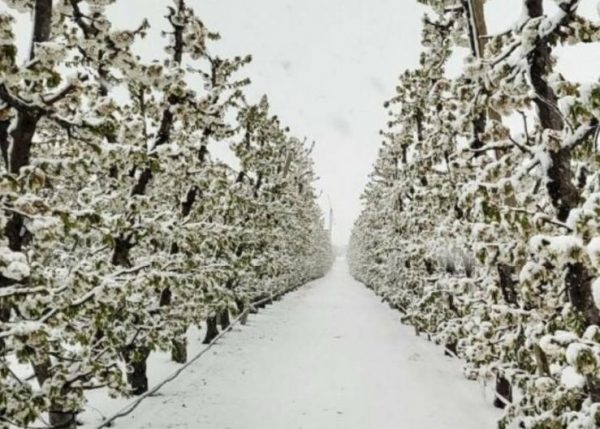
April Snow Chills Northwest Cherry Output

While the Northwest cherry season is likely to extend into September, crop volumes keep getting smaller because of April’s cold and snow, according to B.J. Thurlby, president of the Yakima, Wash.-based Northwest Cherry Growers.

While an average Northwest cherry crop is 20 to 21 million cartons, the latest crop estimate from the group is at just over 14 million cartons.

Thurlby said a fourth crop estimate will be released in early July and the final crop number could be perhaps a million boxes or so lower than the 14 million box projection, he said. 

“We haven’t seen anything like this in a long time,” he said, noting that the Northwest cherry output will be the lowest since 2011. “But we’ve added 15,000 acres since 2011.”

Because the California cherry crop finished by mid-June this year, there was very little overlap between the two major growing regions this year, he said, straining tight supplies even more.

“Last year, [California] shipped all the way into July, and this year they were done by June 8. We didn’t start picking until June 10,” he said.

At the end of June, Thurlby said Northwest cherry shipments were averaging about 275,000 boxes per day, down from normal levels over 500,000 boxes per day.

“It is just a really short crop, and I feel sorry for my growers,” he said.

The USDA reported that, for the week of June 19-25, total U.S. cherry shipments were 28.3 million pounds, down by more than 50% from 70 million pounds the same week a year ago. Season-to-date shipments of cherries in the U.S. were 166.6 million pounds as of June 25, down drastically from 337.2 million pounds the same week last year.

As of June 30, the USDA’s Market News Service had not reported fob prices for Washington cherries. On June 30, 2021, the Market News Service reported red sweet cherries in a range from $17 to $57 per carton, depending on fruit size.

However, the USDA on June 30 reported New York City terminal market wholesale prices for Washington sweet red cherries ranged from $110 to $120 per 18-pound carton, compared with about $50 to $54 per carton at the same time last year.

Retail promotions of cherries also are pricier this year.

Thurlby said he has seen ads running from $3.99 per pound to $7.99 per pound, with higher delivered costs to the East Coast reflected in pricier retail cherry prices there. 

The USDA reported that just over 10,000 retail grocery stores promoted cherries at an average retail price of $2.86 per pound on June 24. Last year, nearly 29,000 U.S. grocery stores promoted cherries at an average price of $2.48 per pound for that same date.

Export demand has normalized compared with the height of the COVID-19 pandemic. Markets such as South Korea, Vietnam, Malaysia and Thailand show improved demand compared with last year, Thurlby said.

Cause and effect

A six-inch snow during cherry bloom on April 12 caused problems for the crop, Thurlby said. Those problems are showing up now with variable fruit maturity and reduced fresh packouts, he said.

“What we’re seeing is there’s less fruit going into a box than what’s coming out of the orchards,” he said. While the fruit being packed is gorgeous and eats very good, packouts are down compared with vintage years.

“When it comes to the packing shed, on a year when the fruit is really clean and running well, we will run 90% of the fruit into the box,” he said.

This year the packouts during the two weeks since harvest started in mid-May have been running closer to 70%, he said.

“It is not that the fruit is soft or doesn’t have sugar, it is because of what happened with the snow at bloom,” he said. Orchards are producing fruit with two distinct ripeness stages. Field workers are told to pick all the red cherries, and packers are finding that a higher percentage of fruit than usual is slightly under-ripe and not good for the fresh market.

“Growers are bringing the fruit in and they’re only getting 70% to 75% of their fruit into the box, so that’s a real challenge,” he said. 

Growers already started out with a reduced crop, and the lower packout knocks down returns even more.

“An average yield here in the Northwest would be five to six tons to the acre and there are some growers out with certain varieties they can get over 10 tons to the acre,” he said. This year, at least for the early part of the Northwest season, yields have just been two and a half to three tons per acre.

“And when you take 30% of that out and say it’s not going to go into your finished product, growers are struggling,” he said.

The snow in April created a lack of pollinating activity by bees.

The crop was about 60% in bloom when the snow hit, and temperatures were below 50 degrees following the snow, which put the trees back to sleep for another 10 days, Thurlby said. Since bees like to work when it is 55 degrees or warmer, the extended cold took a continuing toll on pollination, he said.

“Not only did we see the blooms that may or may not have been pollinated kind of wilt down because they were snowed on, [then] you also had no bee activity regardless, because they didn’t come out because [there] was snow on the ground, and it was too cold,” he said.

After a week of dormancy, some of the trees started to bloom again, with about seven days between pollination compared with the earlier bloom.

“It was absolutely brought on by the snow and the lack of pollination during that window,” he said. “What we’re feeling now is that, you know, the cherries have been pretty well received, and we’re happy with what we’re seeing as our finished product.”

More normal late season

Growers with cherry trees that weren’t in bloom on April 12 may see a more normal “back end” of the season, Thurlby said.

“I think most growers on the northern part of our production regions will tell you that they’ve got a better crop than the crop that we’re seeing on the front end of the season,” he said. However, no growers are saying they expect a bumper crop, he said.

“Not one grower is saying that this year,” he said. 

Some years a stretch of hot weather can push the growing districts together and speed the season up.

This year, that doesn’t appear to be the case, he said. in late June, temperatures have mostly stayed in a range of 75 to 85 degrees, which is “perfect” cherry growing weather.
Some growers in late districts say they will be picking around the end of the first week of September, Thurlby said.

“What that tells us is just how separated these districts are,” he said. “We are going to have fruit in August, and we are going to have fruit in September.”

From The Packer

Peruvian Table Grape Exports To Rise By At Least 8% In 2022-23

Peruvian table grape exports will rise by at least 8 percent this coming season, according to the general manager of Peru’s Table Grape Growers’ Association (Provid).

Alejandro Cabrera Cigarán said the industry would ship a minimum of 70 million boxes in the 2022-23 season, up from 64.8 million boxes in the previous season.

The replacement of traditional grapes for more productive proprietary varieties is the reason behind the increase in volume, according to a report by Agraria.pe.

Cabrera Cigarán pointed out that plants are experiencing better productive performance thanks to varietal changes made three or four years ago. As with any crop, maximum productivity is obtained between the third and fifth year after sewing, so currently, younger trees are close to reaching peak productivity.

“We still haven’t reached those growth curves, which is why we forecast that we will see better performances in our current production areas and we will therefore be able to surpass 70 million boxes. In July, we will have a more exact estimate,” he commented. 

In addition, the General Manager said that reasons behind an extended table grape export season included the production of early harvest and late harvest varieties which encompass more weeks in the calendar, as well as new opportunities in destination markets.

For example, in 2021-22 table grapes were harvested in Piura not only at the start of the season (September/October), but also at the end of the season (April). In this case, good field management allowed for a double harvest.

Cabrera Cigarán explained that ‘Peruvian growers took advantage of a commercial window in April and May, a time of year when demand for white seedless grapes is not satisfied. Chile has Red grapes at this time of year and Mexican table grape supply, which takes over the North American market, only comes into the picture in May.’  

In fact, Peruvian table grape exports in April of the 2021-22 season, increased from 500 percent to 1000 percent in comparison to the same weeks in the previous 2020-21 season.

Early harvest grapes such as Red Globes and proprietary varieties also allowed for early exports to be made in July, albeit with smaller volumes.

Furthermore, Peruvian table grapes will soon be exported to the Japanese market, something which has been in the pipeline for a long time. 

Phytosanitary protocols between authorities in both countries have essentially been agreed and Peru is waiting for a visit from a delegation from Japan’s Ministry of Agriculture (MAFF) to be confirmed, which will mark the last stage in the process.

The visit is expected to take place in August and if there are no observations, the first exports of Peruvian table grapes will be made to Japan in the 2022-23 season. 

Moreover, Cabrera Cigarán added that branching out to the Philippines and Chile is also on the agenda.

From Fresh Fruit Portal

Lawmakers Plead For Deal Ahead Of Dockworker Contract Deadline

Supply chain bottlenecks could worsen if West Coast deadlock leads to work stoppages, Democrats warn

With the U.S. West Coast dockworker contract set to expire on Friday, lawmakers and shippers are getting increasingly nervous about the potential fallout if terminal management and labor are unable to succeed at the bargaining table.

In a letter sent on Thursday to Pacific Maritime Association (PMA) and the International Longshore and Warehouse Union (ILWU), 21 congressional Democrats, led by Rep. Linda Sánchez of California, urged the two sides to “stay committed to the collective bargaining process and work in good faith to reach an agreement.”


Watch: PMA’s Jim McKenna previews labor talks


The current contract between the PMA, negotiating on behalf of container terminal operators at 30 West Coast ports, and the ILWU, which represents 22,000 dockworkers at those ports, is set to expire on Friday. However, contract negotiations have typically extended beyond deadline, and the parties have committed to ensuring cargo flow and continuing to negotiate beyond Friday’s deadline. Port automation is widely considered to be the issue most susceptible to contention.

“We understand that given the complexity of these negotiations, it may be difficult to reach a deal before the expiration of the current agreement,” the letter states. “We also recognize that this timing is typical and appreciate your shared assurances that cargo operations will continue beyond the expiration of the contract.”


Watch: ILWU leadership preview labor talks


But even a brief port shutdown would be felt at a time when the supply chain is already stressed, according to the American Apparel & Footwear Association (AAFA), a major U.S. importer of ocean containers.

“The U.S. economy, American importers and exporters, the tens of millions of workers they employ, and the hundreds of millions of consumers they serve deserve reliability and confidence in the global supply chain,” said Nate Herman, AAFA senior vice president of policy. “Every hour of work counts at the West Coast ports to ensure this stability.”

From FreightWaves

close
Loading…